


CLEVELAND, Ohio — Finding the right quarterback defines a franchise. With that in mind, I will break down Dillon Gabriel and examine the traits that matter most when considering the future of the Cleveland Browns.
It’s clear that Gabriel’s first NFL season did not unfold the way many expected. His rookie production reflected the natural growing pains that came with adjusting to the speed and complexity of the league.
In 2025, he completed 110 of 185 passes for a 59.5% completion rate, totaling 937 passing yards with seven touchdowns, two interceptions, a passer rating of 80.8, and a QBR of 31.0 across 10 games.
More Cleveland Browns coverage
Mike McDaniel, former Dolphins coach, is interviewing with the Browns Monday for their head coach vacancy
Browns request interview with Nate Scheelhaase, Rams pass game coordinator, for their head coach opening
Of franchises needing coaches, what NFL team & QB would you want to coach? — Terry Pluto
Those numbers showed inconsistency and difficulty sustaining rhythm within the offense. Still, those struggles did not erase the historic body of work he put together prior to joining the league.
In college, Dillon Gabriel appeared in 64 career games and threw for 18,722 passing yards, while tying the FBS record with 155 career passing touchdowns. He accounted for 189 total touchdowns in his career, and finished second all-time in career passing yards. In his final season at Oregon in 2024, he completed 326 of 447 passes for a 72.9% completion rate, 3,857 yards, and 30 touchdowns, demonstrating efficiency, command, and consistent production against top-level competition.
That résumé showed a quarterback who processed quickly, protected the football over time, and produced consistently, giving reason to believe he had the tools and experience to become a productive NFL player with continued growth and stability.
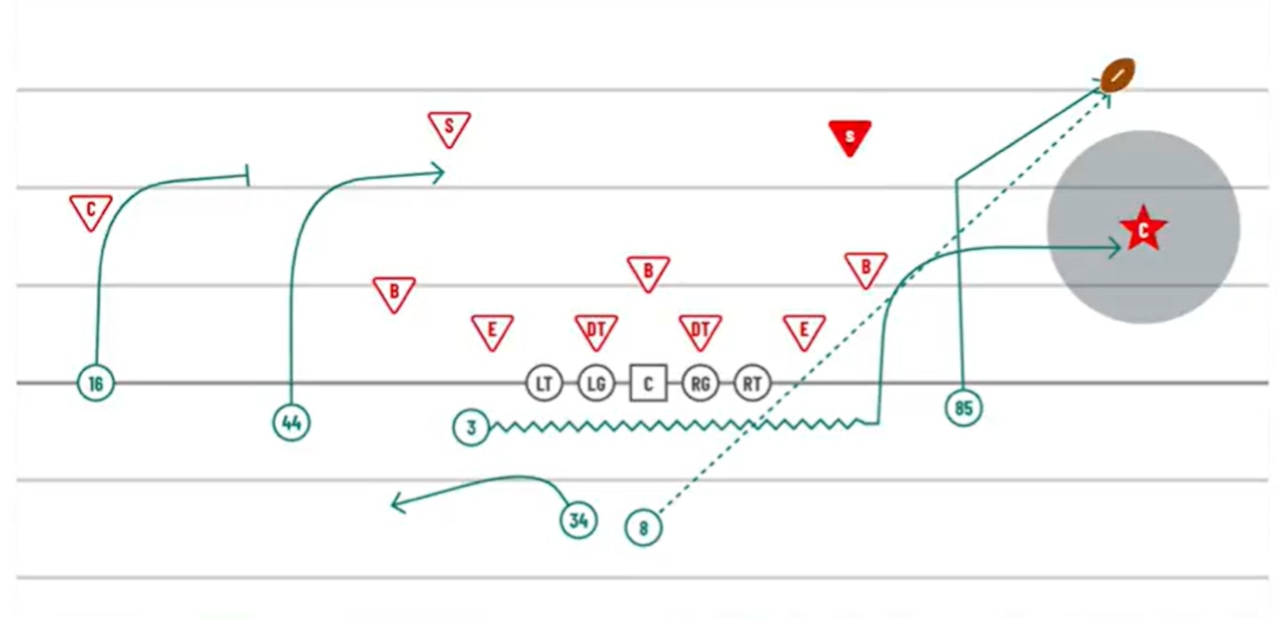
His skill set aligned naturally with what Kevin Stefanski wanted to do offensively, especially on early downs. Gabriel was most comfortable throwing from multiple launch points, which fit the early-down, play-action boot game where the offense was built around straightforward adjustments and layered levels concepts. Those concepts allowed him to read high-to-low, stay on schedule, and deliver the football on time without needing a perfectly clean pocket.
Stefanski also leaned heavily on 12 and 13 personnel to dictate defensive responses, create favorable match-ups, and simplify the quarterback’s decision making. Those heavier groupings forced defenses to declare coverage and personnel, allowing Gabriel to identify defensive leverage before the snap, find the best match-up after the snap, and get the ball out quickly.
The offense asked him to be efficient, decisive, and accurate, traits that consistently showed up in his game illustrating why he made sense in that system.
Below are a few clips that demonstrate Gabriel’s anticipation and accuracy when given a clean pocket.
Evaluating quarterbacks requires focus on five core areas that consistently show up on film:
Measurables and functional skill set
Impact and leadership
Pre-snap-to-post-snap processing
Anticipation and accuracy
Pocket management and situational awareness
As I evaluate Gabriel (and in a future film review, Shedeur Sanders), I will score each category individually using a 1–10 scale, where 1 indicates the trait does not appear on film and 10 indicates it consistently appears at a high level. These ratings are based solely on this season’s performance. That process will ultimately shape my opinion on whether either quarterback showed the traits, developmental upside, and overall profile to be the future franchise quarterback for the Cleveland Browns.
Measurables and functional skill set
Coach Riz Score: 6 out of 10
When assessing measurables and functional skill set, I am looking at Gabriel’s tools and traits and how they translate to on-field production. While his were good enough to play early, they did not give him much margin for error as a rookie. Gabriel’s arm strength was solid but not a true separator, his size tightened throwing lanes, and his athleticism was functional rather than dynamic. When his feet and timing were right, he could operate the offense efficiently, especially on boots and rhythm throws, but when things broke down or windows shrank, those physical limitations showed up quickly.
For Dillon Gabriel, the traits were workable and NFL viable, but they required structure, timing, and support to consistently win, which is why the grade sat in the solid, but not special range.
Below is a clip that shows a miss to a wide-open David Njoku because the pocket began to collapse.
Impact and leadership
Coach Riz Score: 4 out of 10
Gabriel’s lack of impact on the players around him was a real issue and directly limited the offense’s ability to find rhythm and build momentum. While he showed composure, professionalism, and a solid grasp of the system, he did not consistently elevate the unit, or create energy when things stalled. The operation often felt steady but flat, with drives struggling to snowball into sustained production. He handled the huddle and managed the offense, but without a strong presence or ripple effect on others.
With Gabriel on the field, the offense lacked urgency and edge. The poise was there, but the impact was not, which ultimately pulled this grade down.
Below is a miss from Gabriel to Njoku that would have had a positive impact on the loss to the Vikings.
Pre-snap-to-post-snap processing
Coach Riz Score: 6 out of 10
Gabriel showed outstanding pre-snap-to-post-snap processing, consistently identifying coverage, understanding defensive movement, and getting the offense into the right answers. He saw the field well and rarely looked confused by what defenses presented.
However, that strength was occasionally offset by a tendency to default to the checkdown even when deeper options were available. The checkdown is an outstanding decision when the deeper routes are covered, but at times he left explosive plays on the field by not pulling the trigger. The processing was strong, but the aggressiveness within that processing needed to continue to grow, which kept this grade from climbing higher.
In the video below, the Browns use a Dash concept to move Gabriel out of the pocket and change the launch point. He does a nice job quickly locating the first level throw, but he has to progress beyond that and hunt chunk plays. Unfortunately, Gabriel misses a big opportunity from Jeudy, who comes open in the third level.
Anticipation and accuracy
Coach Riz Score: 5 out of 10
Gabriel showed flashes of good anticipation and accuracy, especially on rhythm throws and defined reads that allowed the offense to stay on schedule. When his feet were set and the concept was clean, he delivered catchable footballs and generally protected his receivers with placement.
However, his inability or unwillingness to consistently stretch the field hurt his overall effectiveness in this area. At times, deeper throws were available, but the ball either came out late, arrived off target, or did not come out at all, limiting explosive plays and shrinking defensive stress. The anticipation was there in spots, but the lack of downfield aggression and consistent ball placement ultimately pulled this grade down.
Pocket management and situational awareness
Coach Riz Score: 5 out of 10
Gabriel showed solid pocket awareness and generally understood where the football should be thrown within the structure of the play. He felt pressure well enough to avoid unnecessary sacks and made sound decisions in obvious situations, rarely putting the football in harm’s way.
However, his ability to extend plays was more functional than dynamic, and he did not consistently turn broken plays into positive ones. At times, he was quick to settle for the safe option rather than creating an extra beat for something bigger to develop. The situational awareness was steady, but the lack of play extension and feel for when to push the moment limited the overall impact in this category.
Total Evaluation: 26 out of 50
Gabriel’s final grade of 26 out of 50 reflects a quarterback who can function in the NFL, but one who is not yet capable of driving a franchise. He has real strengths that show up on tape. He processes well, understands structure, protects the football, and can operate an offense when the picture is clean and defined. Those traits are why he was able to play early and why his college success was not accidental.
That being said, Gabriel does not consistently elevate the players around him or change the feel of a game when things break down. Physically, his tools are solid but not special, which means his timing and decision-making have to be nearly perfect. When protection fails or windows tighten, the offense too often settles instead of surging.
He sees the field well but can be overly conservative, leaving explosive plays on the field by defaulting to the safe option. In the pocket, he is aware and composed, yet more functional than creative, rarely extending plays into something bigger. The result is an offense that feels steady, but flat.
Gabriel is not a finished product, and there is still room for growth if his confidence and aggressiveness continue to develop. As of now, he profiles as a quarterback you can win with in the right environment, not one you build a franchise around or ask to carry the offense when it matters most.
Next: Same evaluation process on Shedeur Sanders.