


23-time singles Grand Slam champion Serena Williams is looking for tech founders with a compelling story to tell.
The tennis icon became interested in technology long before retiring from the sport in 2022. In 2017, while still on the professional tournament circuit, Williams teamed up with Alison Rapaport Stillman to found Serena Ventures, a venture capital firm investing in early stage tech companies.
The firm raised $111 million for its inaugural fund and has since built out the team to include six other members. Serena Ventures has backed companies like gaming upstart Bunch, education-focused social platform Fiveable, Black- and Latinx-focused digital healthcare company Hued, and a smattering of fintech and web3 companies.
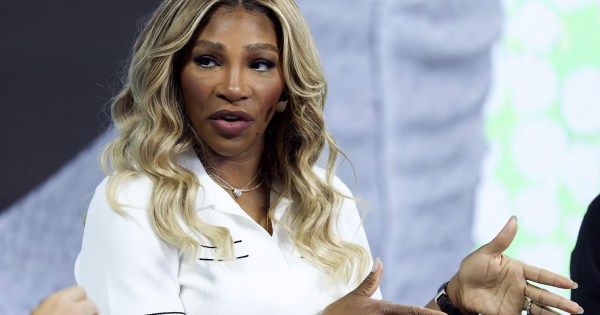
At the Zeta Live 2025 conference, Williams spoke candidly about her approach to investing.
A focus on personal connection
Though Serena Ventures seeks out early signs of growth and market fit, these aren’t the first factors it considers.
“One thing that we really look for is a true story. When we talk to founders and they say, ‘Oh, this is a great white space,’ we love that, but usually, we’ve found that founders don’t do as well unless they had some sort of personal experience” tying them to their mission, Williams said. “Obviously, there has to be a marketplace for it, and a market fit, but [a personal connection] is one of the main things that we look at in founders.”
One founder in the Serena Ventures portfolio—whose company she referred to as a “major unicorn”—told her that his mother had to sell her jewelry to fund his ambitions. He struggled financially to get started, and now, Williams said, “he was tackling an idea not because it was a white space” but because he was personally compelled by solving a specific problem.
Dedication to the 98%
Beyond a personal narrative that indicates a founder’s potential, Williams looks for startups that aim to address widespread needs.
“A lot of VC focuses on 2% to 3% to 4% of the population. We really focus on that 98%,” she said.
She pointed to fintech startup Esusu as an example. The company reports rent payments to major credit bureaus, helping tenants build credit—a benefit rarely available since rent has historically not counted toward credit scores.
“You know how many people are affected by that, and how you can’t build credit?” Williams said. “Your car bill works for credit, but your rent doesn’t. So that problem is facing [a huge percent] of the population. And so we try to look at companies that most VC people [would pass up because they] want to focus on that smaller number. These are trillion-dollar industries that we’re looking at that affect most of the population.”
Backing women and people of color
Since its launch in 2017, Serena Ventures has prioritized women founders and those from underrepresented backgrounds, as well as upstarts developing innovative solutions that seek to improve equity for women and people of color.
As of last year, more than half of the companies in Serena Ventures’ portfolio are women-founded. The portfolio also includes almost 50% Black founders and over 10% Latino founders.
As a Black woman venture capitalist, Williams is uniquely positioned to bolster businesses run by people from underrepresented groups, she said, because “you have to start at the top. If you don’t change that, it doesn’t flow down at all.”
“It’s really about who writes the checks,” she continued. “Once you change who’s writing the checks, then you get different founders. When it’s the same people writing the checks, they’ll get the same investors, and it’s a vicious cycle, right?
“We have several women on our team. We find more underrepresented founders. We find more women founders. That’s why our portfolio has so much diversity—because we see things differently.”