


Editor’s note: This article is part of our College Football Stadium Rankings series, highlighting the most interesting venues across the country.
Bowl season opens Saturday, with the LA Bowl kicking off major college football’s five-week, 46-game postseason. Several bowls boast histories that belong in the first chapter of the sport’s annals. Others are footnotes that rarely end up in the index. But all have a place in shaping college football.
Setting aside the Rose Bowl, the stadiums hosting bowls don’t receive nearly as much discussion as the games themselves, but they also have a major role to play. No matter how difficult it is to compare NFL palaces alongside small, on-campus or community-owned facilities, let’s not shy away from doing so.
Entering the 2025-26 postseason, we’ve ranked the top 25 active bowl venues, with descriptions of the other sites below. (Note: This ranking does not include the four on-campus College Football Playoff first-round games.)
1. Rose Bowl
Name/location: Rose Bowl, Pasadena, Calif.
Opened: 1922
Capacity: 89,702
Matchup: Indiana vs. Oklahoma/Alabama, Jan. 1 (Tickets)
No venue brings the magical blend of scenery, history and character of the Rose Bowl. Viewing the marquee in person produces the same reaction among football fans as a child’s first glimpse of presents under a Christmas tree. In the sports world, only the blooming azaleas at Augusta National can compare with the aesthetic beauty of the sunset hitting the San Gabriel Mountains. The structure is old, but in American sports, the Rose Bowl is the Sistine Chapel.
2. Sugar Bowl
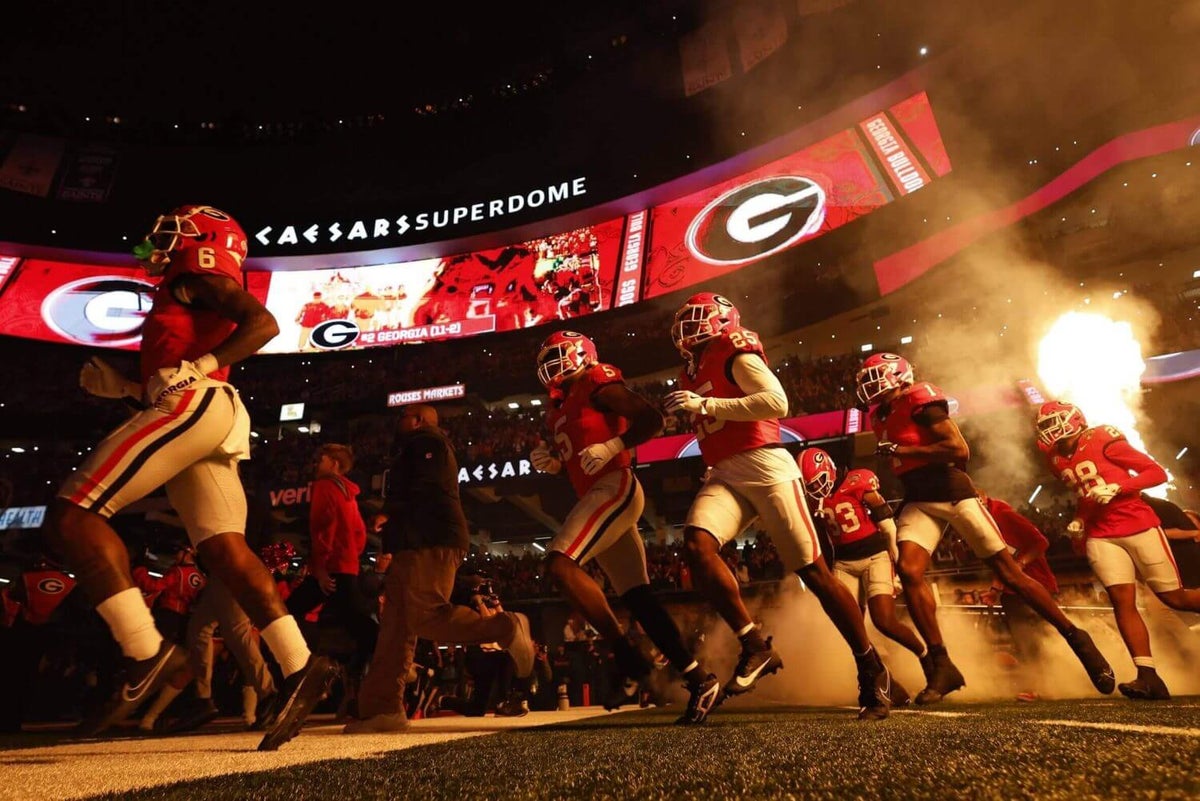
Name/location: Caesars Superdome, New Orleans
Opened: 1975
Capacity: 76,468
Matchups: Sugar Bowl — Georgia vs. Ole Miss/Tulane, Dec. 31 (Tickets); New Orleans Bowl — Western Kentucky vs. Southern Miss, Dec. 23
As indelible as the Rose Bowl is to college football, the Sugar Bowl is its near-equal to SEC fans. The Superdome is among New Orleans’ most recognizable structures, with a roof that covers 9.7 acres, or 440,000 square feet. Several renovations have improved the structure (especially since Hurricane Katrina) but haven’t altered the iconic look of the stadium that has hosted seven Super Bowls.
3. Fiesta Bowl
Name/location: State Farm Stadium; Glendale, Ariz.
Opened: 2006
Capacity: 63,400
Matchup: CFP semifinal, Jan. 8 (Tickets)
The Fiesta Bowl long has been considered an interloper for positioning itself as the fifth New Year’s Day bowl, but its warm-weather climate makes it a great destination. When the game moved into the current stadium nearly 20 years ago, the Fiesta Bowl enjoyed modern comforts and amenities to go along with the perfect location. State Farm Stadium has a retractable roof and possesses as good of a big-game feel as any venue in the country.
4. Cotton Bowl
Name/location: AT&T Stadium; Arlington, Texas
Opened: 2009
Capacity: 80,000 (expandable to 100,000)
Matchup: Ohio State vs. Texas A&M/Miami, Dec. 31 (Tickets)
“Jerry World” changed the game like few football stadiums have. The Cowboys’ massive palace with a retractable roof cost $1.15 billion nearly two decades ago and has forced communities to change how they build new stadiums. The Cotton Bowl moved out of its Fair Park namesake in 2010, and the postseason classic returned to the big time when the Bowl Championship Series morphed into the College Football Playoff four years later.
5. Peach Bowl
Name/location: Mercedes-Benz Stadium; Atlanta
Opened: 2017
Capacity: 71,000 (expandable)
Matchup: CFP semifinal, Jan. 9 (Tickets)
A modern architectural marvel, Mercedes-Benz Stadium has a retractable roof with a pinwheel design that can fully open in 12 minutes. The structure has allowed the Peach Bowl to go from the least of the New Year’s Six bowl games to a critical postseason player. It’s still catching up on prestige and history, but collectively the Peach Bowl and Mercedes-Benz Stadium have elevated Atlanta to its rightful place on college football’s national scene.
6. Orange Bowl
Name/location: Hard Rock Stadium; Miami Gardens, Fla.
Opened: 1987
Capacity: 64,767
Matchups: Orange Bowl — Texas Tech vs. Oregon-James Madison winner, Jan. 1 (Tickets); CFP championship, Jan. 19
With its amazing weather and world-renowned beaches, Miami tops the destination list for perfect bowl locations. Hard Rock Stadium doesn’t have the mystique as its CFP stadium colleagues, but the open-air facility has improved significantly since its 2015 renovation. With incredible history and upcoming events, including this year’s CFP championship game, the Orange Bowl has a lot going for it.
7. ReliaQuest Bowl
Name/location: Raymond James Stadium; Tampa, Fla.
Opened: 1998
Capacity: 65,857
Matchups: ReliaQuest — Vanderbilt vs. Iowa, Dec. 31; Gasparilla—NC State vs. Memphis, Dec. 19
If the College Football Playoff expands to 16 teams and adds two bowls to the quarterfinal/semifinal rotation, it would be a crime not to consider the ReliaQuest Bowl. It’s one of the industry’s best-run bowl destinations, and Raymond James Stadium is a perfect place for holiday season football. It has charisma and texture, both inside and outside the structure. It’s difficult to believe the open-air stadium is nearly 30 years old, but it’s in great shape.
8. Las Vegas Bowl
Name/location: Allegiant Stadium; Paradise, Nev.
Opened: 2020
Capacity: 65,000
Matchup: Nebraska vs. Utah, Dec. 31
Like the ReliaQuest Bowl, the Las Vegas Bowl deserves a shot at moving up if another two games are added to the CFP rotation. While this bowl has longevity, it doesn’t have the tradition because it only recently became a game featuring two Power 4 conference teams. However, Allegiant Stadium and its translucent fixed roof make any sporting event feel like the big time. Plus, Vegas is an attraction all to itself.
9. Texas Bowl
Name/location: NRG Stadium; Houston
Opened: 2002
Capacity: 72,220
Matchup: LSU vs. Houston, Dec. 27
The NFL’s first retractable-roof dome, NRG Stadium has hosted the Texas Bowl since 2006. It’s no longer considered a state-of-the-art facility, but it still provides a fantastic football environment. Currently a mid-level contract bowl for the SEC and Big 12, the Texas Bowl remains a solid postseason destination. It’s just too bad organizers didn’t revive the name Bluebonnet Bowl, which represented Houston from 1959 to ’87.
10. Citrus/Pop-Tarts Bowl
Name/location: Camping World Stadium; Orlando, Fla.
Opened: 1936
Capacity: 60,219
Matchups: Citrus Bowl — Michigan vs. Texas, Dec. 31; Pop-Tarts Bowl — BYU vs. Georgia Tech, Dec. 27; Cure Bowl — Old Dominion vs. USF, Dec. 17
With three bowl games over two weeks, Camping World Stadium is football’s busiest place just 16 miles from the world’s happiest place. The open-air stadium itself is not up the standard of its high-level bowl matchups — especially the Citrus Bowl — which is why it’s located at No. 10 on this list. However, that will change. Last month, the Orlando City Council approved a $400 million renovation, which will boost the capacity and the give the stadium modern touch and amenities.
11. Holiday Bowl
Name/location: Snapdragon Stadium; San Diego, Calif.
Opened: 2022
Capacity: 35,000
Matchup: Arizona vs. SMU, Jan. 2
Some of college football’s most entertaining postseason games were Holiday Bowls at the old Jack Murphy Stadium. After the old stadium’s demolition in 2020, the Holiday moved into brand-new Snapdragon Stadium three years ago. It’s a tighter home and much nicer than the old stadium, which was decrepit in its final years.
12. Gator Bowl
Name/location: EverBank Stadium; Jacksonville, Fla.
Opened: 1946
Capacity: 69,132
Matchup: Missouri vs. Virginia, Dec. 27
One college football’s oldest postseason games, the Gator Bowl is approaching its third iteration as a stadium. It remained largely unchanged for its first 50 years before Jacksonville landed the expansion Jaguars in 1995. Then it was rebuilt for the NFL and hosted a Super Bowl in 2005. Now, it will undergo another major renovation which will limit capacity next year and force the bowl to relocate in 2027. Then, EverBank Stadium will surge near the top of the list of open-air stadiums.
13. Music City Bowl
Name/location: Nissan Stadium; Nashville, Tenn.
Opened: 1999
Capacity: 69,143
Matchup: Illinois vs. Tennessee, Dec. 30
The Music City Bowl’s home has shifted through a laundry list of names over the years, but it’s been a solid site, and its location is perfect, along the Cumberland River and near downtown Nashville. This is the penultimate Music City Bowl for this stadium. After the 2026 game, a new $2.1 billion dome will replace the current Nissan Stadium, and it should usher Nashville into a top-tier status with CFP championships, Final Fours and perhaps a Super Bowl in its future.
14. Alamo Bowl
Name/location: Alamodome; San Antonio, Texas
Opened: 1993
Capacity: 64,000
Matchup: TCU vs. USC, Dec. 30
A longtime facility that has more than served its purpose, the Alamodome has helped build the Alamo Bowl from a lower-tier postseason game into one of the top three bowls outside the CFP. It has great sightlines, and it remains a staple for other high-level sporting events, such as the NCAA men’s and women’s basketball tournaments.
15. Sun Bowl
Name/location: Sun Bowl Stadium; El Paso, Texas
Opened: 1963
Capacity: 51,500
Matchup: Arizona State vs. Duke, Dec. 31
There’s something regal and classic about the 90-year-old Sun Bowl and its generations-long relationship with CBS. The telecast provides a portal to a simpler time in college football, and the ambiance surrounding the stadium feels familiar. The stadium is aging by modern standards, so comparing it to the NFL palaces is unfair. But as a setting, the Sun Bowl remains undefeated.
16. Birmingham Bowl
Name/location: Protective Stadium; Birmingham, Ala.
Opened: 2021
Capacity: 47,100
Matchup: Appalachian State vs. Georgia Southern, Dec. 29
Old Legion Field saw plenty of history from legendary Iron Bowls to the first SEC Championship Game, but it wasn’t cracking the top 20 of this list. But new Protective Stadium has underrated qualities, from a gorgeous exterior to great view of the field. If the Birmingham Bowl gets the chance to move up in the bowl lineup, people will see it’s one of the nation’s better mid-sized open-air stadiums.
17. Frisco Bowl
Name/location: Ford Center at The Star; Frisco, Texas
Opened: 2016
Capacity: 12,000
Matchups: Frisco Bowl — Ohio vs. UNLV, Dec. 23; Xbox Bowl — Missouri State vs. Arkansas State, Dec. 18
The Dallas Cowboys’ practice facility has turned into a bowl hotspot. The Star provides an intimate yet modern environment that provides a great atmosphere for bowls involving Group of 5 teams. This year, ESPN Events shifted the Bahamas Bowl to Frisco, with Xbox securing sponsorship rights. Now there are two bowls at The Star.
18. Fenway Bowl
Name/location: Fenway Park; Boston
Opened: 1912
Capacity: 37,751
Matchup: UConn vs. Army, Dec. 27
Its inarguable that Fenway Park is one of sports’ most iconic viewing environments, right there with the Rose Bowl, Wrigley Field and Augusta National. But this list strictly relates to bowl games and their environments, which is why it isn’t ranked in the top two. It cracked the top 20 for one reason alone: People will tune in to see Fenway Park host a bowl game. They might not even know — or care — who is playing.
19. Liberty Bowl
Name/location: Simmons Bank Liberty Stadium; Memphis, Tenn.
Opened: 1965
Capacity: 50,000
Matchup: Navy vs. Cincinnati, Jan. 2
Few communities work harder to maintain their place in the bowl lineup than Memphis, which has nurtured a 60-year partnership with the Liberty Bowl. The facility doesn’t have the modern amenities of newer bowls, but what it has seen — including Bear Bryant’s final game at Alabama — gives the stadium character, and on television, tradition trumps luxury.
20. Duke’s Mayo Bowl
Name/location: Bank of America Stadium; Charlotte, N.C.
Opened: 1996
Capacity: 75,037
Matchup: Wake Forest vs. Mississippi State, Jan. 2
The Duke’s Mayo Bowl game action has become the curtain raiser to the ceremonial mayo dump for the winning coach. But that fun moment aside, the game delivers a good vibe on television, and the blue seats are a difference maker. Now in its 30th season, the stadium will take on an $800 million renovation that should vault it into one of the best open-air stadiums in America.
21. LA Bowl
Name/location: SoFi Stadium; Inglewood, Calif.
Opened: 2020
Capacity: 70,000
Matchup: Washington vs. Boise State, Dec. 13
As a stadium, nothing compares to SoFi. At a cost of $5 billion-plus, SoFi Stadium is the best in the world and its translucent canopy roof provides the stadium with a unique covering. The LA Bowl’s lack of history (it enters its fifth and potentially final year this weekend) is the only reason why it’s not higher on this list. But SoFi has hosted a CFP championship game, and that’s likely to happen with more regularity.
22. Game Above Bowl
Name/location: Ford Field; Detroit
Opened: 2002
Capacity: 65,000
Matchup: Northwestern vs. Central Michigan, Dec. 26
As a domed stadium, Ford Field is perfect for the Lions. The environment really pops on television and the raucous crowd carries well. It doesn’t have the same vibe for the Game Above Bowl, which is understandable. It’s not a slight on the structure; it’s just difficult to bring out a modicum of the excitement for a lower-level bowl matchup.
23. Rate Bowl
Name/location: Chase Field; Phoenix, Ariz.
Opened: 1998
Capacity: 48,330
Type: Minnesota vs. New Mexico, Dec. 26
The Phoenix area easily ranks among the best bowl locations with its temperate climate in late December. This game used to be played at Arizona State University, but it has been moved to Chase Field, the home of the Arizona Diamondbacks, which is equipped with a retractable roof. To improve fan visibility and broaden the viewing experience, the bowl brings in bleachers behind one of the sidelines, which is helpful.
24. Pinstripe Bowl
Name/location: Yankee Stadium; Bronx, N.Y.
Opened: 2009
Capacity: 46,537
Matchup: Penn State vs. Clemson, Dec. 27
Similar to Fenway Park, Yankee Stadium has few peers as a baseball environment. It doesn’t have the century-old charm of Fenway to bring in casual viewers, but the Pinstripe Bowl hit a home run (or a foul ball, depending on your perspective) with its matchup this season.
25. Independence Bowl
Name/location: Independence Stadium; Shreveport, La.
Opened: 1924
Capacity: 50,000
Matchup: Louisiana Tech vs. Coastal Carolina, Dec. 30
The Independence Bowl has become a postseason outlier of sorts. It somehow has survived for nearly 50 years without a consistent television contract, a shiny new stadium or prominent matchups in a non-destination location. Its perseverance is a credit to its bowl staff and the city of Shreveport’s upkeep of Independence Stadium.
And now, the rest of the bowl venues that didn’t quite make our top 25…
68 Ventures Bowl
Name/location: Hancock Whitney Stadium; Mobile, Ala.
Opened: 2020
Capacity: 25,450
Matchup: Louisiana vs. Delaware, Dec. 17
A new facility that replaced legendary Ladd-Peebles Stadium in 2020, Hancock Whitney Stadium has the functionality required to stage a quality bowl game. It’s best known for the Senior Bowl, which welcomes many of the nation’s top NFL Draft prospects in late January and early February.
Boca Raton Bowl
Name/location: Flagler Credit Union Stadium; Boca Raton, Fla.
Opened: 2011
Capacity: 30,000
Matchup: Louisville vs. Toledo, Dec. 23
A nice open-air stadium which doubles as the home of FAU football, the Boca Raton Bowl has great aesthetics coupled with a fantastic location. The palm trees around the stadium give it that perfect South Florida feel. Despite its place in the bowl pecking order, players will root for a trip here over other locations.
Armed Forces Bowl
Name/location: Amon G. Carter Stadium; Fort Worth, Texas
Opened: 1929
Capacity: 47,000
Matchup: Rice vs. Texas State, Jan. 2
Home of TCU football, Amon G. Carter Stadium had two major renovations in the last 15 years, which makes it one of the friendliest mid-sized stadiums in the country — ironic considering the stadium’s nickname is “Hell’s Half Acre.”
Military Bowl
Name/location: Navy-Marine Corps Memorial Stadium
Opened: 1959
Capacity: 34,400
Matchup: East Carolina vs. Pittsburgh, Dec. 29
Once held at Washington D.C.’s RFK Stadium, the Military Bowl moved to the Naval Academy in 2013. The hillside circling one of the end zones gives it a unique flair.
Salute to Veterans Bowl
Name/location: Cramton Bowl; Montgomery, Ala.
Opened: 1922
Capacity: 25,000
Matchup: Troy vs. Jacksonville State, Dec. 16
A century-old facility, Cramton Bowl once hosted the Philadelphia A’s in spring training, staged Auburn and Alabama games through the early 1950s and was best known for the annual Blue-Gray all-star football game between players from the North and South through 2001.
First Responder Bowl
Name/location: Gerald J. Ford Stadium; Dallas
Opened: 2000
Capacity: 32,000
Matchup: UTSA vs. FIU, Dec. 26
When the Cotton Bowl Classic left for Jerry World, the Cotton Bowl stadium started its own bowl game in 2011. It ran through 2018 before moving to SMU’s cozy on-campus stadium.
Myrtle Beach Bowl
Name/location: Brooks Stadium; Conway, S.C.
Opened: 2003
Capacity: 26,000
Matchup: Western Michigan vs. Kennesaw State, Dec. 19
The teal turf gives the home of Coastal Carolina football a little panache. What is most striking about the facility is Adkins Fieldhouse located outside the north end zone. It looks like a giant golf clubhouse overlooking the football field. This year’s matchup is perhaps the best among Group of 5 programs, with two conference champions going head-to-head.
Famous Idaho Potato Bowl
Name/location: Albertson Stadium; Boise, Idaho
Opened: 1970
Capacity: 36,387
Matchup: Utah State vs. Washington State, Dec. 22
It’s interesting how this bowl has stayed in place for nearly 30 years. Although it’s a hidden gem as a city, Boise doesn’t attract many visitors in December. Yet, several thousand fly to Idaho for this bowl game. Every year one of Boise State’s conference rivals plays on the blue turf, sometimes after losing badly there during the regular season.
New Mexico Bowl
Name/location: University Stadium; Albuquerque, N.M.
Opened: 1960
Capacity: 39,224
Matchup: San Diego State vs. North Texas, Dec. 27
If you look at University Stadium itself, there’s nothing special. But if you step inside, you can see the mountains outside of Albuquerque, and that makes your trip worthwhile.
Arizona Bowl
Name/location: Casino Del Sol Stadium; Tucson, Ariz.
Opened: 1928
Capacity: 50,782
Matchup: Fresno State vs. Miami (Ohio), Dec. 27
Home of the Arizona Wildcats, the newly named Casino Del Sol Stadium once staged the Copper Bowl in the early 1990s. What the facility lacks in aesthetic beauty it makes up for in location. Tucson’s surroundings are breathtaking and visible from the upper deck.
Hawaii Bowl
Name/location: Clarence T.C. Ching Athletic Complex; Honolulu, Hawaii
Opened: 2015
Capacity: 15,194
Matchup: Hawaii vs. California, Dec. 24
The stadium is a makeshift facility that is smaller than many high school football programs’ homes. But nobody really cares about comfort at a football game when you’re watching in Hawaii, right?
The College Football Stadium Rankings series is part of a partnership with StubHub. The Athletic maintains full editorial independence. Partners have no control over or input into the reporting or editing process and do not review stories before publication.