


The Globe examined soccer stadium projects in Seattle, Denver, and Kansas City, Mo., all of which are being developed or were completed within the last two years. While none is an exact replica of the split-funding plan in Boston, they each are designed to be homes to women’s professional soccer teams or, in Seattle’s case, specifically for high school student-athletes, just as in Boston.
Seattle is pursuing a $150 million publicly funded redevelopment of a 6,500-seat stadium, with help from private donors. In Denver, the Summit FC team is footing the $200 million bill for a new stadium, with the city paying $70 million for land and other costs. Kansas City’s two-year-old women’s soccer venue cost a reported $140 million.
Meanwhile in Boston, costs have jumped more than 60 percent from an initial projection of $200 million.
Wu has attributed the price spike for the 10,000-seat White Stadium to the impact of tariffs on building supplies; inflation that, in a span of just a few years, has significantly driven up prices; and updates suggested by the surrounding community that she said would “make the project better and therefore more expensive.”
Experts said developing and building a huge project can also simply cost more in Boston than in other major metro areas, given many use unionized labor, and that in general, wages here reflect the region’s high cost of living. The permitting process here can also be expensive.
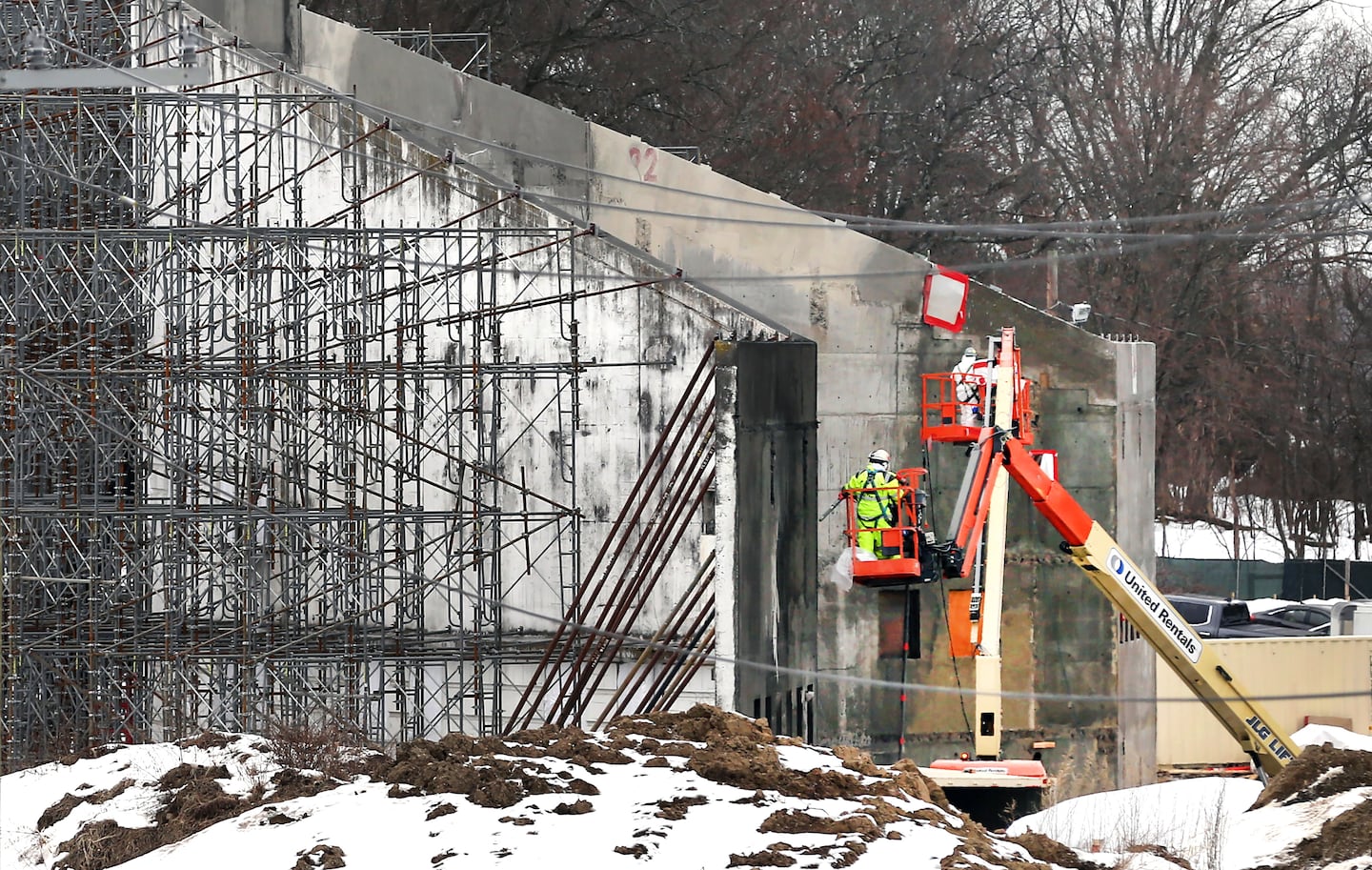
The revamped White Stadium is expected to open in the summer of 2027.
Emma Pettit, a Wu spokesperson, said in a statement that city officials “caution against drawing comparisons with facilities built for different purposes, in different years, and in different markets.”
“Rebuilding White Stadium will be the largest investment in BPS athletics and Franklin Park since the stadium was constructed in 1949,” Pettit said. “We are excited that construction is now underway.”
Under the city’s agreement with Boston Legacy FC, the team will spend at least $190 million on the renovation, while Boston will put in $135 million — which Wu insists will be the limit of the city’s share. The team will also pay more than $62 million over the coming years in rent to the city, and on maintenance for the stadium, improvements to Franklin Park, and other community benefits.
Wu officials have called it a historic and innovative deal: a private team investing a nine-figure sum to help build a valuable public asset, but will remain owned and controlled by BPS. The new facility will also be open to the public 365 days a year, including the 20 days the professional soccer team can host home games, and will be an “economic driver” in the area, Wu’s office said.
Other comparable stadiums — both those still in the works, and one that is completed — don’t come near the total cost of White Stadium.
The Kansas City Current built the 11,500-seat CPKC Stadium for about $117 million in 2024, though that does not include additional infrastructure improvements, according to a Kansas City official. The cost ultimately rose to a reported $140 million, nearly double the original $70 million estimate.
The team did receive $6 million in state tax credits and up to $8 million in reimbursements for utility work, funded by revenue from a port improvement district sales tax.
Like the Boston Legacy, the Current play in the National Women’s Soccer League.
Another NWSL team, the Denver Summit FC, is planning a 14,500-seat stadium on a large lot that once housed a rubber factory, with the team expected to spend $200 million. The facility is forecast to be open in 2028.
While the stadium itself is privately funded, it was contingent on Denver purchasing the land and making improvements for a total of $70 million.
“It’s a historically contaminated site that . . . has been nothing valuable to [my] community but a big divide and blight,” said City Councilor Flor Alvidrez.
The location of the Denver facility is in contrast to that of White Stadium in Franklin Park, considered the crown jewel of Frederick Law Olmsted’s network of public parks known as the Emerald Necklace. The environmental nonprofit the Emerald Necklace Conservancy and a number of Boston residents have sued the city to stop the project, and further called on the city to renovate it without the involvement of a private soccer team.
Seattle is doing just that, with a $150 million effort to renovate Seattle Public Schools’ Memorial Stadium. At 6,500 seats, it will be smaller than Boston’s new White Stadium, but would be funded largely by the city and the school district, with about $30 million coming from private donors.
The Seattle school district originally budgeted $66.5 million to replace the aging stadium, but decided to upgrade the plans, said Fred Podesta, the district’s chief operations officer. The stadium would primarily be used by students, but officials said it could also host concerts or professional sports games, which could also help defray maintenance costs.
“We arrived at a design and a cost that is going to serve everybody’s needs,” Podesta said.
That the cost of White Stadium is far higher than each of those isn’t surprising to some experts.
Development is extremely expensive in Massachusetts compared to other states for a variety of reasons, from the web of building and environmental regulations that developers must follow to the cost of land, said John Ferrante, chief executive of Associated General Contractors of Massachusetts.
The construction industry is also largely unionized, and labor can be one of the biggest line items in a project budget, he said.
“The cost of living here is quite high, and so obviously we’re trying to compensate people so that they can afford to live in the communities that they’re building in,” Ferrante said.
Renovations such as the White Stadium project can also be more expensive than a new build, he added. There’s more uncertainty over what will be uncovered, such as asbestos or unexpected wiring, and there are additional costs that come with preserving any part of the original structure, Ferrante said.
Tariffs and inflation have also caused the price of materials to skyrocket, making it far more expensive to build now than even just one or two years ago, said Robert Koshgarian, head of the sports and entertainment project development team at the national real estate firm JLL.
“It’s massive,” Koshgarian said. “I’ve had contractors tell me that they’re seeing somewhere near [a] 40 percent increase.”
Wu has argued that Boston could not build a new stadium of the caliber she says students deserve for much less than the $135 million the city is spending.
Other stadium projects also carry hefty price tags. In nearby Everett, the Kraft Group is planning to spend an estimated $500 million to build a new stadium for the New England Revolution that could hold up to 24,000 fans.
Still, some critics still aren’t sold on Wu’s plan. Andrew Zimbalist, an economics professor at Smith College, said a stadium that’s designed to cater to both a professional team and high school athletes is “a kind of a hybrid that doesn’t exist.”
“The project is bad for high school sports,” he said, “and it’s not good for Boston women’s soccer to have only half of a professional stadium.”