


A recent audit uncovered significant contract violations amounting to hundreds of thousands of dollars owed to the Municipality of Anchorage.
“This level of noncompliance is unusual and is going to precipitate a meaningful response from us,” said Bill Falsey, chief administrative officer for the municipality, during an interview this week.
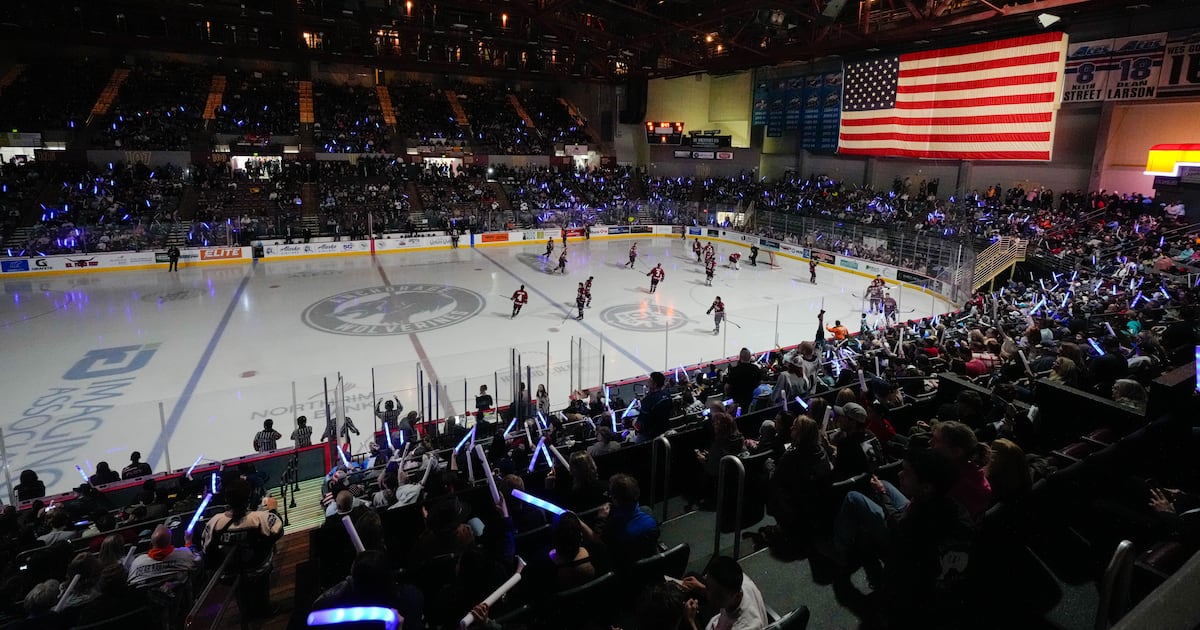
At issue are three city-owned facilities and the private company contracted to manage them a few years ago. Beginning in 2022 and 2023, O’Malley Ice and Sports Center took over operations at the Ben Boeke, Dempsey Anderson and George M. Sullivan arenas. All three facilities have ice rinks and are pillars of Anchorage’s ice hockey community. Returning them to normal use was a priority for the Bronson administration after several tumultuous years of pandemic closures, financial precarity and, in the case of the Sullivan, prolonged use as a large homeless shelter.
Beginning in 2025, however, members of Mayor Suzanne LaFrance’s administration became aware of major financial problems with how O’Malley was executing its contract. Falsey told a group of Anchorage Assembly members during a work session last week that those initial concerns culminated in an extensive report from the municipality’s Office of Internal Audit, which was published in February.
The head of O’Malley, Steve Agni, said the company has had to spend huge sums of money handling repairs at the aging facilities while keeping them open and available to user groups. But according to the audit, they did so without following basic financial protocols, overpaying themselves in the process and misusing taxpayer subsidies.
Several Anchorage Assembly members at the Feb. 27 meeting appeared genuinely surprised by the degree to which O’Malley is alleged to have ignored contract terms, amounting to potential mismanagement “in excess of half a million” taxpayer dollars, Falsey told them.
“That is a lot of public money going out the door in a way that it was certainly not intended,” Assembly member Zac Johnson, who represents South Anchorage, said during the meeting.
Johnson asked the administration whether there was any chance of recovering those funds. Falsey said it’s too early to know, given the range of outstanding variables and questions.
In light of the ongoing disagreements with O’Malley and the audit findings, Falsey said the municipality issued a notice of default in February, and this month put out a new request for proposals to firms that may have plans for how to run the arenas.
A contract with ‘strange peculiarities’
The contract between the city and O’Malley was criticized from the start, in part because it broke with several norms in the municipal procurement process that Falsey at one point called “strange peculiarities.”
For one thing, in July 2023 it was signed by Mayor Dave Bronson himself, a formality in officiating public contracts that’s usually handled by the purchasing director.
The deal did not go before the Assembly or its typical public process for reviewing and approving multimillion-dollar lease agreements with contractors. Months later, in November 2023, the Assembly passed a measure that changed official procurement rules because members believed the Bronson administration had circumvented those requirements in its contract with O’Malley. According to a memorandum filed with that resolution, the sponsors said part of the reason the code revisions were merited was because of how the Bronson administration had handled the arenas arrangement with O’Malley.
“This already-executed transaction continues to roll forward in effect and without the required Assembly approval or public process,” wrote Assembly Chair Christopher Constant and then-Vice Chair Meg Zaletel in the memorandum.
February’s audit concluded that however fair or unfair the initial contract was, many of its most important terms have not been followed in the intervening years.
“Alterations on financial statements without justification raise questions on the reliability and integrity of the Contractor’s financial reporting, and the actual financial standing of the facility is unclear,” wrote auditor Dalton Benson.
Among the significant findings in the report:
• O’Malley “has not submitted audited financials for Boeke and Dempsey since the start of the original contract in August 2022 and has not submitted audited financials for Sullivan since it was added in the revised contract in July 2023.”
• The company appears to have overcompensated itself by retaining a share of revenues that were supposed to be sent to the municipality: “Overall, we estimate the Contractor overpaid themselves for Boeke and Dempsey incentives by $164,112. We were not able to accurately determine Sullivan incentives since they had not always collected or separated ticket surcharge revenues.”
• The auditors found differing figures in O’Malley’s internal accounting system than what was reported to the municipality.
• Instead of retaining revenues in a “capital reserve account” to pay for repairs, O’Malley requested of the city “$217,418 in operating fund expenditures that outlined various major and minor repairs, renovations, and purchases for Sullivan completed in 2024.” The majority of that repair work, auditors concluded, should have been paid out of the reserve fund.
• O’Malley retained money from the municipality that was supposed to pay for maintenance, according to the audit findings. According to the audit, “Contractor kept the facility maintenance subsidies as an allowance towards their own repairs of the facilities. As of August 31, 2025, the Contractor currently owes the Municipality $360,000 in unpaid maintenance and repair subsidies for the three contracted years.”
• Under the terms of the contract, O’Malley was supposed to begin paying for utilities at Sullivan Arena in August 2025. But the company “has refused to accept the transfer of the utilities into their name, and as of November 30, 2025 the Municipality has incurred $127,445 in Sullivan utility costs that should have been paid from operating revenue by the Contractor,” according to the audit.
Falsey said the other novelty in the contract was that it was signed without the municipality’s purchasing department ever receiving a performance bond, a chunk of money the city would retain if a contractor failed to deliver on its side of the deal —something it still doesn’t have from O’Malley. Typically, Falsey said, the purchasing department does not sign a contract if it doesn’t have the performance bond in hand.
“I don’t know what that was about,” Falsey said. “And nobody here knows why.”
‘Private-sector approach to problems’
It was never going to be easy to make Sullivan Arena profitable coming out of the COVID era and its tenure as a low-barrier shelter for hundreds of people a night.
“We knew it was not going to be a moneymaker,” said Agni, head of O’Malley Ice and Sports Center and former co-owner of the Alaska Aces, as he answered questions during the Assembly’s work session. “We did not know the extent of the deferred maintenance.”
Agni told members that the company’s main priority was bringing Sullivan Arena back online, and keeping it, as well as the other two ice arenas, available to the community of regular users. But the structure was severely damaged and in need of repairs both big and small.
“We have not missed an operating day in those buildings despite the need to always complete exigent repairs,” Agni said. “I believe that O’Malley performed its fundamental duties.”
He defended the company’s record against some of the audit’s more critical findings, pointing out that the investigation’s scope is confined to analyzing the narrow parameters of the contracts’ terms, without taking the full context of management considerations into account.
“There’s a lot of things that were either missed in the municipal files or, we believe, mischaracterized,” Agni said in an interview this week.
He noted that there were repeated instances where major systems at the aging ice rinks were in trouble, and rather than going through the protracted steps of getting city employees to come fix them, the company quickly stepped in and spent the money to get it done as soon as they could.
“We took a private-sector approach to problems,” Agni said. “We’d hear from municipal Maintenance and Operations that they didn’t have people available or people qualified. So we were confronted with shutting buildings down or not achieving the opening of the Sullivan.”
Agni said he and his company had managed the facilities in good faith and opened their records to auditors, but felt that relatively benign discrepancies were now being wielded as “a cudgel” against the company.
“Nobody’s hiding anything,” he said.
As for refusing to pay for utilities, he said, it just doesn’t pencil out. After more than a year of facilitating events, Agni said, the company realized that passing additional utility costs over to customers like the Anchorage Wolverines or UAA ice hockey team would make things unaffordable for patrons.
“They would have to double and triple their ticket prices,” Agni said.
Both O’Malley and the municipality are asking whether the Sullivan can operate without a generous public subsidy. Included in that request was the option to propose an operating subsidy to ensure financial stability.
Even before the pandemic and mass shelter era, city officials were alarmed by just how big a money pit the arena was becoming. The last profitable year was 2015, right around the time the Alaska Airlines Center began siphoning clients and just before the Alaska Aces hockey franchise left. In 2016, the Sullivan ran a deficit of $588,999, according to the audit.
Agni said O’Malley intends to bid on this new RFP. Both the Boeke and Dempsey Anderson facilities are turning a profit, he said, though Sullivan Arena is a different animal.