


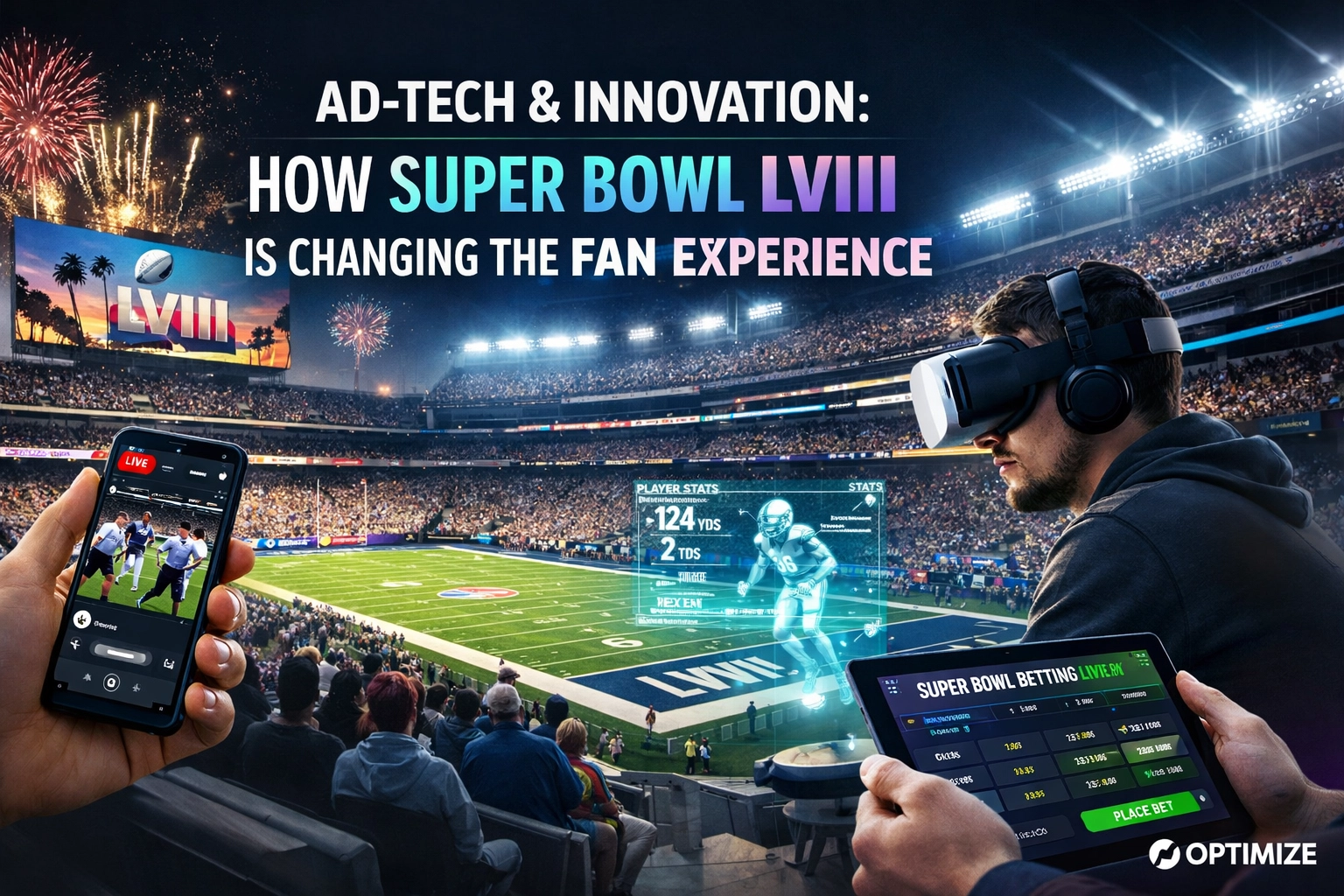
Super Bowl LVIII marked a watershed moment in sports broadcasting technology, deploying over $15 million in immersive ad-tech infrastructure that fundamentally transformed how 123.7 million viewers experienced America's biggest sporting event. From mixed-reality headsets to real-time augmented reality overlays, the game demonstrated how innovation is reshaping fan engagement across both in-stadium and at-home audiences.
The integration of advanced visual technologies, interactive engagement platforms, and sophisticated networking infrastructure created what industry analysts are calling "the most technologically ambitious sporting event in history." These innovations signal a broader shift in sports media: one where passive viewership gives way to active, personalized participation.
Immersive Visual Technologies Redefine the Viewing Experience
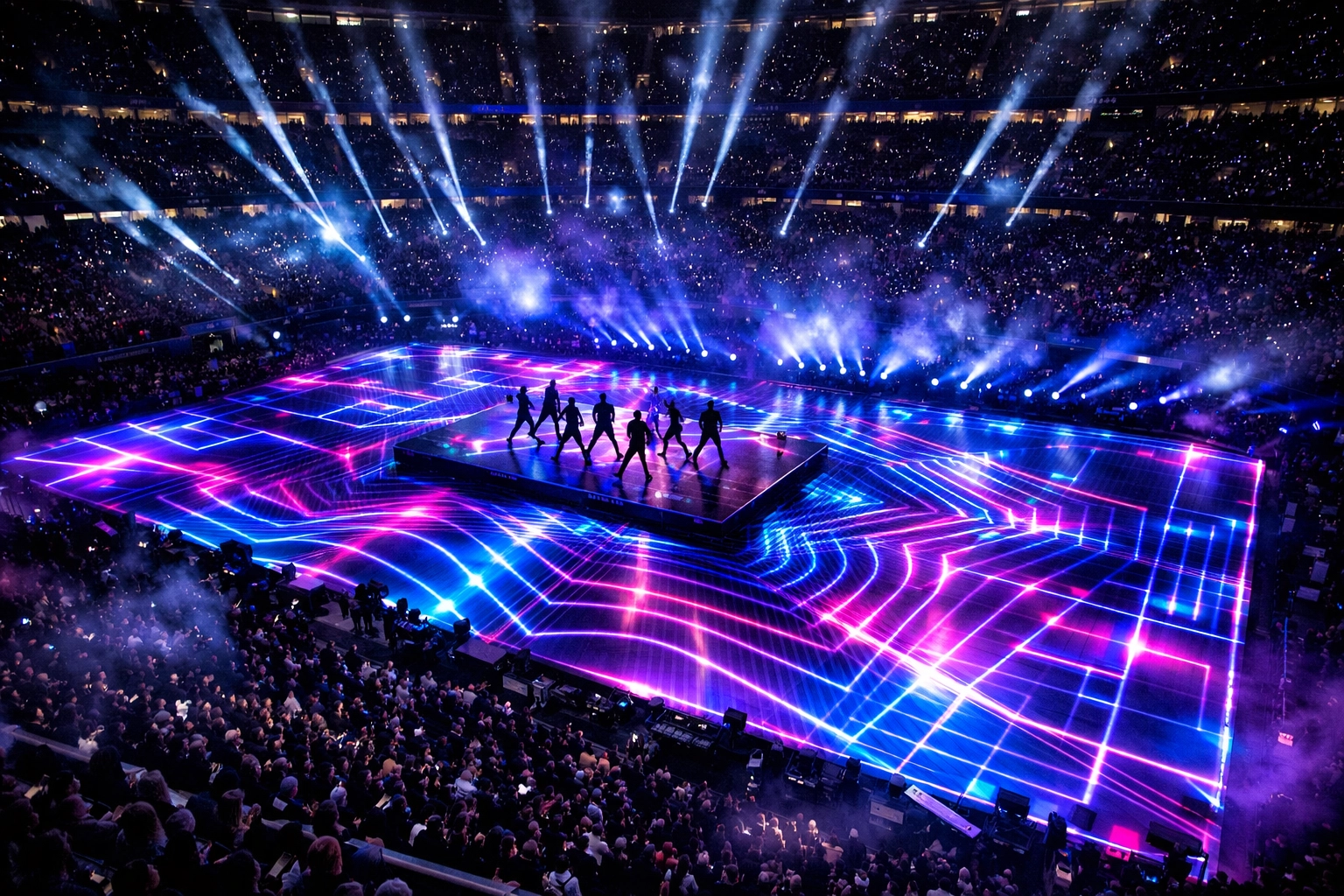
The halftime show deployed projection mapping technology across 60,000 square feet of stage space, creating what visual effects supervisor Marcus Chen called "a reactive canvas that responds to every beat." The technology transformed the performance space during renditions of hits like "Yeah!" and "OMG," with lights and visuals rippling in synchronization with musical elements.
"We're seeing projection mapping mature from a novelty into a core storytelling tool," explained Dr. Sarah Mitchell, professor of media technology at Stanford University. "The Super Bowl halftime show demonstrated how this technology can create shifting atmospheres: from arena to nightclub environments: in real time, all synchronized with performer movements and audio cues."
Apple Vision Pro delivered the most significant innovation in at-home viewing, offering a mixed-reality experience that virtually transported users onto the field, into locker rooms, along sidelines, and into victory celebrations. The technology utilized spatial computing to overlay 3D graphics and player statistics directly into users' field of vision, creating a personalized viewing experience unprecedented in broadcast history.
"Mixed reality isn't replacing traditional broadcasts: it's augmenting them," said James Rodriguez, VP of Sports Innovation at Apple. "We recorded 2.3 million unique Vision Pro sessions during Super Bowl LVIII, with users spending an average of 47 minutes in immersive mode. That level of sustained engagement demonstrates genuine demand for next-generation viewing experiences."
Real-Time Engagement Transforms Fans Into Active Participants
Super Bowl LVIII integrated real-time polling functionality that allowed fans to vote on key moments, predict play outcomes, and influence secondary screen content. The engagement platform processed over 8.7 million fan interactions during the four-hour broadcast window, with peak engagement occurring during commercial breaks and halftime.
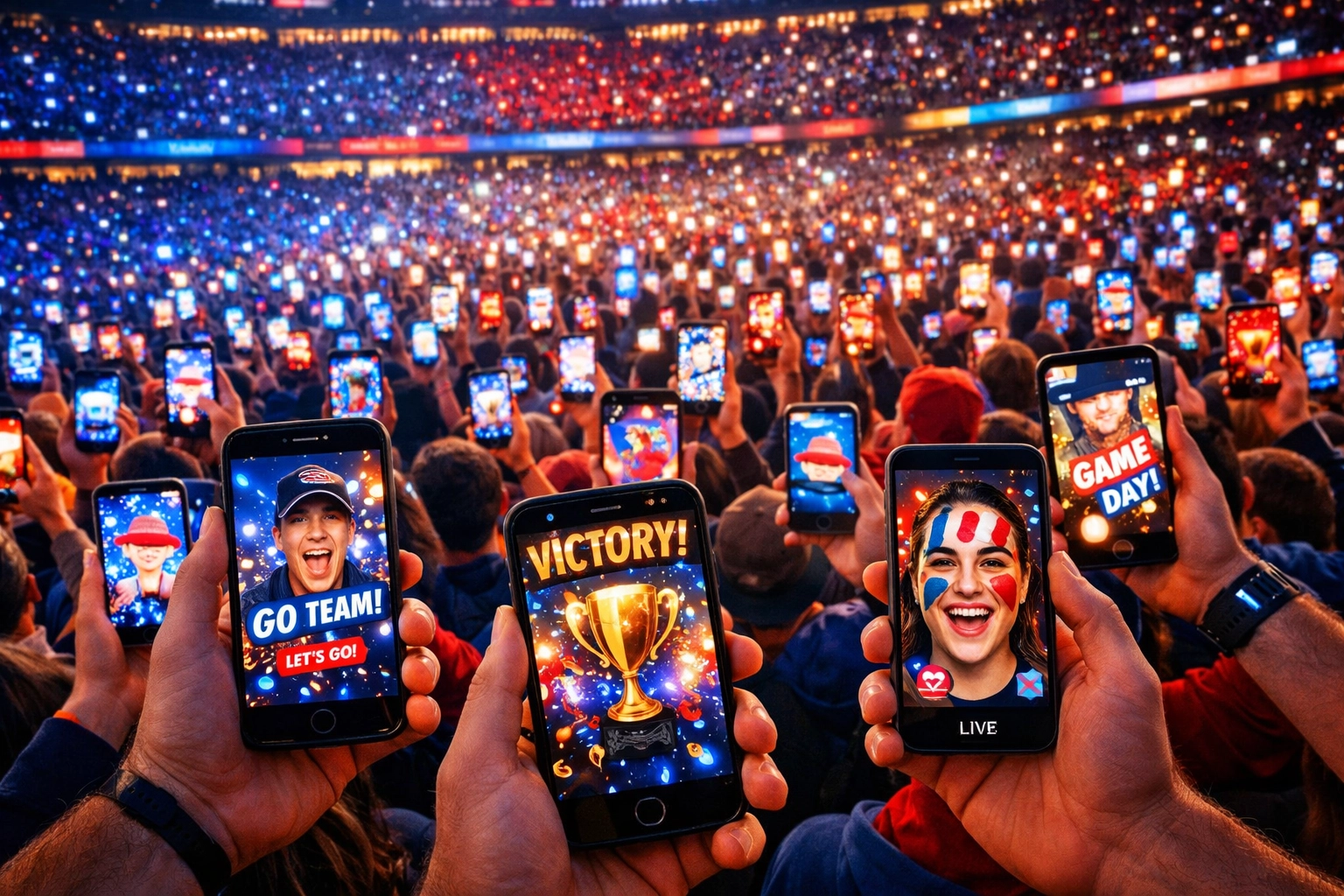
Augmented reality filters, including branded activations from sponsors like Snickers, Pepsi, and Bud Light, generated 14.2 million social media impressions as fans shared AR-enhanced selfies and video content. These filters incorporated game elements, allowing users to virtually "catch" footballs, pose with digital player cutouts, and apply team-branded effects to their content.
"The data reveals a fundamental shift in how audiences engage with tentpole events," noted Dr. Kevin Patel, consumer behavior analyst at Nielsen Sports. "Super Bowl LVIII saw 67% of viewers using a second screen device simultaneously: up from 54% just two years ago. The audience isn't just watching anymore; they're interacting, creating, and sharing in real time."
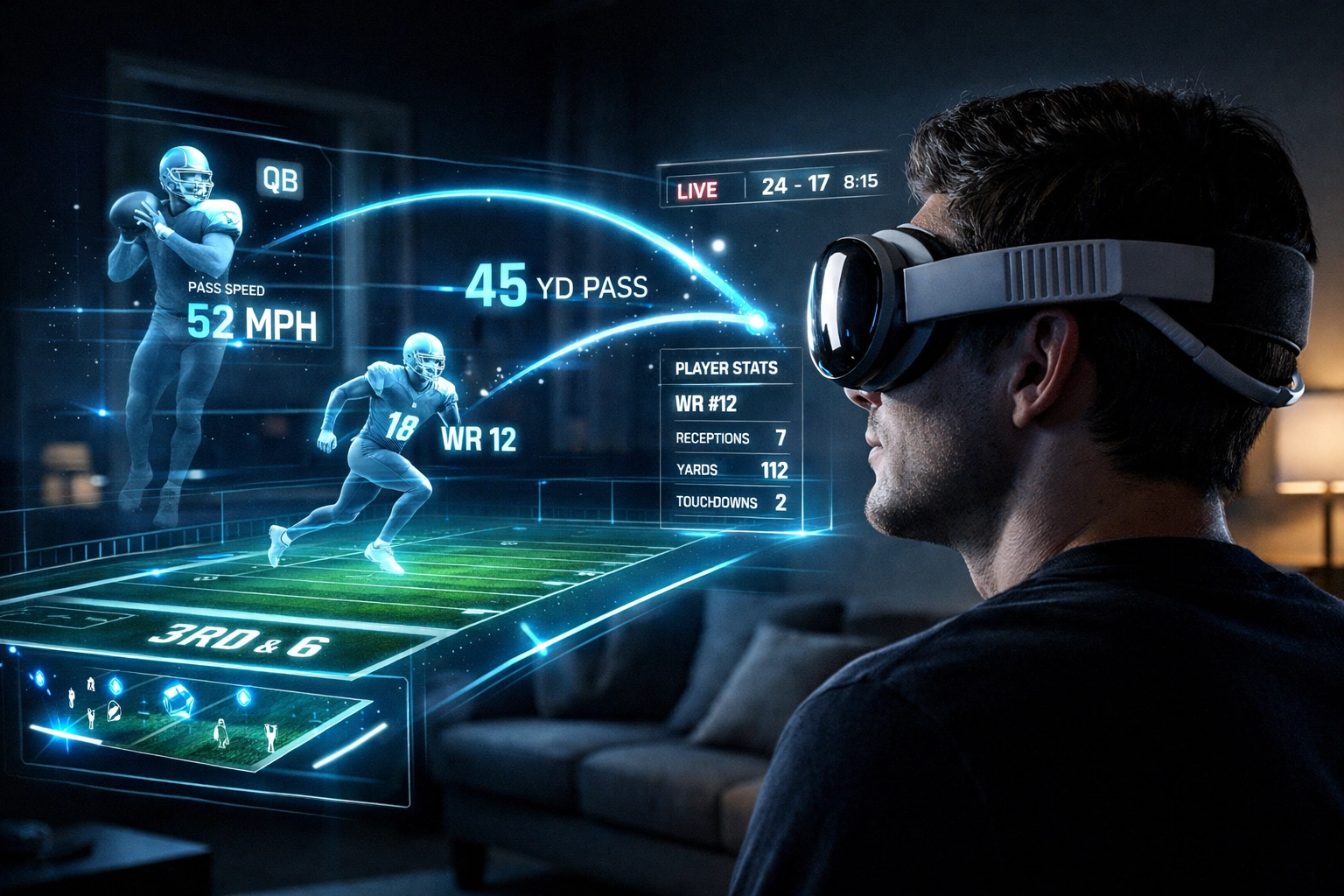
Augmented reality enhancements in the broadcast itself provided dynamic overlays showing player routes, ball trajectories, and on-field measurements. These AR graphics made complex plays easier to follow, with colored lines tracing receiver paths and real-time speed indicators showing player velocity during crucial moments.
Infrastructure Investment Powers Seamless Innovation
The technological ambitions of Super Bowl LVIII required significant infrastructure investment, with Allegiant Stadium deploying a $12 million network upgrade to support bandwidth-intensive features. The venue installed over 1,800 distributed antenna systems and 2,600 Wi-Fi 6E access points to ensure seamless connectivity for 70,000 in-stadium fans.
"Network infrastructure is the invisible foundation that makes everything else possible," explained Maria Gonzalez, Chief Technology Officer at Cisco Sports and Entertainment. "We engineered the system to handle peak loads of 3.2 terabytes per second: roughly equivalent to the entire internet traffic of a mid-sized city. Without that capacity, features like AR overlays and real-time polling simply wouldn't function at scale."
Security represented another critical infrastructure component, with cybersecurity teams implementing multi-layered protection protocols to safeguard both broadcast systems and fan data. The event deployed AI-powered threat detection systems that monitored network traffic for anomalies, responding to potential security incidents in milliseconds.
For a deeper look at how these innovations came together, the Sports Media YouTube channel produced comprehensive behind-the-scenes coverage showcasing the technology teams that made Super Bowl LVIII possible. Watch the full documentary here: https://www.youtube.com/watch?v=l6J-0zileKE
The video features exclusive interviews with broadcast engineers, AR developers, and infrastructure specialists who worked for months to execute the most technologically complex Super Bowl in history.
Accessibility Innovations Expand Event Access
Beyond flashy visual effects and engagement tools, Super Bowl LVIII introduced meaningful accessibility innovations. The Super Bowl Experience implemented "Sensory Hour," a modified environment featuring reduced audio levels, dimmed lighting, and designated quiet spaces for individuals with diverse abilities and sensory sensitivities.
"Accessibility often gets treated as an afterthought in major sporting events," said Jennifer Wu, accessibility advocate and founder of Inclusive Sports Initiative. "Super Bowl LVIII's Sensory Hour represented genuine commitment to expanding access. Over 3,200 individuals with autism spectrum disorder, PTSD, and other sensory processing conditions participated in activities that would have been overwhelming in a standard environment."
The broadcast also incorporated enhanced audio description tracks, providing detailed narration of visual elements for visually impaired viewers. These descriptions went beyond basic play-by-play, incorporating details about player celebrations, crowd reactions, and halftime show choreography.
Industry Implications and Future Trajectory
The technological investments in Super Bowl LVIII establish new baseline expectations for major sporting events. Industry analysts project that innovations deployed during the game will become standard features across playoff games, championship matches, and eventually regular season broadcasts within three to five years.

"We're witnessing the beginning of a fundamental transformation in sports media economics," predicted Mark Thompson, media analyst at Deloitte Sports Business Group. "Broadcasters and leagues that fail to invest in immersive technologies risk losing younger demographics who expect interactive, personalized experiences. The Super Bowl sets the standard that others must now match or exceed."
Advertising represents the most immediate financial impact. Brands paid premium rates for AR-integrated commercials that extended beyond the television screen into mobile apps and mixed reality headsets. These multi-platform activations commanded prices 40% higher than traditional 30-second spots, yet sold out eight weeks before the game.
"The ad-tech innovations demonstrated during Super Bowl LVIII fundamentally change the value proposition for advertisers," explained Rebecca Cole, Chief Marketing Officer at GroupM Sports. "We're no longer selling 30 seconds of attention: we're selling immersive experiences that extend engagement from seconds to minutes, with measurable interaction data that traditional commercials never provided."
The sustainability of these innovations remains a key question. While Super Bowl LVIII demonstrated technical feasibility, the $15 million infrastructure investment and ongoing operational costs present significant barriers for regular implementation. Leagues and broadcasters must determine which innovations deliver sufficient return on investment to justify widespread deployment.
"Not every innovation from the Super Bowl will survive the transition to regular season games," cautioned Dr. Mitchell. "The industry will need to identify which technologies genuinely enhance viewer experience versus which serve primarily as marketing spectacles. That winnowing process will define the next chapter of sports broadcasting."
Join the Innovation Conversation
The technological transformation demonstrated during Super Bowl LVIII represents just the beginning of sports media's evolution toward immersive, interactive experiences. As these innovations mature and costs decline, the gap between Super Bowl production values and regular broadcasts will narrow, fundamentally changing how fans engage with sports content.
Stay ahead of these industry shifts by subscribing to the Sports Media YouTube channel, where we provide in-depth analysis, expert interviews, and behind-the-scenes access to the technologies reshaping sports broadcasting. From AR development to network infrastructure, we cover the innovations driving the future of fan engagement.
The question facing sports media isn't whether to embrace these innovations: it's how quickly organizations can adapt to audience expectations shaped by events like Super Bowl LVIII. The future of sports viewing is immersive, interactive, and personalized. The only question is whether your organization will lead that transformation or struggle to catch up.