


I believe that statesmanship is exceptional leadership characterized by vision, courage, compassion, civility and effectiveness.
Considered narrowly, statesmanship relates primarily to politics and government. However, when looked at more expansively, it is equally relevant to business, law, academia, philanthropy and religion. We need statesmanship in all aspects of American society and from the leaders and institutions who influence our lives.
We even need it in sports, which is, as we know, an important feature of American economic, social and even political life.
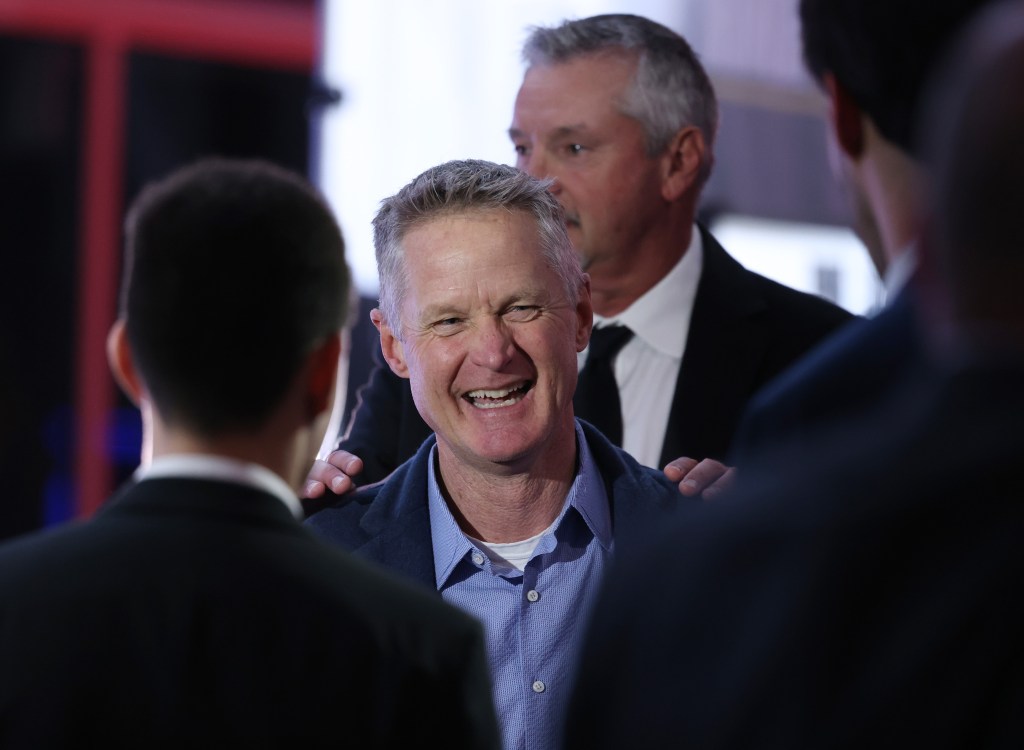
Steve Kerr, the coach of the Golden State Warriors, would resist the designation of statesman. However, his impressive work to create a culture of excellence for the Warriors has had an outsize impact that far transcends basketball arenas. Kerr’s system of sustained excellence has captured the notice, admiration, and even attempts at emulation in business and politics.
Earlier this year, The Athletic, the sports unit of The New York Times, conducted a survey of the 40 most admired leaders in sports. Kerr took the top spot.
Kerr has been devoted to basketball since he was a teenager. He played at the University of Arizona and then spent 15 years in the NBA as a player. He was a member of three Bulls championship teams and two with the San Antonio Spurs. After retiring as a player, he was the general manager of the Phoenix Suns and a broadcaster for TNT, and, since 2014, he has been the head coach of the Warriors.
Under his leadership, the Warriors reached the NBA Finals six times and won four championships. His 2015-16 Warriors team won 73 games, the most in a single season in the league’s history. He has been voted as one of the 15 best coaches in NBA history. He was the head coach of the USA men’s basketball team that won the gold medal at the 2024 Paris Olympics.
Kerr’s nine combined championships as a player and coach are deeply impressive. So is the way in which he has won. He’s created a culture of innovation and quality that has been widely lauded. It is as common to see Kerr speak at a graduate business school or corporate conference as it is on a sports podcast.
He has said that the Warriors culture is based on four values: joy, competition, mindfulness and compassion. These values infuse the Warriors organization not only during championship years. They are also apparent during years when the team has struggled, often due to player injuries.
Kerr encourages players, coaches and others in the Warriors organization to be kind and tough-minded, compassionate and competitive, rigorous and creative, consistent and innovative. He celebrates and models collaboration, preparation and transparency and urges lifelong learning. He has invited luminaries from various professions to describe their work. Author Michael Lewis, Ambassador Michael McFaul and performer Alicia Keys are among those who have shared their insights with the Warriors.
Speaking at the Aspen Ideas Festival last summer, Kerr described the challenge of creating a culture of excellence and also talked about using his public platform to weigh in on matters on which he is both passionate and knowledgeable.
One is gun violence prevention. His father, Malcolm Kerr, was a respected University of California, Los Angeles professor who was assassinated in 1984 while serving as the president of the American University in Beirut. Kerr is determined to help find solutions to the epidemic of gun violence, focusing on background checks and gun safety.
“There is plenty we can do. There is so much we can do,” he said.
Kerr brushes aside questions about a future political career. “That’s not what I do. I’m a basketball coach,” he said at the Aspen event. “We can lead from our own sphere, from our own place in the world.”
However, his speech at the 2024 Democratic National Convention in Chicago made it clear that he understands the essence of leadership — and of statesmanship.
“I believe in a certain kind of leadership,” he told the DNC delegates gathered at the United Center. “I believe that leaders must display dignity. I believe that leaders must tell the truth. I believe that leaders must be able to laugh at themselves. I believe that leaders must care for and love the people they are leading. I believe leaders must possess knowledge and expertise, but with the full awareness that none of us has all the answers.”
Kerr ended his remarks with an uplifting message for all of us.
“Now imagine what we could do with all 330 million of us playing on the same team. Not as Democrats, not as Republicans, not as libertarians, but as Americans who know the greatness of our nation doesn’t come from any one of us, but from each of us doing our part to build a more perfect union.”
John T. Shaw is director of the Paul Simon Public Policy Institute. Shaw’s columns, exclusive to the Tribune, appear the last Monday of each month. His most recent book is “The Education of a Statesman: How Global Leaders Can Repair a Fractured World.”