


By Jacob Potter | June 1st, 2026
The 2026 NBA Finals matchup is officially set, and while the on-court battle between the San Antonio Spurs and the New York Knicks promises a historic rematch of 1999, the real story lies in the league’s balance sheet. After a seven-game "heavyweight fight" in the Western Conference Finals, the San Antonio Spurs emerged victorious over the defending champion Oklahoma City Thunder. For Commissioner Adam Silver and the NBA’s global marketing arm, this result is arguably the most lucrative outcome possible for the league’s long-term commercial future.
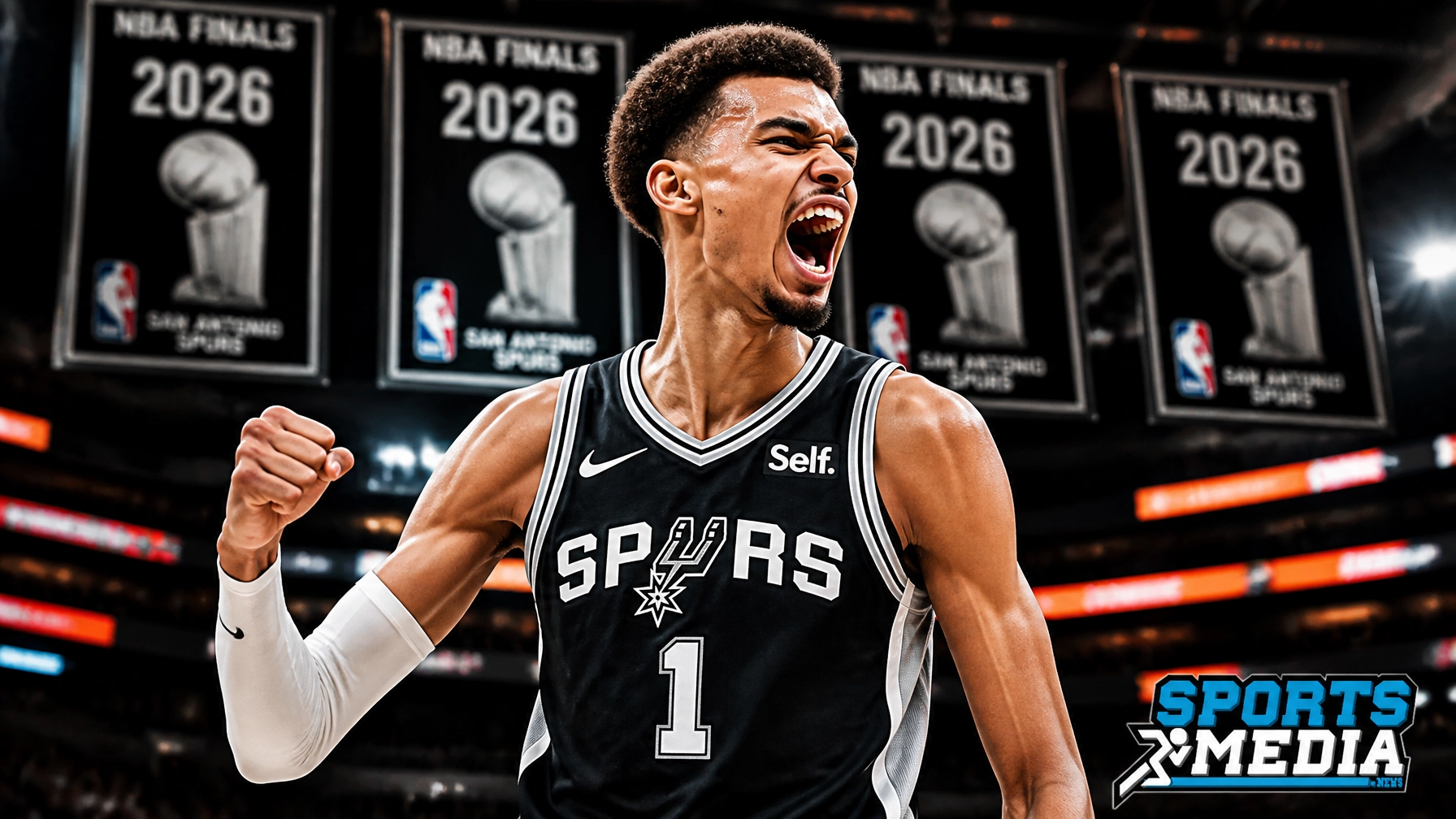
The Spurs, led by the generational phenom Victor Wembanyama, secured their spot with a 111–103 win in Game 7 on the road. This victory doesn't just mean a trip to the Finals for the first time since 2014; it represents the culmination of a decade-long international strategy. While the Oklahoma City Thunder boasted a formidable young roster, they lacked the singular, global icon status that Wembanyama carries: a factor that industry experts say is critical for the NBA’s expansion into European and Asian markets.
The ‘Wemby’ Factor: A Global Commercial Platform
At just 22 years old, Victor Wembanyama has already transitioned from a "global phenomenon" to a "global brand." During the Western Conference Finals, Wembanyama averaged 27.3 points, 10.9 rebounds, and 2.7 blocks, earning him the Earvin “Magic” Johnson Western Conference Finals MVP award. His presence in the Finals provides a marketing hook that transcends traditional basketball viewership.
"LeBron James was a massive U.S. story in 2003, whereas Wembanyama was a global one from the start," noted a senior analyst from the Sports Business Journal. This distinction is vital for the NBA’s current media rights cycle. By 2026, the league has leaned heavily into streaming and international distribution. Wembanyama’s French heritage and his unique "unicorn" skill set make him a primary driver for viewership in Europe: a market the NBA has been aggressively courting.
The commercial ecosystem, including shoe deals and social media engagement, is already treating the 7'4" center as the definitive face of the league. Unlike prior stars who grew into their roles, Wembanyama entered the league with a "global shadow" already cast over every storyline. For the NBA, having him on the game’s biggest stage is the equivalent of a multi-billion dollar advertisement for the sport's global accessibility.

Validating the Small-Market Blueprint
The Spurs’ return to the Finals also serves as a critical validation of the "small market" blueprint. In an era where player movement and big-market gravity often dominate headlines, San Antonio has consistently demonstrated how to build a championship contender through stability and international scouting. This model is particularly relevant as the league continues to navigate the complexities of team valuations and sponsorship deals, such as the recent arms race for crypto and tech sponsorships.
"The Spurs are the gold standard of international scouting," says one Eastern Conference executive. "They create an environment where international talent doesn't just arrive; it thrives." This reputation allows the Spurs to remain competitive despite the inherent disadvantages of being a smaller television market. By leveraging global talent, they’ve achieved what many franchises struggle to do: sustain success across multiple eras.
This success is built on "labor-market arbitrage": the ability to find undervalued stars abroad and integrate them into a stable, high-performance culture. From the 1989 signing of Žarko Paspalj to the drafting of Manu Ginóbili and Tony Parker, and now the Wembanyama era, the Spurs have effectively "outsourced" their dominance. This approach reduces the reliance on high-priced domestic free agents and creates a more sustainable financial model for the franchise.
The 1999 Rematch: A Narrative for the Ages
From a broadcasting perspective, a Spurs-Knicks Finals is a dream scenario. It offers a "historical echo" of the 1999 Finals, a series that marked the beginning of the Spurs' dynasty and the start of a decades-long drought for the Knicks. The 1999 series averaged roughly 18-19 million U.S. viewers per game on NBC, a number that the 2026 matchup aims to challenge through a different metric: total global reach.
While linear TV ratings have structurally shifted since the late '90s, the 2026 Finals will be measured by total audience across streaming, out-of-home viewing, and international carriage. The combination of the New York media market: the largest in the U.S.: and the international pull of Wembanyama is expected to produce record-breaking digital engagement. The Knicks, entering their first Finals in 27 years, bring a starved fan base and a massive cultural footprint that few other teams can match.
"This is the 'big market vs. historical powerhouse' storyline that networks crave," says a marketing expert. "You have the resurgent Knicks trying to end a 53-year championship drought against a newly reloaded Spurs dynasty. It’s a perfect collision of legacy and the future."

Globalization as a Growth Strategy
The Spurs' international-first approach is no longer an outlier; it has become the NBA's default playbook for expansion. As the league looks to increase its revenue through international broadcasting deals and sponsorships: similar to how European football clubs have leveraged Middle East airline partnerships: the Spurs serve as a proof of concept.
The "Larry Tour," an innovation where the Spurs took the championship trophy to players' hometowns worldwide in 2014, has since been adopted by other teams. This deepens international fandom and makes the NBA a truly global product. The presence of international stars from over 100 countries in the league today is a direct result of the scouting paths blazed by San Antonio.
This globalization also has practical implications for game-day logistics and security. As the league expands its international presence, understanding restrictions surrounding major sporting events becomes paramount for organizing global tours and neutral-site games. The Spurs' expertise in navigating international waters makes them the ideal ambassador for the NBA’s next chapter.
Seeking Legitimacy and Lasting Impacts
The 2026 NBA Finals represent more than just a championship; they represent a "passing of the torch" to a new era of global superstars. The winner of this series will be the eighth different franchise to win the title in eight years, a record run of parity that speaks to the league's overall health and competitive balance.
"Whether the Spurs win their sixth title or the Knicks end their half-century wait, the NBA has already won," says a business professor specializing in sports economics. "The league is showcasing its two most successful ways to build a brand: through the massive cultural gravity of a city like New York and the global scouting innovation of a city like San Antonio."
As Game 1 approaches on June 3rd in San Antonio, the focus will be on the court. But behind the scenes, the NBA is already preparing to capitalize on a series that validates its global mission. The "Wemby era" hasn't just arrived; it has taken over, and the business of basketball will never be the same.

Jacob Potter is a featured columnist for Sportsmedia News, specializing in NBA history and the league’s global evolution. He is the author of 'The GOAT Debate: Jordan vs LeBron' and 'Derrick Rose: A Rose That Grew from Chicago'.