


By Dan Kost
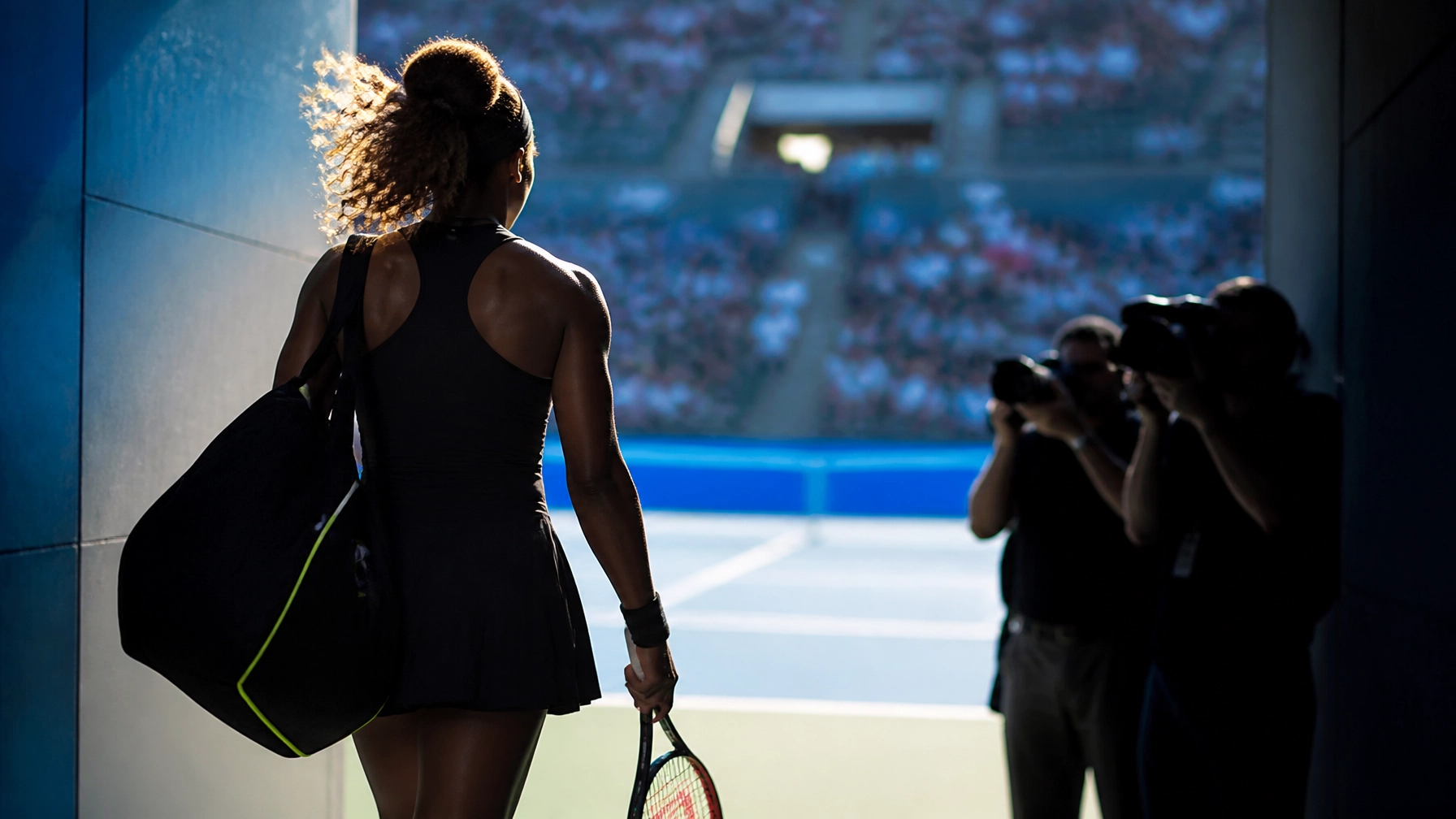
Serena Williams has not declared a full-time return to the WTA Tour, and any “comeback” to singles would remain an if/when story until a tournament entry list, wild card, or official announcement makes it real. But the mere possibility still carries real weight in sports media: because Serena is no longer just an athlete who gets covered. She is an athlete who can produce, package, and monetize coverage on her own terms.
That’s why even rumors of a Serena return can function like a live rights event: they trigger a fast-moving news cycle, drive debate across platforms, and attract brand interest well before the first ball is hit.
This article breaks down what a Serena Williams return could mean for the future of sports media: coverage cadence, athlete-owned media, brandingstrategy and brandingidentity, sponsorship structures, streaming and social distribution, and even the ProjectManagement required to cover a modern comeback without getting trapped in hype.
The “if/when” effect: how speculation can dominate the news cycle
In 2022, Williams wrote in Vogue that she was “evolving away from tennis,” deliberately avoiding the word “retirement.” That language choice matters in today’s media environment because it keeps a door open: one that headline writers, TV segments, podcast producers, and social accounts can revisit indefinitely.
A separate layer emerged in 2024 when Williams hinted publicly that she was “ready to hit some balls again,” fueling another round of comeback talk without committing to a schedule. In other words: the modern cycle doesn’t require confirmation to start running.
This is particularly relevant for outlets trying to keep audience trust. If a comeback is treated as inevitable rather than conditional, fans can feel sold a storyline that never materializes. And when the subject is Serena: one of the most-covered athletes of the last 25 years: the margin for sloppy framing gets even smaller.
Actionable takeaway for sports media orgs:
Create a simple internal standard for “return” coverage language:
- Confirmed: entry list, wild card, official statement, or tournament announcement
- Credible: quotes on the record + evidence of training block + reporting from tournament sources
- Speculative: social hints, fan theories, secondhand chatter
Use these tiers consistently across headlines, push alerts, and social.
Beyond the match: the comeback as a content franchise, not a single event
A Serena return wouldn’t just be “first match back.” It would be a multi-format, multi-week: or multi-month: content arc. The modern sports audience expects:
- behind-the-scenes training glimpses
- health and preparation context
- interviews with coaches and peers
- format experimentation (short vertical video, long-form doc, audio series, live streams)
That shift changes how editors plan. The story becomes less like covering a single game and more like covering a major entertainment release: think of it as a “tentpole” moment with multiple episodes, angles, and distribution windows.
USC Annenberg’s research on women athletes and athlete-led media describes athletes “creating, distributing and monetizing original content,” especially in digital video and podcasts: ownership that changes who controls the narrative and how it’s monetized. That trend is the backdrop to any Serena comeback conversation because it creates a scenario where the athlete may control the most compelling footage and the earliest messaging.
Actionable takeaway:
Treat major comeback scenarios as series planning, not event planning:
- assign a “story runner” editor responsible for continuity
- build a rolling content calendar (pre-return, return-week, post-return)
- pre-produce explainer assets (career timeline, injury history context, rivals)
- set a rights-and-usage checklist for social clips and embedded video
Athlete-owned media: Serena as both subject and studio

Athlete-owned media has shifted from novelty to infrastructure. USC Annenberg’s “Owning the Narrative” work shows athletes building media pathways through podcasts and digital shows, and that women athlete-hosted shows often broaden coverage beyond pure competition into life, identity, and culture: without abandoning sports.
This is where Serena becomes especially instructive. Whether or not she returns to singles, she already operates like a modern media entity: public moments are timed, language is intentional, and brand partnerships are integrated with storytelling.
For newsrooms, that creates a tension:
- fans still want independent reporting and analysis
- athletes increasingly publish “primary source” content first, on owned channels
- sponsors may follow the athlete’s distribution rather than the outlet’s
In a Serena comeback scenario, the biggest storytelling assets (training footage, family context, decision-making moments) may appear first in athlete-controlled ecosystems: forcing traditional media to either amplify, contextualize, or compete with a narrative that is already framed.
Actionable takeaway:
Build a “two-lane” coverage model:
- Lane A: Verified news (tournaments, entries, statements, schedules)
- Lane B: Narrative analysis (what owned media reveals, what it omits, why timing matters)
This keeps credibility high while still meeting audience demand for interpretation.
Brandingstrategy and brandingidentity: why Serena’s next chapter is bigger than tennis
A comeback is never only about results. It’s about identity.
Serena’s public positioning since stepping away has emphasized evolution: motherhood, business, investment, and media projects alongside athletic legacy. That mix shapes audience expectations: a return would be interpreted through lenses like longevity, elite motherhood, and entrepreneurship, not just forehands and fitness.
Academic work has examined how Williams’ public performance around motherhood created a commercially and culturally meaningful “athlete-mother” identity: an example of personal narrative intersecting with modern brand building.
For sports media, that means the coverage that performs best may not be the most technical match analysis. It may be the reporting that connects:
- elite performance and life transition
- competitive drive and risk management
- legacy debates and media power
Actionable takeaway:
If/when comeback chatter spikes, don’t over-index on match predictions. Balance it with:
- brand context (how her positioning has changed)
- media context (where the story is being told first)
- business context (sponsors, production partners, distribution)
Sponsorships: from logo placement to co-produced storytelling

The sponsorship model around a Serena return would likely reveal where the industry is heading. When athletes own platforms and audiences, sponsors don’t just buy visibility: they buy association with a narrative.
USC Annenberg’s reporting on athlete-owned media suggests that as athletes become creators and distributors, monetization follows them more directly. In practical terms, this can look like:
- “presented by” integrations tied to athlete content (not just event broadcasts)
- episodic partnerships (a training series sponsor; a behind-the-scenes sponsor)
- long-tail sponsorship (content that keeps generating views after the match)
For media outlets, that’s an opportunity and a threat:
- opportunity: partner with brands for high-quality, high-trust editorial-adjacent projects
- threat: advertisers may allocate more budget to athlete-owned channels
Actionable takeaway:
Sales teams should package comeback coverage with modern inventory:
- sponsorship across short-form social + newsletter + live blog + podcast
- clear brand safety controls (especially important in rumor cycles)
- performance reporting that goes beyond pageviews (watch time, completion, repeat visits)
Streaming and social: the return as a multi-platform “live event”

If Serena returns in any capacity, the audience won’t wait for the next-day recap. Fans will follow the story in real time: often in vertical video, clips, and commentary threads.
That changes the value of speed and format innovation:
- quick-hit explainers (What would a wild card mean? How would seeding work?)
- social-native video breakdowns (30–60 seconds, captioned, highly visual)
- real-time Q&A (live spaces, live blogs, rapid push alerts)
It also shifts the competitive set. You’re not just competing with other sports sites: you’re competing with athlete channels, creator accounts, and aggregator pages.
Actionable takeaway:
Prepare “rapid response” assets before the cycle hits:
- a comeback explainer template (editable in minutes)
- a quote bank (past statements with dates and sources)
- a distribution map (what goes to site vs. YouTube vs. TikTok vs. X)
College influence and the next generation: why this matters beyond tennis
Serena’s potential return has relevance well outside the WTA because the mechanics of comeback storytelling are now shaping how younger athletes think: especially in the era of NIL and athlete entrepreneurship.
College athletes already operate with personal brands, sponsorship activations, and social-first distribution. Watching a global icon potentially orchestrate a return: while controlling narrative and monetization: reinforces a lesson that’s becoming standard in college sports:
Elite performance is only one part of the portfolio. Brandingidentity and content strategy are career tools.
That doesn’t mean every athlete becomes a production company. But it does mean even college programs and athletic departments are learning to treat “stories” like assets: recruiting storytelling, injury returns, rivalry moments, and behind-the-scenes content calendars.
Actionable takeaway:
For outlets covering college and pro: build “through-lines” that connect the ecosystems. Explain how pro-level comeback coverage techniques mirror what NIL-era athletes are already doing.
ProjectManagement: how to cover a comeback without burning out your newsroom

Big comeback coverage isn’t just editorial: it’s operations. It’s staffing, coordination, asset management, approvals, and contingency plans. In a fast rumor cycle, it’s easy to create duplicated work, inconsistent headlines, and conflicting social posts.
This may serve as a practical test of a newsroom’s ProjectManagement maturity:
- Can editors coordinate across writers, video, social, SEO, and newsletters?
- Can the org publish quickly while keeping standards tight?
- Can you prevent “speculation creep” where uncertain stories become treated as facts?
Actionable takeaway (a simple coverage playbook):
- Name an owner (coverage lead) and a backup
- Define the confirmation bar for push alerts and headlines
- Create a living doc: timeline, key sources, link pack, status updates
- Build modular content: explainer + opinion-free analysis + business angle + legacy angle
- Schedule check-ins during spikes (morning, afternoon, post-event)
- Post-mortem after the cycle: what drove quality engagement vs. empty traffic?
What Serena’s return could signal next
If/when Serena Williams returns: whether in a limited competitive window, a doubles appearance, or a fuller schedule: the moment will be measured not only in wins and losses, but in how the story is produced and distributed.
The broader signal for sports media is clear: the next era belongs to organizations that can combine verified news, fast and flexible formats, and modern business literacy around sponsorship, creator competition, and athlete-owned platforms.
In a landscape increasingly powered by Innovation, Serena’s comeback: real or rumored: functions like a stress test. It reveals who can cover a cultural moment with accuracy, speed, context, and respect for the audience.
Sources
- USC Annenberg Center for Public Relations, How Women Athletes Are Reclaiming Their Narratives (Owning the Narrative) : https://annenberg.usc.edu/research/center-public-relations/usc-annenberg-relevance-report/how-women-athletes-are-reclaiming
- Sky Sports (2024), coverage of Serena Williams hinting at hitting balls again : https://www.skysports.com/tennis/news/12110/13140864/serena-williams-tennis-great-ready-to-hit-some-balls-again-as-she-hints-at-comeback
- ABC7 News, report on a professional tennis comeback appearance (doubles) at Queen’s Club : https://abc7news.com/post/serena-williams-announces-comeback-professional-tennis-hsbc-championship-doubles-event/19212235/