


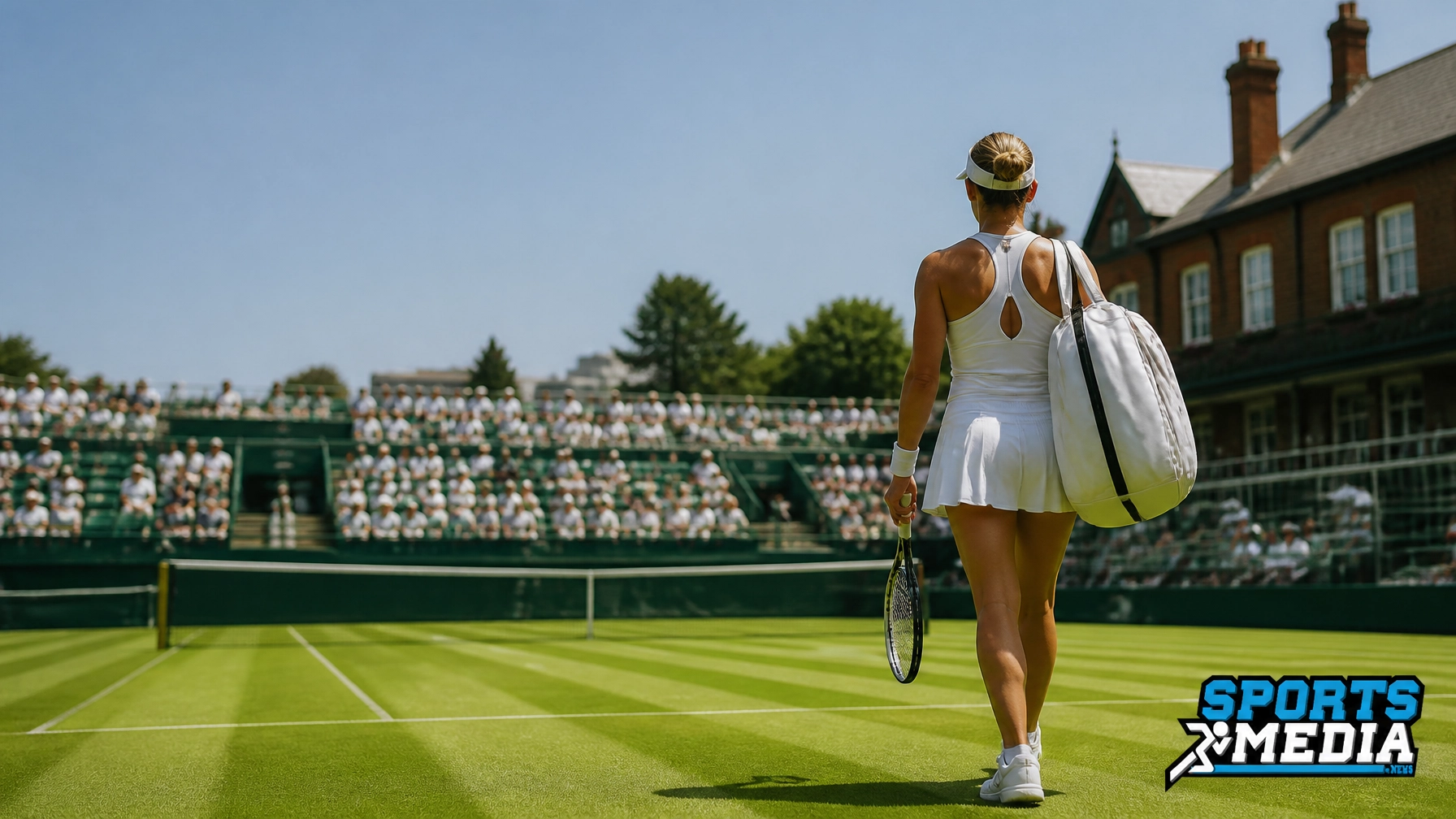
Headline: Match, Game, Set: Serena Williams announces return to professional tennis
Subheadline: Serena Williams’ reported comeback could reshape viewership, sponsorship interest, and tournament buzz ahead of Wimbledon season.
By: Carolyn Coene, Intern Journalist
Publication date: June 2nd, 2026
News lead: A four-year absence ends: at least in doubles
Serena Williams is set to return to professional tennis nearly four years after her last competitive match, with multiple outlets reporting she has accepted a wild-card entry into the doubles draw at the HSBC Championships: a WTA 500 grass-court tournament scheduled for June 8–14, 2026 at Queen’s Club in London.
The entry would mark Williams’ first sanctioned match since the 2022 U.S. Open, where she reached the third round before losing to Ajla Tomljanović in what many fans and commentators treated as a de facto farewell: though Williams did not officially announce a retirement.
While the tennis significance is obvious, the business impact is just as notable: a Williams return, even limited to doubles, tends to operate like a “ratings multiplier,” influencing ticket demand, sponsorship interest, and broader sports media programming decisions as the grass season accelerates toward Wimbledon.
External reporting (placeholder links):
- The Athletic / NYT (return news): https://www.nytimes.com/athletic/ (placeholder)
- TikTok clip (teaser video): https://www.tiktok.com/ (placeholder)
What we know: Wild card at Queen’s, partner reported as Victoria Mboko
The comeback details circulating Monday center on Queen’s Club, long known for its grass-court tradition and for serving as a key lead-in event on the Wimbledon calendar.
Key reported details:
- Event: HSBC Championships (Queen’s Club, London)
- Level: WTA 500
- Dates: June 8–14, 2026
- Entry: Wild card, doubles draw
- Reported partner: Victoria Mboko (Canada)
Williams’ social media activity helped spark the initial buzz, with a short teaser video posted ahead of official tournament communications, according to multiple reports. Tournament officials later confirmed the doubles pairing in the coverage reviewed by Sportsmedia News.
Williams’ choice to return on grass: the surface tied to several of her most visible global moments: also fits a broader pattern among star athletes: if a comeback is going to happen, it often happens on the stage most likely to amplify the story.

Background: Why the ITIA testing pool matters to eligibility
A major driver of the comeback speculation has been Williams’ reported re-entry into the International Tennis Integrity Agency (ITIA) anti-doping testing framework. Multiple reports have noted that Williams re-entered the ITIA testing pool, a procedural requirement for players seeking to return to WTA competition.
The ITIA oversees tennis’ integrity and anti-doping programs, including “whereabouts” obligations for athletes in registered testing pools. In business terms, it’s not a marketing move; it’s the compliance step that makes a return logistically possible. For fans and media, it is often interpreted as a “tell” that competitive plans are at least being considered seriously.
At the same time, the existence of compliance steps does not always guarantee a full schedule: many athletes pursue eligibility options as a form of strategic flexibility while evaluating health, motivation, and family logistics.
Career context: A resume that still moves markets
Williams’ on-court résumé remains one of the most commercially powerful in modern sports:
- 23 Grand Slam singles titles (most by any woman in the Open Era)
- 73 career singles titles
- 319 weeks ranked No. 1
- Four Olympic gold medals
- 14 Grand Slam doubles titles with sister Venus Williams
- A Career Golden Slam achieved in both singles and doubles (as widely documented across tennis records)
Even after stepping away from full-time competition, Williams stayed highly visible through business ventures, branding partnerships, and media appearances: keeping her name recognition at a level that few athletes maintain post-peak.
That’s where the sports business angle sharpens: in an attention economy, awareness is inventory. A Serena Williams match: especially in a short-format doubles setting: is premium inventory for broadcasters, streaming platforms, and sponsors looking for culturally relevant sports moments.
What it means for sports media and business: A “tentpole” effect in the grass season
Williams’ reported return is likely to have immediate ripple effects across sports news coverage cycles, rights-holder shoulder programming, and social distribution strategies. Media companies typically treat star comeback events as “tentpoles”: anchors around which entire weeks of coverage can be scheduled.
Viewership and programming: From match window to media week
Even if Williams plays a limited number of matches, the surrounding content can expand significantly: practice sightings, press conferences, behind-the-scenes segments, and opponent/partner storylines. That content is valuable not just to tennis outlets but to mainstream sports platforms looking for crossover audiences.
This may serve as a reminder of a broader trend: star-driven sports moments increasingly behave like entertainment releases, with coordinated social packaging, highlight distribution, and platform-specific cuts designed for quick consumption.

Sponsorship and branding: A short return can still be a big branding play
From a branding and brandingstrategy perspective, Williams’ return creates a concentrated window of attention where brands may attempt to “borrow equity” through association: particularly brands targeting women’s sports audiences, premium consumers, or global markets.
For tournaments and partners, the value isn’t only in ticket scans. It’s in:
- premium hospitality demand,
- sponsor activations,
- earned media,
- and a temporary lift in digital audience growth.
The issue is particularly relevant in 2026 as sports properties compete for partners amid rising rights fees and increasingly fragmented viewing habits. A universally recognizable athlete can still cut through the noise.

Innovation and distribution: Social-first moments still drive mainstream coverage
Williams’ teaser video approach fits the current reality: social platforms frequently act as the first stop for announcement momentum, even when official confirmation comes later. It’s a pattern that blends Innovation in distribution with traditional news-cycle dynamics.
The result is often a two-wave attention curve:
- the tease (speculation, debate, reposts), then
- the confirmation (booking segments, long-form interviews, sponsor tie-ins).
In practical ProjectManagement terms, newsrooms and social teams treat these situations as rapid-response events: reassigning editors, building live blogs, and prepping explainers on eligibility rules, draw formats, and historical context.
Inspiration, motivation, and the wider sports ecosystem
It’s also difficult to separate Williams’ return from the cultural effect she has had on tennis participation and athlete branding. Her continued visibility can influence everything from youth engagement to how current players narrate their careers.
While “Inspiration” and “motivation” can be overused concepts in sports marketing, Williams’ career has repeatedly functioned as a reference point for athletes and sponsors alike: especially in discussions about longevity, reinvention, and athletes as entrepreneurs.
(For U.S. audience development, that halo effect can extend into college tennis visibility as well: where major pro storylines often boost general interest and participation narratives.)
Player reactions: Osaka and Gauff weigh in as reported
The reported comeback has also drawn quick reaction from current stars, highlighting how Williams’ presence can reshape the emotional and promotional center of an event.
Naomi Osaka, according to reporting cited by international outlets, suggested Williams’ return would pull more viewers toward the sport, saying: “I think it will bring people to watch tennis, which she always does bring an audience with her.”
Coco Gauff, in comments reported during the 2026 French Open media cycle, emphasized her desire to have competed against Williams, calling it a missed opportunity and adding that it would be meaningful for the sport to see Williams back: “One of my biggest regrets was not being able to play her,” Gauff said, according to reporting. “It would be cool for this sport to have a legend back playing.”
Those comments underscore a commercial reality: when current stars amplify the moment, the return becomes a multi-generational storyline: valuable for broadcasters, sponsors, and tournament marketing teams.
What’s next: Queen’s Club first, Wimbledon questions follow
The immediate next step is straightforward: Williams is expected to appear at Queen’s Club in the doubles draw during the June 8–14 tournament window.
Beyond that, the biggest question is whether Queen’s functions as a one-off: or the beginning of a broader grass-season plan that could include Wimbledon. Williams is a seven-time Wimbledon singles champion and has also won six Wimbledon doubles titles with Venus, making any hint of a Wimbledon appearance a major global story.
Tournament organizers have not publicly detailed additional events beyond Queen’s in the reporting available to Sportsmedia News, and Williams has not formally outlined a wider schedule. Still, in modern sports media terms, even the possibility of a Wimbledon follow-up can sustain coverage for weeks.

As the grass season continues, the business indicators to watch will be tangible: ticket resale patterns, sponsor activations, broadcaster programming shifts, and the intensity of day-by-day coverage. If Williams takes the court, the event may become a short-term case study in how a single athlete can still command the sports attention marketplace in 2026.
By: Carolyn Coene, Intern Journalist
Publication Date: June 2nd, 2026