


By Jacob Potter | June 5, 2026
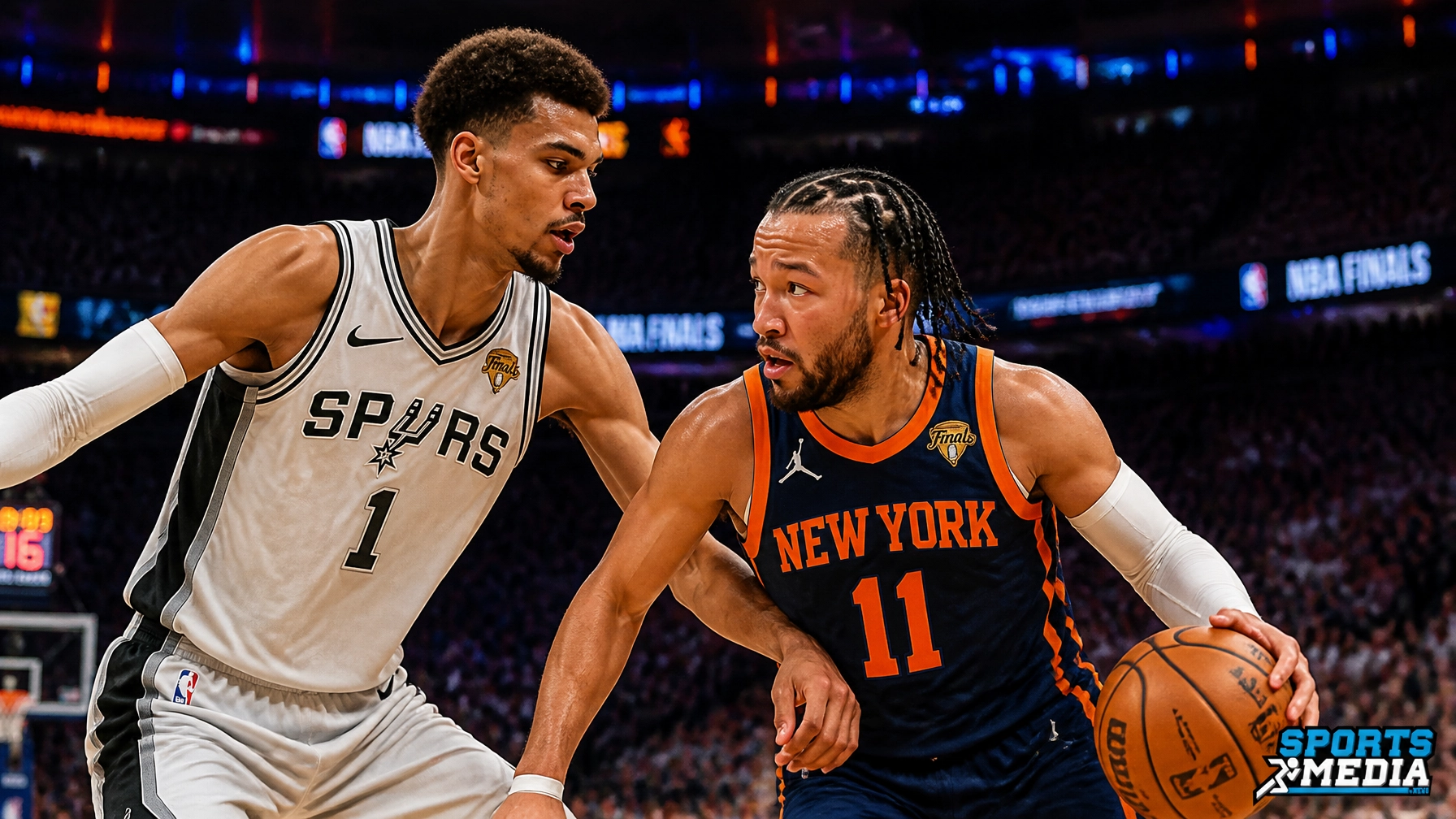
The margin for error in the NBA Finals is famously thin, but for the San Antonio Spurs, it may have just evaporated. Following a 105–95 loss to the New York Knicks in Game 1 at Madison Square Garden, the Spurs find themselves staring at a pivotal Game 2 that history suggests will decide their championship fate.
The statistics are unforgiving for teams that fall behind early in the series. Since the NBA moved to the 2-2-1-1-1 format, teams that take a 2–0 lead in the Finals have gone on to win the championship 86% of the time. For a young Spurs roster led by Victor Wembanyama, the pressure of Game 2 is not just about evening the series; it is about avoiding a psychological and statistical "arms race" that they are currently losing.
The insurmountable 0–2 hole
In the high-stakes environment of June basketball, the difference between 1–1 and 0–2 is an ocean. A win in Game 2 allows San Antonio to return to the Frost Bank Center with home-court advantage effectively reclaimed. A loss, however, would force them to win four of the next five games against a Knicks squad that has now secured 12 consecutive playoff victories.
"When you are playing a team with as much momentum as the Knicks have right now, you cannot afford to let the belief in their locker room solidify," says Dr. Elena Vance, a sports psychology consultant and professor of athletic performance. "A 2–0 lead isn't just a lead in the standings; it’s a mental barrier for the opponent. For the Spurs, Game 2 is the line in the sand. If they cross it with a loss, the weight of the deficit often becomes more taxing than the actual physical play on the court."
The issue is particularly relevant given the Knicks' current trajectory. Jalen Brunson's historic run has turned the Garden into a fortress, and the Spurs' ability to respond in Game 2 will determine if this series is a competitive back-and-forth or a coronation for New York.

Seeking legitimacy: The Wembanyama efficiency gap
The most glaring issue from Game 1 was the uncharacteristic inefficiency of Victor Wembanyama. While the French superstar finished with 26 points and 12 rebounds, he did so on a staggering 6-of-21 shooting performance. It was a physical, grueling Finals debut where the Knicks' frontline, led by Karl-Anthony Towns and OG Anunoby, successfully pushed Wembanyama away from his preferred spots.
"The Knicks played a very specific brand of 'body-on-body' defense," explains Marcus Thorne, a veteran NBA scout and former lead assistant coach. "They weren't just contesting shots; they were disrupting his rhythm before the catch. For the Spurs to win Game 2, they have to find ways to get Victor downhill or in transition where he isn't fighting a set defense on every possession. You cannot expect to win a championship when your primary option is shooting under 30% from the field."
The tactical adjustment for San Antonio must involve better screening and more creative off-ball movement for Wembanyama. In Game 1, the Spurs often stagnated, watching their 7-foot-4 centerpiece battle for post position while the Knicks sent timely doubles. To reclaim the series, the Spurs must transition from a reliance on individual brilliance to a more fluid, team-oriented offensive set that forces New York's defenders to make difficult choices.
The Brunson problem and fourth-quarter collapses
While Wembanyama struggled with efficiency, Jalen Brunson flourished. The Knicks’ captain dropped 30 points, including 13 in a decisive fourth quarter that saw New York erase a 14-point second-half deficit. The Spurs’ inability to contain Brunson in high-leverage moments has become the central narrative of the series’ opening act.
San Antonio’s defense, anchored by Stephon Castle and Jeremy Sochan, was elite for the first 30 minutes of Game 1, holding the Knicks to just 19 points in the opening quarter. However, as the intensity rose, the Spurs' young perimeter defenders found themselves in foul trouble or trailing Brunson around high-ball screens.
"Jalen Brunson is an expert at finding the 'crack' in a defense," Thorne notes. "He waits for you to make one mistake: one over-rotation or one missed assignment: and he punishes it. The Spurs have to decide if they are going to live with him scoring 30 or if they are going to take the ball out of his hands and dare the Knicks' secondary shooters like Josh Hart to beat them."
The fourth-quarter disparity was stark. The Knicks outscored the Spurs 29–19 in the final frame, a trend that cannot continue if San Antonio hopes to hoist the Larry O'Brien trophy. For the Spurs, the psychological necessity of holding a lead in Game 2 is paramount. Another second-half collapse would not only put them down 0–2 but would likely shatter the confidence of a roster that is still learning how to win on the game's biggest stage.

Lasting impacts of Game 2 tactical shifts
Beyond the stars, the Spurs' bench production and role-player consistency will be under the microscope. Julian Champagnie and Dylan Harper provided 16 points each in Game 1, but their impact faded as the Knicks increased their defensive pressure in the second half.
The issue of game security and the environment surrounding these major events is also a factor. With the eyes of the world on New York and San Antonio, the logistical pressure is immense. Industry experts note that major sporting events of this scale often involve complex security restrictions, reflecting the high-stakes nature of the Finals not just on the court, but in the arena's operations.
"At the end of the day, Game 2 is about adjustments," says former NBA executive Robert Sterling. "In the playoffs, you don't play the same game twice. The Spurs showed in the first half of Game 1 that they are the more talented team when things are clicking. The question is whether they have the veteran poise to execute those adjustments over 48 minutes instead of 24. If they can’t find that poise now, they won't find it when they're down 0–2."
The Spurs must also address the rebounding battle. Despite Josh Hart’s size disadvantage, he managed to grab 15 rebounds, fueling the Knicks' second-chance opportunities. For a Spurs team that prides itself on length and athleticism, being outrebounded by a guard is a statistical anomaly that Coach Gregg Popovich will surely highlight in film sessions.
Expert predictions: The road ahead
As the teams prepare for the tip-off of Game 2, the sentiment among analysts is split, but the consensus on the importance of the game is unanimous.
"This is the 'must-win' of all must-wins," says Thorne. "If San Antonio wins, they have all the momentum going back to Texas. They will have proven they can win in the most hostile environment in sports. If they lose, I suspect we are looking at a five-game series ending in a Knicks parade. The Spurs are playing for their season on Friday night."
The Spurs have the tools to win. Wembanyama is unlikely to shoot 6-of-21 again, and the defensive blueprint that worked in the first half of Game 1 is still viable. However, the execution must be flawless. In a series that feels like a collision of two different eras: the traditional grit of the Knicks and the futuristic potential of the Spurs: Game 2 will serve as the ultimate litmus test for Wembanyama’s supporting cast.
Whether it is through a shift in defensive coverage on Brunson or a concerted effort to win the "dirty work" battles on the glass, San Antonio must find a way to escape New York with a split. If they do, the 2026 NBA Finals becomes a brand-new series. If they don't, they may find themselves as a mere footnote in the Knicks' historic 2026 campaign.
