


By Mark Ricci | June 8th, 2026
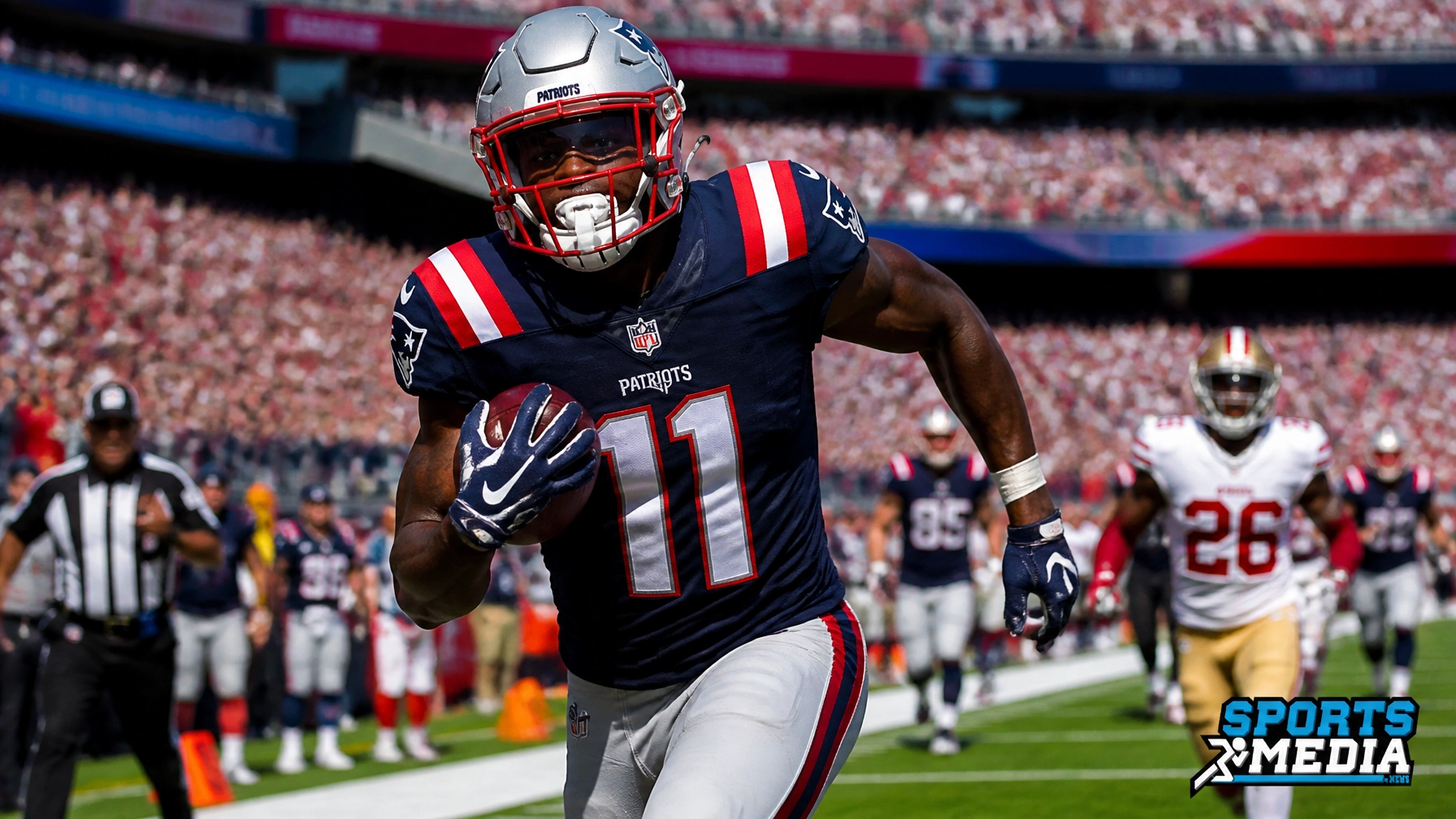
The Philadelphia Eagles’ trade of star wide receiver A.J. Brown to the New England Patriots stands as one of the most consequential moves of the 2026 NFL offseason. After months of speculation regarding the star's contract and Philadelphia's tightening cap space, the deal finally materialized following the critical June 1 deadline, instantly reshaping the competitive landscape of the AFC and NFC alike.
By sending one of the league’s most dynamic and physically dominant receivers to a Patriots team building around young quarterback Drake Maye, New England has made an immediate statement about their intent to compete. Conversely, the Eagles have signaled a strategic pivot, choosing long-term financial flexibility and future draft capital over the short-term benefit of keeping a foundational offensive weapon.
Seeking Legitimacy: The Patriots’ Offensive Revolution
For the New England Patriots, the acquisition of A.J. Brown is more than a roster upgrade; it is a declaration of faith in Drake Maye. Since being drafted, Maye has shown flashes of brilliance but often lacked the elite perimeter threat necessary to dictate defensive alignments. Brown, a three-time Pro Bowler, provides exactly that.
"A.J. Brown is more than a high-volume target; he is a matchup problem who changes defensive game plans," says Marcus Thorne, a senior offensive consultant and former NFL scout. "New England is adding a true top receiver who can win outside, command extra coverage, and create easier throws for the rest of the offense. For a young quarterback like Maye, that security blanket is invaluable."
The trade immediately raises the ceiling of New England’s passing game. Brown gives Maye a legitimate star target who can excel on high-leverage third downs, dominate in the red zone, and win contested catches down the field. His presence forces opposing defenses to abandon the conservative, short-throw-limiting schemes they previously employed against the Patriots. With Brown on the perimeter, New England can now attack vertically and win one-on-one battles, fundamentally changing the geometry of the field for their offensive coordinator.

Financial Maneuvering: The Eagles’ Post-June 1 Strategy
For the Eagles, the decision to part with Brown was as much a product of accounting as it was of football strategy. The timing of the trade: occurring after June 1: was the linchpin of the entire deal. Under NFL salary cap rules, trading a player after this date allows a team to split the dead-money charge across two seasons rather than absorbing the full blow in a single year.
Specifically, by waiting until June 8th to finalize the paperwork, Philadelphia limited its 2026 dead-money hit to approximately $16.3 million. Had they moved him before the June 1 window, the Eagles would have faced a staggering $43 million cap charge in 2026 alone: a figure that would have crippled their ability to sign depth or navigate the regular season.
"This move is about the next three years of the Philadelphia Eagles' roster construction," notes Dr. Elena Vance, a professor of sports economics. "By moving Brown now, they avoid over $113 million in cash obligations over the next four years. While they lose an elite player today, they gain the ability to extend younger core pieces and keep their competitive window open longer."
The return for Philadelphia is also forward-looking. The Eagles received a 2028 first-round pick and a 2027 fifth-round pick. While these assets don't help Jalen Hurts in the upcoming season, they provide General Manager Howie Roseman with the "ammunition" he traditionally uses to navigate the draft board or facilitate future blockbuster acquisitions.

Internal Development and Tactical Shifting in Philadelphia
The departure of Brown creates a massive void in the Eagles’ offensive identity. His size, strength, and remarkable consistency made him a centerpiece of their aerial attack. Without him, the Eagles must now lean on a combination of internal development and perhaps a broader shift in how their offense is structured.
DeVonta Smith is expected to transition into the clear No. 1 role, but the depth behind him remains a concern for many analysts. The Eagles may choose to shift toward a more run-heavy approach or look to the remaining free-agent market to find a "bridge" receiver to mitigate the loss.
"Philadelphia loses a major part of its offensive identity with Brown gone," says Thorne. "They now have to lean on internal growth or another addition. It is a calculated reset, but one that puts immense pressure on the remaining coaching staff to find ways to replicate Brown's 1,200-yard-per-season production."
The Wide Receiver "Arms Race": League-Wide Implications
Around the NFL, this trade is being viewed as the latest salvo in a wide receiver "arms race." Elite receivers are increasingly being treated as major trade assets, similar to top-tier pass rushers or cornerbacks. Teams are proving more willing than ever to move stars when the contract, timing, and roster direction align.
The Patriots’ willingness to inherit Brown's contract: a three-year, $96 million extension set to begin in 2027: highlights the premium placed on veteran talent in today's league. For New England, the risk of the $84 million in guarantees is outweighed by the immediate necessity of supporting their franchise quarterback.
"If Brown hits quickly in New England, the Patriots could become a much more dangerous team faster than anyone expected," says Thorne. "The deal fits a broader trend: rebuilding teams are willing to pay a premium in both draft capital and salary to give their young quarterbacks a chance to succeed."
Lasting Impacts and Future Outlook
As the dust settles on this blockbuster move, both franchises find themselves at a crossroads. For the Patriots, the success of the 2026 season: and perhaps the next four: now hinges on the chemistry between Maye and Brown. The veteran receiver will be 29 years old at the start of the season, entering the late prime of a career that has already seen him dominate two different divisions.
For the Eagles, the focus shifts to the 2028 draft and the cap space they have successfully preserved. It is a gamble on the philosophy that a balanced, deep roster is more sustainable than one top-heavy with massive veteran contracts.
Either way, this trade has fundamentally changed the outlook for both franchises. Whether it is viewed as a brilliant heist by the Patriots or a masterclass in asset management by the Eagles will likely be determined by the final scores of the 2026 season.

Mark Ricci is a senior sports business analyst for Sportsmedia News. Covering league dynamics, event analytics, and industry trends, Mark provides in-depth insights into the intersection of athlete performance and sports commerce.