


By Mark Ricci | June 17, 2026
UFC and White House join forces for an unprecedented MMA spectacle on the South Lawn, marking 250 years of U.S. independence.
On June 14, 2026, the White House South Lawn was transformed into an unlikely arena for one of the most talked-about sporting events in recent memory: UFC Freedom 250. This seven-bout mixed martial arts card was staged not just as a standard fight night, but as a central pillar of the America 250 celebrations, commemorating the 250th anniversary of U.S. independence. The event, which coincided with President Donald Trump’s 80th birthday, marked the first time in history that official UFC fights were sanctioned and held on the grounds of 1600 Pennsylvania Avenue.
The business implications of the evening are as significant as the athletic results. With a production cost exceeding $60 million, the event represents a massive strategic pivot for TKO Group Holdings, the parent company of UFC. Analysts suggest that while the event may lose roughly $30 million on its immediate P&L, the long-term marketing value and global brand equity generated by the spectacle are nearly impossible to quantify. "This is arguably the greatest earned marketing tool in the history of sports," noted one senior sports business analyst following the broadcast.
A Historic Setting
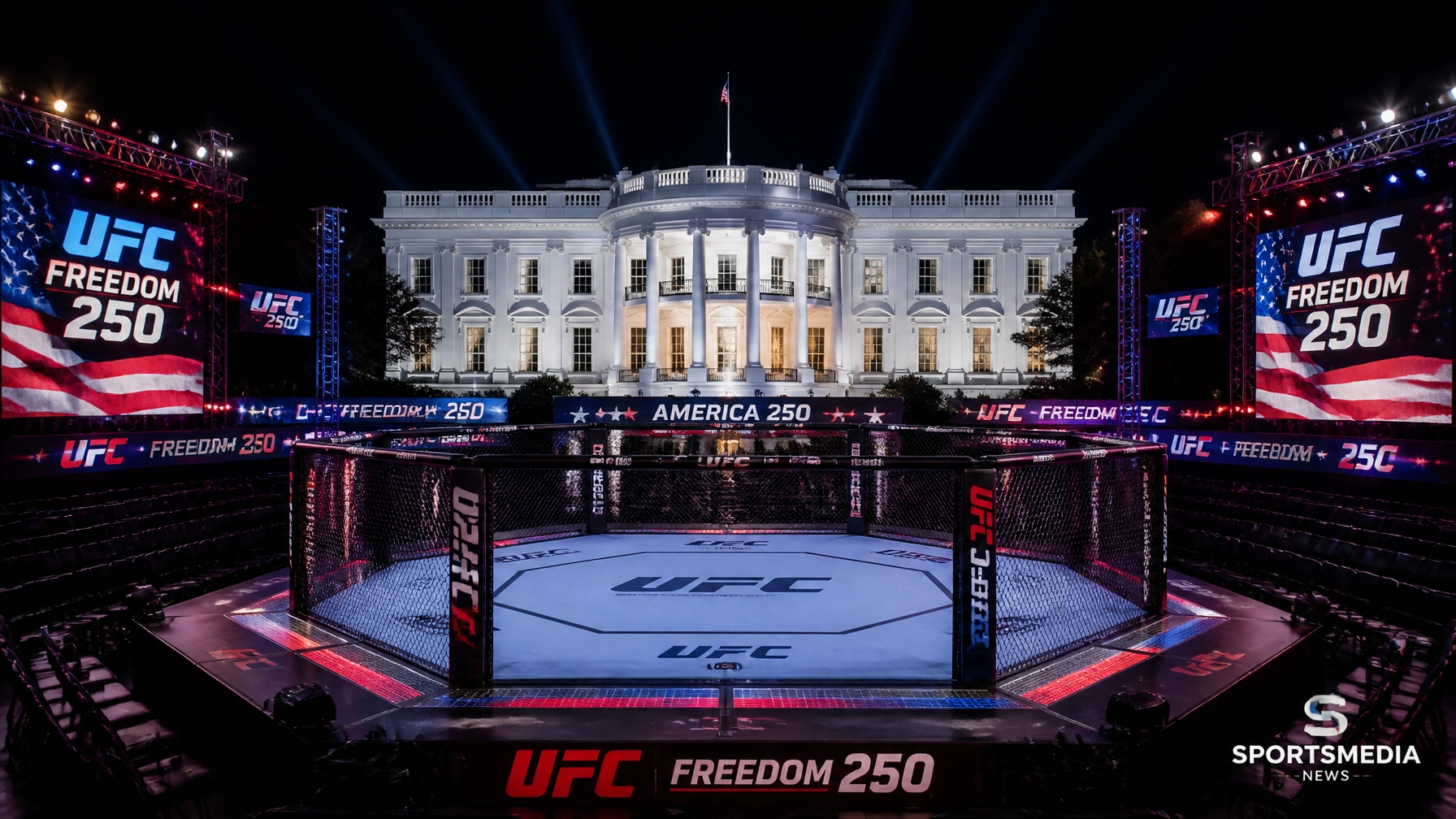
Organizers spared no expense in converting the South Lawn into a professional-grade UFC venue. The setup featured a regulation-size Octagon, sophisticated broadcast lighting, and custom walkout ramps, all positioned against the backdrop of the illuminated North Portico. The juxtaposition of the gritty, high-intensity sport of MMA against the neoclassical elegance of the White House created a visual that saturated global media outlets within minutes of the opening bell.

Admission to the South Lawn was strictly invitation-only, limited to just over 4,000 guests. This elite crowd was composed largely of active-duty military personnel, senior government officials, and high-level business executives. However, the event’s reach extended far beyond the White House fence. An estimated 80,000 to 85,000 fans gathered on the nearby Ellipse and surrounding areas for a free outdoor watch party, bringing the total in-person attendance within the immediate complex into the six figures.
The logistics of such an event were daunting. Security and infrastructure costs alone accounted for a significant portion of the $60 million budget. Temporary seating structures were engineered to protect the historic lawn, while professional broadcast equipment was integrated into the site without disrupting the permanent grounds. Despite early reports of strong winds and the threat of rain, the card proceeded as scheduled, culminating in the early hours of Monday morning and cementing its place as a centerpiece of the broader America 250 program.
The Card and Main Event
UFC Freedom 250 was officially promoted as a premier championship event, featuring two title bouts that lived up to the massive hype. The main attraction was a lightweight title unification fight between the Georgian-Spanish champion Ilia Topuria and the American contender Justin Gaethje.
In a result that has been described as a major upset and a career-defining moment, Justin Gaethje stopped the previously undefeated Topuria via fourth-round TKO. The fight was a technical and brutal display of endurance, with Topuria’s corner eventually halting the bout on the stool before the start of the fifth round. Gaethje, who entered the Octagon as the underdog, solidified his status as the undisputed UFC lightweight champion under the watchful eyes of President Trump and UFC CEO Dana White, who were both seated cageside.

The co-main event saw Ciryl Gane defeat Alex Pereira to capture the interim heavyweight title. The card was noted for its high finish rate and multiple upsets, which served to keep the high-energy crowd engaged throughout the night. For Gaethje, the victory on such a symbolic stage represents the pinnacle of his career. "To win the belt here, on this night, is something I can't even put into words," Gaethje said in his post-fight interview. The team finished its postseason-style buildup with a dominant performance that underscored the high level of competition within the UFC's lightweight division.
Politics, Spectacle, and America 250
The event quickly became a flashpoint for both political and cultural commentary. UFC Freedom 250 was billed by the White House and the UFC as a patriotic celebration of the American spirit, specifically tied to the semiquincentennial. However, the timing: coinciding with the President's 80th birthday and Flag Day: drew inevitable comparisons to political rallies.
Dana White, who has a long-standing relationship with President Trump, framed the card as a historic "thank you" to the country rather than a partisan event. "This isn't about politics; it's about the biggest sport in the world celebrating the greatest country in the world," White stated during the pre-fight press conference. This strategy of leveraging sports for brand myth-making is not new, but the scale of the White House South Lawn activation set a new precedent.
The business side of the event was equally compelling. Legal challenges seeking to block the commercial spectacle at the seat of the executive branch were filed by various groups but ultimately rejected by federal courts. The courts cited the projected economic impact and the event’s integration into the official America 250 programming as justifications for allowing it to proceed. For the UFC, the event served as a high-stakes play for "soft power," aligning the brand with national identity and providing unparalleled access to policymakers and high-net-worth donors.
Broadcast and Commercial Partners
UFC Freedom 250 was a made-for-TV spectacle designed to maximize domestic and international reach. The event streamed in the United States on Paramount+ and was also carried by CBS, ensuring that the "White House Fight Night" reached a massive national audience. The broadcast drew an estimated 5.9 million viewers, making it one of the most-watched UFC events in recent history, rivaling the viewership numbers typically seen in major league championships like the Stanley Cup.

The commercial scale of the production was reinforced by the presence of major corporate partners. Brands such as Crypto.com and Ram were prominently featured as presenting sponsors, with their logos appearing on the Octagon mat and throughout the broadcast. The inclusion of crypto-related sponsorships continues a trend of these firms seeking high-visibility sports deals to achieve mass adoption. Furthermore, the on-site presence of beverage sponsors like Bud Light highlighted the "standard" UFC production value being transplanted into a "non-standard" and highly symbolic public space.
The strategic decision by TKO Group to absorb a significant financial loss for this event highlights the shift toward treating major sports contests as global advertising campaigns. By partnering with the White House for America’s 250th birthday, the UFC secured impressions that far exceed the value of a traditional media buy.
Legacy of UFC Freedom 250
Whether viewed as a masterstroke of marketing or a controversial blurring of lines, UFC Freedom 250 is already being cited as a watershed moment for the intersection of sports, politics, and national branding. It has fundamentally altered the expectations for how major sports leagues can interact with government entities and utilize iconic national landmarks for commercial purposes.

Supporters point to the event’s high production value and the celebratory atmosphere as a successful model for national commemoration. "This is the future of eventized sports," noted one marketing executive. "You take a global property and place it in a location where it simply shouldn't be, and you create a moment that is impossible to ignore."
Critics, however, remain skeptical of the optics of hosting a commercial combat sports event at the White House. Regardless of the viewpoint, the data is clear: the event achieved historic viewership and generated billions of global social media impressions. As the dust settles on the South Lawn, the legacy of UFC Freedom 250 will likely serve as a case study for future sports business leaders and cultural analysts alike, proving that in the modern era, the Octagon knows no bounds.
Mark Ricci is a senior sports business analyst for Sportsmedia News. Covering league dynamics, event analytics, and industry trends, Mark provides in-depth insights into the intersection of athlete performance and sports commerce.