


By Jacob Potter
June 18th, 2026
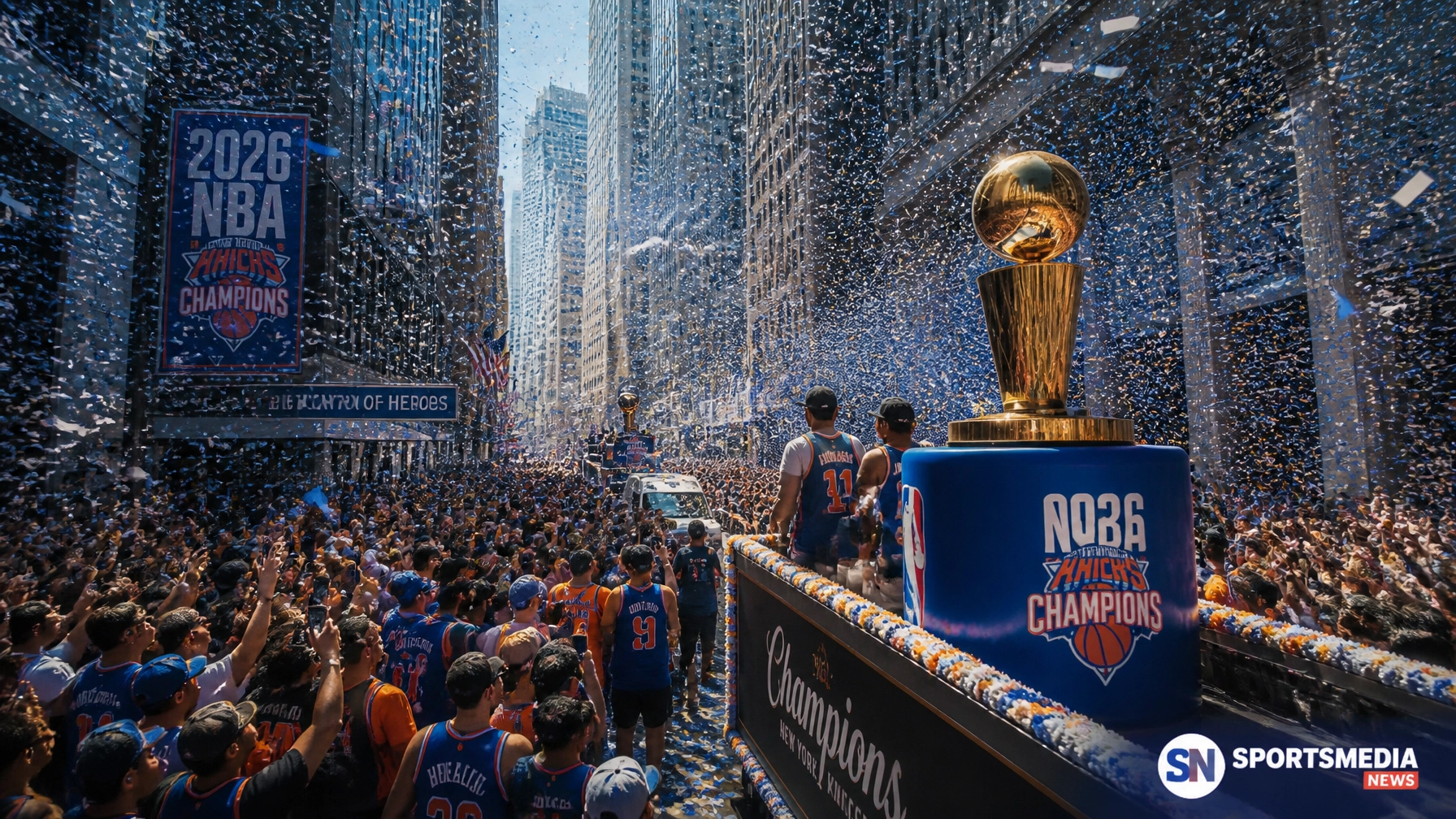
The air in Lower Manhattan was thick with more than just humidity on Thursday; it was heavy with the weight of millions of strips of recycled paper and the exhaled relief of a city that had waited fifty-three years for this moment. As the New York Knicks’ championship float navigated the narrow, skyscraper-lined corridor of Broadway, the "Canyon of Heroes" reclaimed its title as the ultimate stage for sports marketing and civic branding.
For the Knicks, the 2026 NBA championship is more than a sporting achievement; it is a transformative commercial event. Beyond the trophy and the rings lies a masterclass in brand revitalization that has turned a historically scrutinized franchise into the world’s most valuable sports property.
A massive economic windfall
The direct financial impact of the Knicks’ championship run and the ensuing parade has surpassed even the most optimistic projections from City Hall. According to internal reports and city economic data, the 2026 postseason generated approximately $465 million in total economic activity for New York City.
This figure includes a concentrated one-day boost from the ticker-tape parade, which saw hundreds of thousands of fans descend upon Lower Manhattan. "This Knicks championship parade is essentially a one-day stimulus package for the local economy," noted one city official during a morning briefing. Bars, cafes, and street-level retailers along the parade route reported record-breaking revenue, with some businesses seeing a 400% increase in daily sales compared to a standard Thursday in June.
The surge in spending wasn't limited to the parade route. Hotel occupancy rates in Midtown and Lower Manhattan reached 98%, driven by an influx of international fans and domestic tourists who traveled to witness the historic celebration. "Every fan lining the Canyon of Heroes represents spending in our bars, restaurants, and shops," said a representative from the Downtown Alliance. "But they also represent millions of viewers around the world seeing New York at its absolute best."

The global billboard: Branding NYC
While the immediate cash flow is substantial, the long-term value of the parade lies in its role as a global advertisement for New York City. The Canyon of Heroes carries over a century of symbolic capital, having hosted celebrations for astronauts, world leaders, and legendary athletes. By placing the 2026 Knicks in this lineage, the city is projecting a narrative of resilience and cultural dominance.
Industry experts refer to this as "earned media." The global coverage of the parade: spanning social media feeds, international news broadcasts, and live streams: generates exposure that would cost hundreds of millions of dollars to purchase through traditional advertising channels. The sight of Jalen Brunson and the Knicks roster showered in ticker tape against the backdrop of the One World Trade Center serves as a powerful visual metaphor for a city that remains the undisputed capital of the basketball world.
"Ticker-tape parades have always been about more than just confetti; they are the mechanism by which New York turns individual victories into a shared story about our identity," says a marketing strategist specializing in sports branding. This shared story is particularly valuable for the city’s tourism sector, which continues to leverage these high-profile events to signal that New York is open, vibrant, and thriving.
Institutional resurgence and the "Knicks Brand"
For the Knicks franchise, the 2026 title represents the final step in a decade-long journey toward institutional legitimacy. For years, the team's brand was associated with missed opportunities and front-office instability. Today, it is synonymous with excellence and massive commercial upside.
The championship has cemented the Knicks not just as a local basketball team, but as a global entertainment property. This shift is already manifesting in retail. Sources indicate that sales of Knicks-branded merchandise have increased by 320% year-over-year, with a significant portion of those sales coming from international markets where the NBA’s popularity continues to skyrocket.

The "branding identity" of the Knicks is currently at an all-time high, allowing the organization to command premium prices for future sponsorships and arena partnerships. The team’s home, Madison Square Garden, has seen a corresponding rise in its own brand value. "The postseason has already generated hundreds of millions in new economic activity; the parade converts that momentum into long-term brand value for both the city and the franchise," explained a sports economist.
Future revenue streams and lasting impacts
The 2026 parade is not the end of the story; it is the launchpad for the next phase of the Knicks' business strategy. The "halo effect" of a championship typically lasts for several seasons, influencing everything from season ticket renewals to local television broadcasting rights.
Industry analysts predict that the Knicks will see a 15-20% increase in sponsorship revenue over the next 24 months as brands scramble to be associated with the "New York Champions" narrative. Furthermore, the emotional inspiration provided by the win serves as a powerful retention tool for the team’s fanbase, ensuring that the next generation of New Yorkers is firmly rooted in the orange and blue.
As the last of the ticker tape is swept from the streets of Broadway, the financial and cultural impact of this day will continue to resonate. The 2026 Knicks didn't just win a trophy; they re-established New York City as the epicenter of the sports business universe.
Jacob Potter is a veteran sports business reporter covering the financial and cultural impact of professional basketball.
Ending the 53-Year Wait: The Strategic Masterclass Behind the Knicks’ 2026 NBA Title

By Jacob Potter
June 18th, 2026
The drought is over. Fifty-three years of heartbreak, "what-ifs," and rebuilding cycles culminated in a thunderous roar at Madison Square Garden as the New York Knicks secured the 2026 NBA Championship. While the city celebrates in the streets, analysts and basketball purists are looking deeper into the strategic blueprint that allowed this team to succeed where so many previous iterations failed.
The 2026 title was not a product of luck; it was the result of a calculated, multi-year masterclass in roster construction, defensive discipline, and tactical adaptability.
The Leon Rose blueprint: Patience over splashes
The foundation of this championship was laid years ago when the front office, led by Leon Rose, opted for a path of strategic patience rather than chasing the "quick-fix" superstar trades that had plagued the franchise for decades. Instead of depleting their draft assets for aging veterans, the Knicks built a sustainable core around Jalen Brunson, whose leadership has become the heartbeat of the franchise.
"The key was never just about finding the best players; it was about finding the right players for the New York environment," says a former NBA executive familiar with the team's operations. The 2026 roster featured a blend of homegrown talent and surgical free-agent acquisitions who prioritized versatility and defensive grit. This philosophy created a team that was not only talented but remarkably resilient under the intense pressure of the New York media spotlight.

Defensive dominance and tactical execution
Throughout the 2026 postseason, the Knicks’ identity was rooted in a suffocating defensive scheme that frustrated opponents from the first round through the Finals. The coaching staff implemented a high-pressure system that neutralized some of the league's most potent offensive threats, proving that even in a high-scoring modern NBA, defense remains the bedrock of championship aspirations.
The tactical mastery was most evident in the Finals series. Facing a high-octane offensive opponent, the Knicks' coaching staff made critical adjustments in Game 3 and Game 5, shifting their pick-and-roll coverage and utilizing a "small-ball" lineup that caught their opponents off guard. These maneuvers allowed the Knicks to dictate the pace of the series, turning every game into a physical grind that favored their superior conditioning and mental toughness.
The road through the playoffs
The path to the 2026 title was anything but easy. The Knicks had to navigate a gauntlet of Eastern Conference powerhouses, including a grueling seven-game series in the conference semifinals that many believe was the true "Finals before the Finals."
Their ability to win on the road was a defining characteristic of this run. Statistical analysis of the 2026 postseason shows that the Knicks maintained a higher defensive rating in road games than any other playoff team in the last five years. This "road warrior" mentality silenced hostile crowds and provided the team with the confidence necessary to close out the Finals on their home floor at the World’s Most Famous Arena.

A legacy secured
By ending the 53-year wait, this 2026 squad has achieved a level of legendary status that transcends traditional sports metrics. Players like Brunson and the team's core defensive anchors will now be mentioned in the same breath as the 1970 and 1973 championship icons like Walt Frazier and Willis Reed.
The impact of this win on the future of the franchise cannot be overstated. With a championship-winning culture firmly established and a roster designed for longevity, the Knicks have moved from being a team looking for an identity to being the standard-bearer for the rest of the league.
As the parade ticker tape settles, the 2026 Knicks leave behind a legacy of strategic excellence and an blueprint for how to build a champion in the modern era of professional basketball.
Jacob Potter is a veteran sports business reporter covering the financial and cultural impact of professional basketball.