


By Nicolas Dorigatti | June 20, 2026
Every year, the NBA Draft quietly does what free agency and the Finals cannot: it determines which franchises will matter a decade from now.
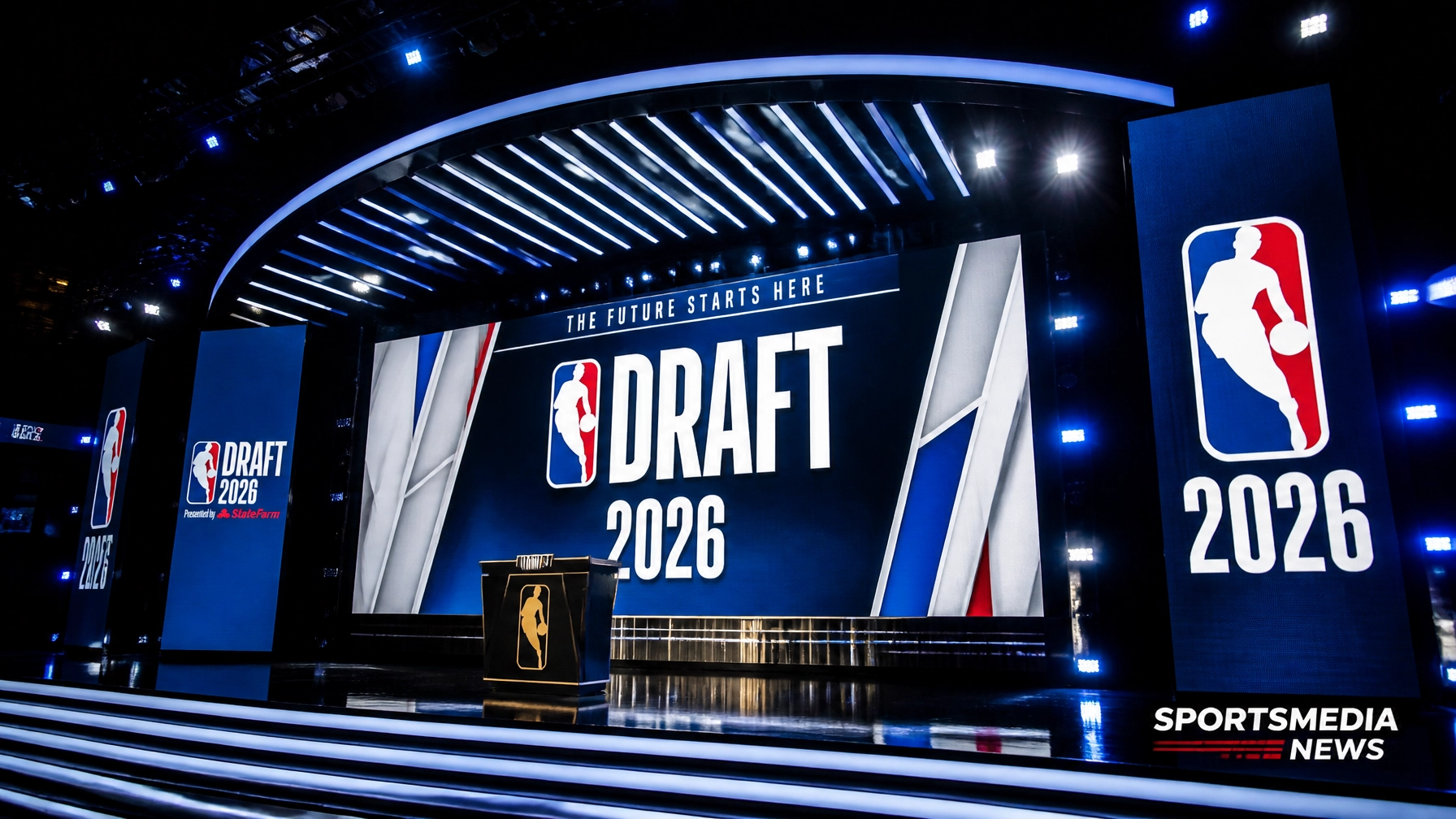
The 2026 draft arrives with more anticipation than most. Scouts across the league are calling it one of the deepest and most talented classes in years : a group with multiple players capable of altering the fortunes of the franchises that select them. For rebuilding teams desperate for a cornerstone and contenders hunting rotational pieces, a single pick can change everything in the ever-evolving landscape of professional sports news.
A Class Built Around Star Power
At the top of the board sits AJ Dybantsa, the 6-foot-9 wing widely projected to go first overall. He is the kind of prospect that makes scouts reach for superlatives: elite athleticism, advanced shot creation, and defensive versatility that allows him to guard multiple positions. Dybantsa fits the prototype of the modern NBA star : big enough to bully opponents, skilled enough to create off the dribble, and engaged enough defensively to matter on both ends. His time in the college ranks has shown a level of motivation that separates him from his peers.

Behind him is Darryn Peterson, an explosive scoring guard whose creativity and ability to generate offense at all three levels have made him one of the most electric prospects in the class. Peterson plays with a competitive edge that tends to translate seamlessly to the professional level.
Then there is Cameron Boozer. The son of former All-Star Carlos Boozer does not carry the typical upside questions that follow most top prospects; he arrives with a polished game built on high IQ, rebounding, vision, and scoring versatility. In a class of "ceiling chasers," Boozer might be the safest bet to contribute immediately, providing a stable brandingidentity for whichever franchise secures his services.
The depth beyond the top three is what truly sets this class apart. Versatile wings, athletic forwards, and multidimensional playmakers fill out the board at a time when the NBA prizes exactly those attributes. History offers a useful frame: the 1984 draft produced Jordan and Olajuwon; the 1996 class gave the league Kobe and Iverson; the 2003 draft brought LeBron and Wade. Whether 2026 reaches those heights remains to be seen, but the Inspiration drawn from this talent pool has executives genuinely excited.
Why the Draft Matters More Than Ever
The NBA's Collective Bargaining Agreement has quietly made draft picks more valuable than ever. Stricter penalties for teams spending above the "second tax apron" have limited what big-spending contenders can do in free agency. Rosters built on expensive veterans are now harder to improve and adjust.

Consequently, a young player on a rookie-scale contract is no longer just a developmental asset: he is a financial lifeline. This shift in brandingstrategy means teams like the Oklahoma City Thunder and Orlando Magic, who have stockpiled draft capital, are now in a position of significant leverage. Innovation in how front offices manage these assets has never carried more weight, as the cost-controlled production of a draft pick can offset the heavy tax burdens of established stars.
Franchise-Defining Decisions
For teams near the top of the board, the stakes are enormous. The Washington Wizards, deep into a rebuild, enter draft night looking for a player who can become the face of the franchise. Getting it right provides a direction for the next several years; getting it wrong extends the rebuild further into a nebulous future.

The Utah Jazz, Charlotte Hornets, and Chicago Bulls face similarly critical decisions. Each must weigh whether to stay the course, retool around existing pieces, or push toward a more aggressive timeline. Professional branding at the organizational level often begins with these selections, as a single player can redefine how a city and its fans perceive the team's future.
Draft Night Is Also Trade Night
What plays out on the draft floor is only part of the story. Draft night has become one of the busiest trade periods on the NBA calendar, and 2026 figures to be no different. Contenders routinely package picks to acquire veterans who can help now, while rebuilding teams flip those same veterans for future assets.

This complex ProjectManagement of team assets requires precision. Several organizations enter this draft at a crossroads: stars in the final years of contracts, veterans stranded on rebuilding rosters, and expensive players squeezed by cap constraints. All of them become candidates for movement. Some of the most significant transactions in recent NBA history have occurred while the draft was still underway, shifting the league's power balance in real-time.
The Draft as a Mirror of the Game
Each draft class reflects where basketball is going. The 2026 class is no exception. Positionless play continues to define the modern NBA, and the most coveted prospects in this class embody it: wings who shoot and facilitate; big men who space the floor; and guards who contribute in every phase.
The evaluation process has evolved accordingly. Advanced analytics, biometric testing, and AI-assisted modeling now sit alongside traditional scouting: not to replace it, but to reduce the uncertainty that comes with projecting teenage talent onto an NBA court. This level of technological Innovation ensures that teams are making the most informed decisions possible in a high-stakes environment.
What This Draft Could Mean
Years from now, analysts will look back at the 2026 draft and trace the origins of multiple team transformations to decisions made over two nights in Brooklyn. Some of these players will become All-Stars. A few may become MVPs. One or two could lead a team to a championship.
The franchises that choose well will have earned an advantage that money alone cannot buy. The next face of the NBA may hear his name called on draft night; the only question is which organization will be wise enough: and lucky enough: to call it.
Nicolas Dorigatti is a sports business analyst specializing in the intersection of global culture and athletic commerce. With years of experience covering major international tournaments, he provides deep insights into how sports shape our world.