


Historic Milestones, Competitive Parity, and Structural Expansion Define a Pivotal 30th Season

By Mark Ricci | June 26, 2026
The WNBA’s 30th season is entering a pivotal stretch marked by historic individual achievements, increasingly competitive standings, and structural changes that will shape the league’s trajectory for decades. Recent developments on and off the court underscore both the maturity and continued growth of the women’s professional game, signaling a transformation from a niche league into a dominant force in the global sports business landscape.
A Historical Scoring Pace: A'ja Wilson Redefines Greatness
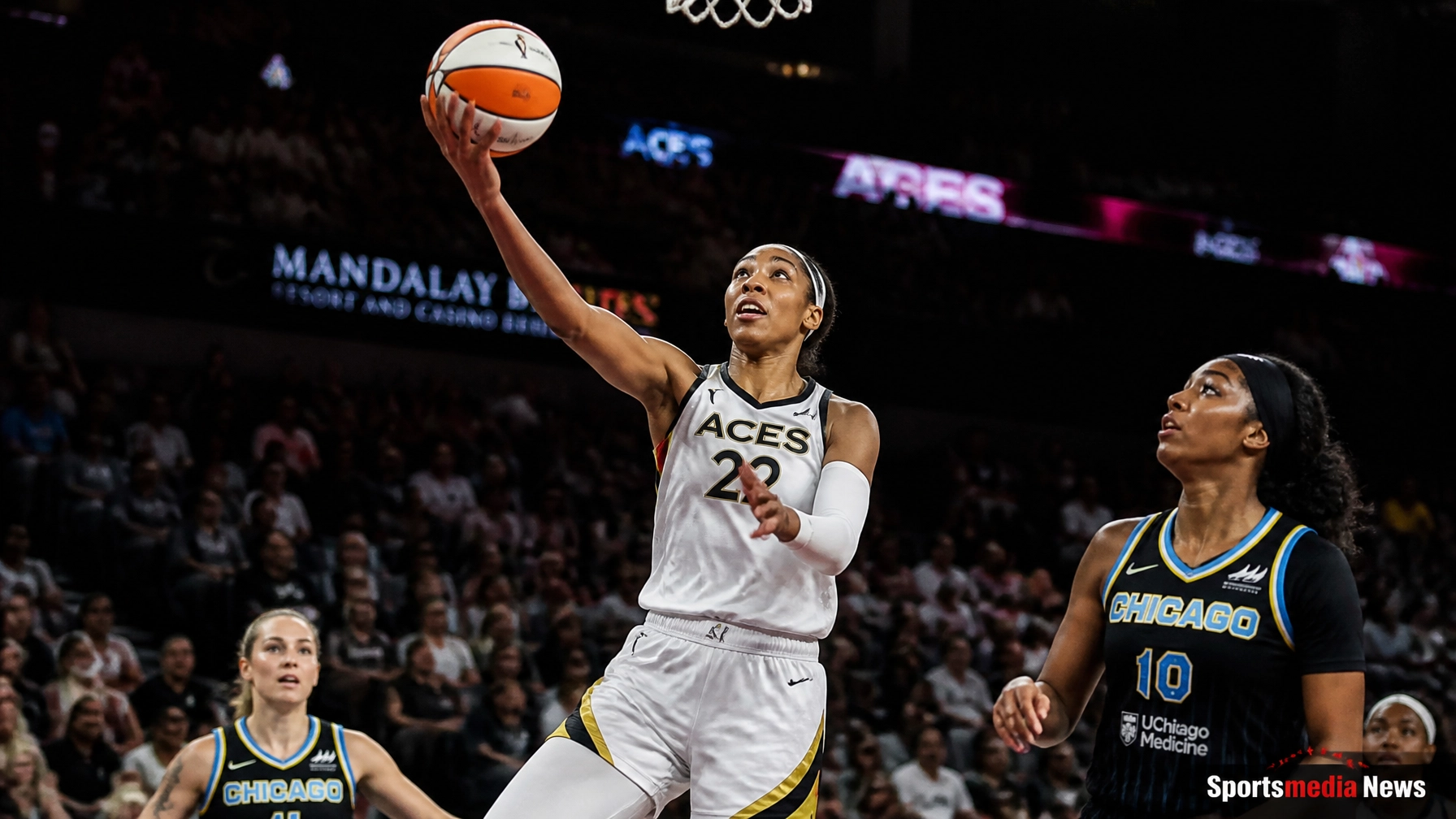
Las Vegas Aces forward A’ja Wilson added another significant milestone to her résumé on June 8, becoming the fastest player in WNBA history to reach 6,000 career points. She achieved the mark in a 101–91 victory over the Seattle Storm at Michelob ULTRA Arena, entering the contest needing 30 points and finishing with 34 points, 12 rebounds, nine assists, and three blocks in a comprehensive performance.

According to data compiled by ESPN, Wilson reached 6,000 points in her 278th career game, surpassing the pace of Diana Taurasi (291 games) and Breanna Stewart (293), both former No. 1 overall draft picks. The WNBA highlighted the achievement across its official channels, noting that Wilson is now “fastest to 6K in WNBA history” and emphasizing the gap she has opened on historical scoring timelines.
At 29 and in her ninth season, Wilson has firmly established herself as the central figure for the Aces under coach Becky Hammon. Her performance against Seattle was consistent with her 2026 campaign; she is currently averaging approximately 25.9 points, 9.6 rebounds, 3.3 assists, and 2.4 blocks per game. These figures place her at the top of the league in scoring, blocks, player efficiency rating, and win shares.
Wilson’s current form builds on an already substantial awards profile. She is the reigning WNBA Most Valuable Player, having captured her fourth MVP award in 2025 following a late-season surge that included a 16-game winning streak and another championship for the Aces. During that campaign, she averaged 23.4 points and 10.2 rebounds while shooting 50.5 percent from the field. Defensively, Wilson has earned the WNBA Defensive Player of the Year award three times, sharing the 2025 honor with Alanna Smith. Entering 2026, she signed a supermax contract to remain in Las Vegas, reinforcing her long-term commitment to the franchise.
Competitive Balance and the "Arms Race" for Playoff Seeding
While Wilson’s accomplishments have commanded headlines, the broader competitive landscape has been similarly noteworthy. Late-June standings indicate a tightly packed field, reflecting a high degree of parity that has become a hallmark of the 2026 season. Teams such as the Connecticut Sun and Minnesota Lynx are in contention for top overall records, while the Las Vegas Aces and Seattle Storm have both hovered around 18–11.

In the Eastern Conference, the Atlanta Dream, New York Liberty, Indiana Fever, and Washington Mystics have all appeared among the top four seeds at various points. This level of competition is driving increased viewership and sponsorship interest, similar to the massive sponsorship deals seen in other professional leagues.
This season also marks the first for the Toronto Tempo, the league’s inaugural Canadian franchise. The Tempo's inclusion further extends the WNBA’s geographic reach and taps into a passionate international basketball market. Recent expansion teams such as the Golden State Valkyries and Portland Fire are already integrated into the nightly schedule; the Valkyries have played competitive contests against Las Vegas, and matchups involving Portland and Golden State have quickly become regular features in league coverage.
Strategic Market Growth: Expansion and Relocation
The WNBA is currently navigating one of the most significant periods of structural change since its founding. In addition to on-court developments, the league has announced significant changes to its regular-season structure. Beginning with the 2027 season, the league will expand to 50 games per team, up from the 44-game schedules used in 2025 and 2026.

The expansion is enabled by the new collective bargaining agreement (CBA) ratified earlier in 2026, which permits 50-game seasons in 2027 and 2028 and up to 52 games beginning in 2029. The agreement also specifies season-end dates: November 21 for 2027 and November 30 for 2028: to accommodate the longer calendar. This shift allows the league to capitalize on longer broadcast windows and increased ticket revenue.
Further growth is planned through a multi-year expansion roadmap:
- 2028: Cleveland scheduled to join the league.
- 2029: Detroit returns to the WNBA landscape.
- 2030: Philadelphia enters as the 18th franchise.
At the same time, the league is addressing market sustainability through relocation. The Connecticut Sun are scheduled to move to Houston in 2027, reestablishing a WNBA presence in a market with deep historic ties to the league. This move is seen as a strategic play to secure larger arena partnerships and tap into the fourth-largest city in the United States.
Professional Perspectives on the League's Trajectory
Industry analysts view the 50-game expansion as a necessary step for the league's financial maturity. "We are seeing an arms race for legitimacy," says one sports business consultant. "By increasing the inventory of games and expanding into tier-one markets like Toronto and Philadelphia, the WNBA is positioning itself as a year-round sports property that can compete for top-tier broadcast rights."
The issue of player health remains a central point of discussion as the schedule lengthens. Much like the discussions surrounding athlete health in combat sports, WNBA stakeholders are prioritizing recovery protocols and travel standards. The 2026 CBA includes provisions for increased charter flight funding and enhanced medical staff requirements for all franchises.
Looking Ahead: A New Era of Professionalism
In summary, recent events in the WNBA highlight a league operating at a high level of competitive and organizational sophistication. A’ja Wilson’s record-setting pace and multi-award résumé exemplify the quality of individual talent, while the evolving standings, expanded schedule, and strategic market growth point to a future in which the WNBA’s footprint continues to increase both domestically and internationally.
As the league marches toward its 2027 expansion and the milestone of a 50-game season, the focus remains on balancing rapid growth with the preservation of the high-level competition that has defined its first three decades. For fans and investors alike, the 2026 season serves as the launchpad for what many are calling the "Golden Era" of women’s professional basketball.
Mark Ricci is a sports business analyst covering the WNBA, league expansion, and professional athlete performance for Sportsmedia News.