


By Nicolas Dorigatti | July 4, 2026
Fifteen years ago, Formula 1 was a sport that struggled to fill grandstands outside of Britain, Italy, and a handful of European strongholds. It was often dismissed in the United States as a niche curiosity — fast cars, expensive tickets, races that started at inconvenient hours, and a broadcast product that felt closed off to outsiders. Today, that description no longer applies. Formula 1 has become one of the fastest-growing sports properties on the planet, drawing record crowds, shattering streaming and television numbers, and building a global fanbase now estimated at over 800 million people.
This transformation didn't happen by accident. It was the product of a deliberate, years-long strategy: a change in ownership, a hit television show, a push into new markets, closer racing on track, and an entirely new relationship between the sport and its fans. Formula 1 now competes for cultural attention alongside the NFL, the NBA, and the Premier League — and in terms of raw global reach, it has arguably surpassed them all.
The Liberty Media Revolution
The inflection point came in 2017, when American media company Liberty Media completed its acquisition of Formula 1 from longtime commercial rights holder Bernie Ecclestone and private equity firm CVC Capital Partners. For decades under Ecclestone, F1 had run on a model built around exclusivity: tightly controlled broadcast rights, minimal social media presence, and a reluctance to give fans direct access to the personalities behind the sport. The racing was elite, but the sport's digital footprint lagged far behind other major leagues.
Liberty Media tore up that playbook. The new ownership treated F1 less like a closed broadcast product and more like a modern entertainment brand — one that needed to live on the platforms where audiences, especially younger ones, actually spent their time.
The company opened the door to Instagram, TikTok, YouTube, and X, encouraging teams and drivers to share content that had previously been off-limits: radio communications, garage celebrations, pit wall arguments, and unfiltered personality. Fans got access to raw team radio, behind-the-scenes documentaries, and driver interactions that had rarely, if ever, been shown before. That transparency didn't just entertain people — it humanized the athletes and helped casual viewers understand the strategic complexity hiding beneath the noise of the engines.
Netflix and the Drive to Survive Effect

If one single product accelerated Formula 1's global rise more than any other, it's the Netflix docuseries Drive to Survive, which debuted in 2019. The show didn't chase lap times or technical minutiae — it chased drama. Contract disputes, team-principal rivalries, high-stakes pressure, and personal stories became the entry point for millions of viewers who had never watched a Grand Prix in their lives.
That approach worked spectacularly well, especially in the United States, a market F1 had tried and failed to crack for decades. Since the show's release, American television ratings, race attendance, and merchandise sales have all climbed sharply, and Drive to Survive is widely credited as the single biggest driver of that shift. The formula proved so effective that Formula 1 followed it with F1: The Movie, a big-budget feature starring Brad Pitt. Released in 2025, the film became the highest-grossing sports movie of all time, generating more than $630 million worldwide and further cementing motorsport's place in mainstream pop culture.
America's Growing Love for Formula 1

For most of its history, Formula 1 was an afterthought in the United States, where NASCAR and IndyCar dominated the motorsport conversation and Grands Prix aired at odd hours to a fraction of the audience other sports commanded. That has changed dramatically.
The U.S. calendar has expanded to three Grands Prix a year: Miami, Austin, and Las Vegas — each one built as much around spectacle as it is around racing. These weekends now come packaged with concerts, celebrity appearances, and luxury hospitality experiences designed to pull in audiences who might never have considered themselves race fans.
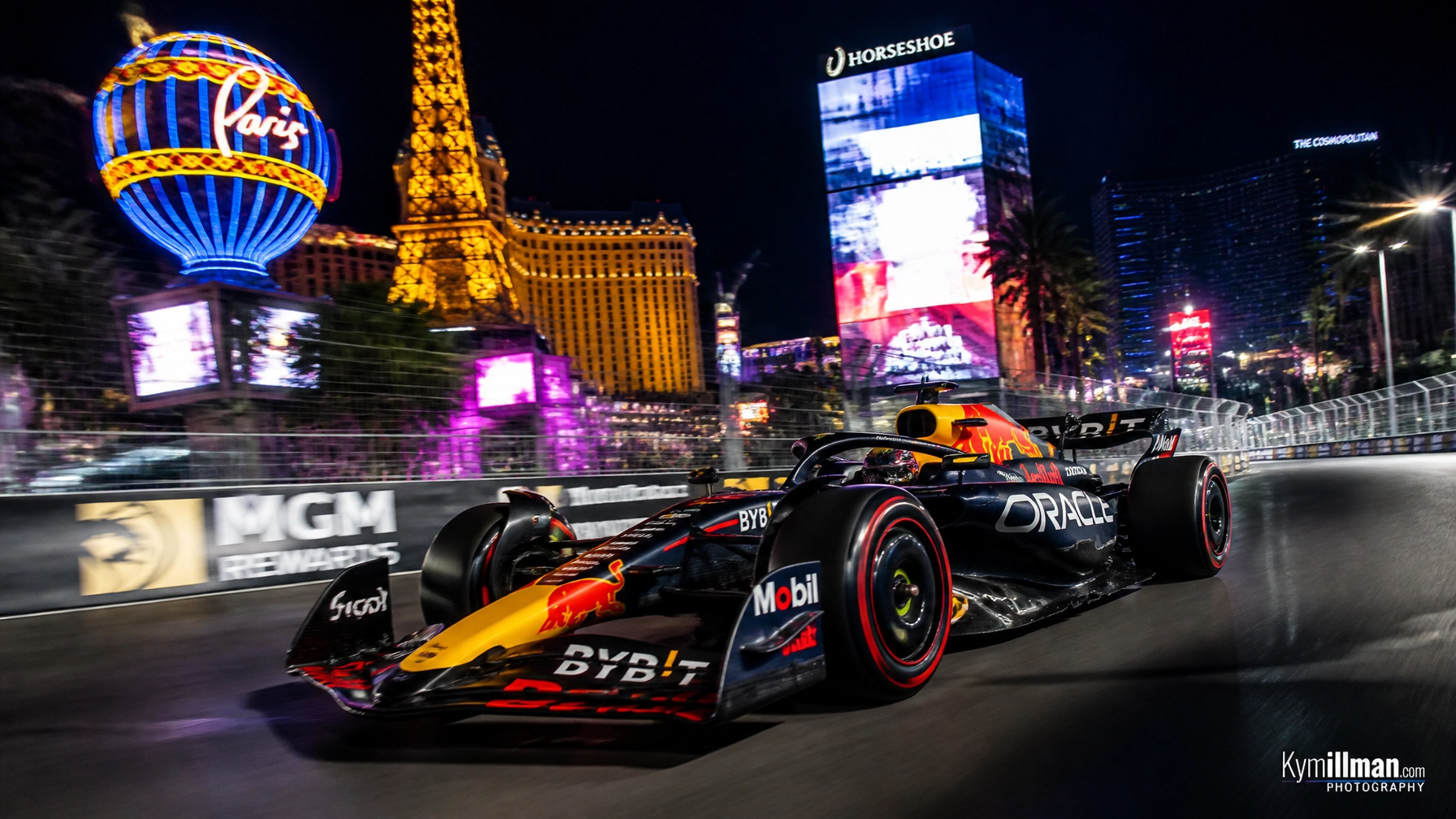
Las Vegas has become the clearest symbol of F1's new identity in America. Racing under the lights of the Strip created one of the most visually striking events on the calendar, and it has delivered results to match: the 2025 Las Vegas Grand Prix sold out with a weekend crowd of more than 300,000, generated over 450 million video views, and produced more than 43,000 media articles in a single week. American broadcaster ESPN, meanwhile, averaged a record 1.3 million viewers per race in its final season broadcasting the sport in the U.S. — a huge leap from the roughly 550,000 it averaged when its F1 deal began back in 2018.
Drivers Become Global Superstars
Part of F1's growth comes down to a simple truth: today's drivers are more visible, and more marketable, than any generation before them. Names like Lewis Hamilton, Max Verstappen, Charles Leclerc, Lando Norris, and Oscar Piastri have built massive personal followings that extend well beyond racing.
Fans don't just tune in on Sunday afternoons — they follow drivers' training routines, fashion choices, travel, and friendships throughout the week. That level of engagement has turned drivers into standalone celebrities and, in the process, deepened the emotional connection fans feel to the sport. It's a shift that mirrors what other leagues have learned: people follow people first, and teams or leagues second.
Technology Meets Elite Competition

Formula 1's appeal isn't just about personalities — it's also about engineering at the absolute limit of what's possible. Each team invests hundreds of millions of dollars developing cars that shave off fractions of a second per lap. Engineers process enormous volumes of telemetry in real time, and race strategists make split-second calls — when to pit, which tire compound to run, how to respond to a shifting forecast — that can decide a championship.
That complexity has become part of the show rather than a barrier to it. Fans have grown genuinely interested in tire degradation, aerodynamic upgrades, pit-stop execution, and strategic gambles, and broadcasters have leaned into that appetite with richer graphics and data overlays. Newcomers quickly discover that Formula 1 isn't simply about who's the fastest driver — it's a contest between entire organizations operating at the edge of engineering and logistics.
A New Generation of Fans
Perhaps F1's most important achievement over the past several years has been reaching an entirely new, younger audience. Short-form platforms — TikTok, Instagram Reels, YouTube Shorts — have made the sport endlessly clip-able: team radio outbursts, dramatic overtakes, paddock humor, and onboard footage travel far beyond F1's traditional audience.
The numbers back this up. Formula 1's global fanbase has been estimated at roughly 827 million people, with 43% of that audience now under the age of 35 and more than half of all new fans joining in that same age bracket. The sport's social media following has also grown enormously — more than quintupling since 2018 — while F1 has been recognized as the fastest-growing major sports league on social media for five consecutive years. Younger fans, notably, are also more likely to rally around individual drivers than a single team, which sustains engagement year-round rather than just on race weekends.
Closer Competition Creates Better Racing
None of this growth would matter much if the racing itself wasn't improving — and on that front, regulatory changes have genuinely helped. New aerodynamic rules were introduced specifically to let cars follow one another more closely, reducing the "dirty air" effect that once made overtaking nearly impossible. A cost cap, meanwhile, has narrowed the financial gap between the wealthiest teams and the rest of the field.
The result has been a more competitive midfield and a level of unpredictability that keeps fans invested from the first race to the last. The 2025 season captured this shift perfectly, coming down to a three-way title fight in the final race — a dramatic sendoff for the current generation of cars ahead of a major regulation overhaul in 2026.
Formula 1's Business Boom

The commercial side of Formula 1 has grown right alongside its cultural profile. Sponsorship portfolios have expanded rapidly — F1's roster of major global partners has more than doubled since 2020 — and the sport has attracted long-term commitments from brands like LVMH, whose ten-year deal brought Louis Vuitton, TAG Heuer, and Moët Hennessy into the paddock. Race promoters are paying record fees to secure spots on the calendar, and long-term venue contracts now stretch well into the 2030s.
Attendance figures tell a similarly striking story. The 2025 season drew a combined 6.7 million fans across 24 race weekends — the highest total in the championship's 75-year history, up from 6.5 million in 2024 and just 4.2 million in 2019. Nineteen of those 24 events sold out completely, eleven set new attendance records, and marquee weekends like the British Grand Prix at Silverstone drew crowds of 500,000 — the largest F1 audience in three decades.
Looking Ahead
Formula 1 shows no signs of slowing down. With international markets like China and India expanding rapidly, new manufacturers such as Cadillac, Ford, Audi, and Honda joining the grid, and a sweeping set of technical regulations arriving for the 2026 season, the sport is positioned to keep growing well beyond its traditional base.
What was once considered an exclusive European racing series has become a genuinely global entertainment product — one that blends elite athletic competition, cutting-edge engineering, character-driven storytelling, and digital-first fan engagement. Formula 1's greatest achievement over the past decade may not be measured in championships or podiums, but in how it rewrote the relationship between a century-old sport and a brand-new generation of fans. Its rise stands as a blueprint for how legacy sports can modernize without losing what made them compelling in the first place.
About the Author
Nicolas Dorigatti is a senior sports business analyst for Sportsmedia News, specializing in the intersection of international motorsport, media rights, and global fan engagement. With over a decade of experience covering the FIA Formula One World Championship, he provides in-depth reporting on the financial and cultural shifts redefining the landscape of modern racing.