


A 4-1 Round of 16 defeat ended the co-host's campaign on home soil, triggering political drama, painful questions, and a defining moment for U.S. soccer.
By Mark Ricci | July 9th, 2026
The USA's 4-1 loss to Belgium in the 2026 FIFA World Cup Round of 16 was one of the most emotional matches of the tournament, marking the end of the co-host's campaign on home soil and triggering a wave of reaction in the days that followed. Belgium's clinical performance, the political backdrop around a key U.S. player, and the public response combined to make this game: and its aftermath: especially notable.
Match setting and stakes
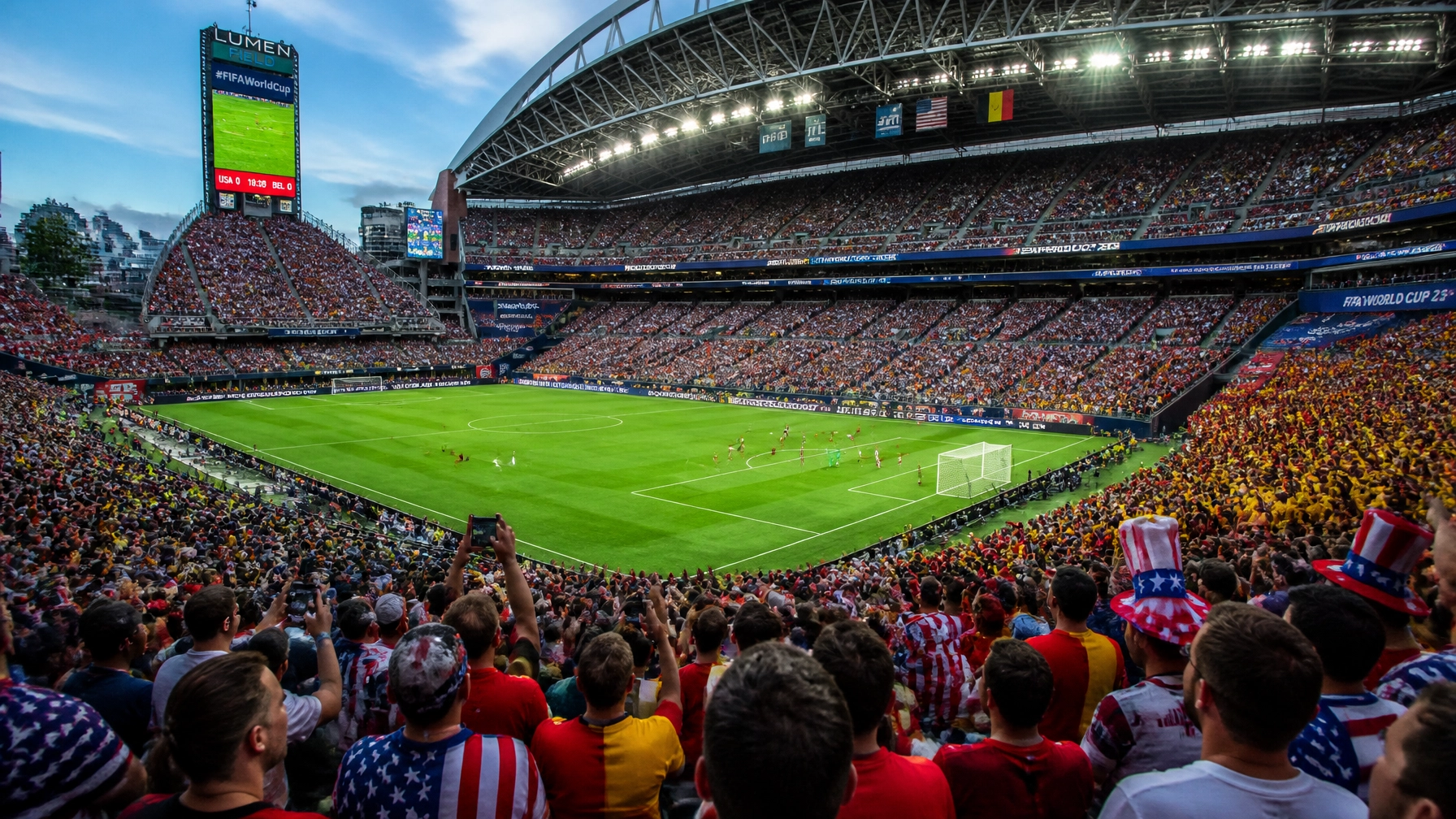
The Round of 16 clash was played on July 6, 2026, at Lumen Field in Seattle, with a sold-out crowd on hand, the majority of whom backed the United States and hoped to see the team reach the quarterfinals for the first time in 24 years.
The U.S. had built momentum heading into the match:
They topped Group D, advancing to the knockout stage after strong group-phase performances on home soil.
They then beat Bosnia and Herzegovina in the Round of 32, earning their first World Cup knockout-stage victory since 2002 and setting up the meeting with ninth-ranked Belgium.
Expectations were high, and the game was widely seen as a major test of whether the USMNT was ready to compete consistently with Europe's elite.
How the game unfolded
Belgium ultimately controlled the match, winning 4-1 and showing why, as U.S. Soccer noted, they entered the game unbeaten in their last 18 matches.
First half: early blow, brief hope
Belgium struck early to quiet the home crowd and underline their status as favorites.
The Americans "were in trouble from the first minute," and an early goal put the USA behind, exposing defensive naivety and missed assignments that became a theme of the night.
Midfielder Malik Tillman equalized with a direct free-kick goal, his second free-kick strike of the tournament, to bring the score to 1-1 and briefly restore belief among U.S. fans.
Belgium responded almost immediately and retook the lead, going into halftime up 2-1 after punishing a brief lapse in U.S. defending only minutes after the equalizer.
Second half: Belgium pulls away
In the second half, the USA pushed to get back into the game, but Belgium's quality and composure told.
Belgium added a third goal, extending the lead and forcing the U.S. to chase the match, which opened more space for Belgian attacks.
Late on, Belgium scored a fourth to complete what was described as their "most complete game of the tournament," cementing their quarterfinal place and underlining the gap between the sides.
The final scoreline: USA 1, Belgium 4, reflected Belgium's opportunism and efficiency far more than the USA's energy and effort, leaving the home side and its fans stunned and drawing comparisons to the USMNT's previous Round of 16 exit against the Netherlands in 2022.
The political backdrop: Trump's intervention
The game's narrative was complicated by events between the Round of 32 and the Round of 16.
In the match against Bosnia and Herzegovina, U.S. striker Folarin Balogun received a contentious red card, which initially meant he would miss the game against Belgium.
President Donald Trump publicly intervened, pressing FIFA president Gianni Infantino to review the decision.
FIFA ultimately overturned Balogun's suspension, making him eligible for selection against Belgium.
After Belgium's victory, the Belgian Football Association and Belgian media mocked the reversal on social channels, including posts highlighting Lukaku's goal with captions challenging the idea of "overturning" results, adding a pointed jab at the political pressure that had preceded the match.
Trump's involvement, the overturned suspension, and the heavy defeat led some commentators to revive talk of a "Trump sports curse," mostly in a tongue-in-cheek way, suggesting that teams he publicly supports often fare poorly.
Immediate reaction in the U.S.
The loss generated a swift and intense reaction across American media and social platforms.
Reports described the match as a "thorough thumping," noting that a campaign which had "begun with exaltation and promise" came to a screeching halt as Belgium punished the U.S. for naive defending and repeated mistakes.
New and casual fans, energized by group-stage performances and the novelty of a home World Cup, expressed shock at how quickly the USA fell behind and how little control they seemed to have once chasing the game.
Commentators pointed out that the "hype train" around the USMNT, boosted by home advantage, marketing, and strong early results, collided with the reality of facing a seasoned European side, leading to renewed debate about where U.S. soccer truly stands.
Rival fans and international observers seized on the result, highlighting the team's pre-tournament confidence, the high-profile presidential intervention, and the eventual defeat as a cautionary tale about mixing politics and sport.
How the USMNT framed the tournament
Despite the painful exit, U.S. Soccer emphasized positive milestones in its official recap.
The team finished atop its group and recorded a knockout-stage win: its first at a men's World Cup since 2002, before falling in the Round of 16.
The USMNT scored freely throughout the tournament, with double-digit goals in both the group stage and the Round of 32, surpassing the output of some previous World Cup campaigns.
The federation highlighted home crowds and nationwide interest, noting that the team helped "boost the sport to towering levels" during the first men's World Cup held in the U.S. since 1994.
Head coach Mauricio Pochettino and his squad were credited with generating unprecedented domestic attention and enthusiasm for the sport, even though they fell short of reaching the quarterfinals.
Belgium's perspective and next steps
For Belgium, the match was a statement win.
The 4-1 result moved Belgium up in Round-of-16 power rankings and was widely described as their most complete performance of the tournament so far.
With the victory, Belgium advanced to face Spain in the quarterfinals in Los Angeles, one of four marquee quarterfinals, along with France vs Morocco, Norway vs England, Spain vs Belgium, and Argentina vs Switzerland.
Belgian media and social accounts mixed pride in the team's dominant display with playful mockery of the political drama around Balogun's suspension, adding an extra layer of rivalry and narrative off the pitch.
Long-term implications for U.S. soccer
The aftermath of the USA vs Belgium left two parallel stories for U.S. soccer:
On one hand, the 2026 World Cup campaign showed clear progress: topping the group, winning a knockout match, and energizing fans across the country in a home tournament.
On the other hand, the heavy defeat against a top European side raised familiar questions about whether the USMNT is "ready for primetime" at the very highest level, and underscored the gap that still exists between the U.S. and world-class opponents.
Debates about coaching decisions, squad construction, and off-field political involvement are likely to continue, with this game serving as a reference point for what went right early in the tournament and what went wrong when it mattered most.
Mark Ricci is a senior contributor for Sportsmedia News, specializing in international soccer, U.S. national team analysis, and the intersection of sports and politics.