


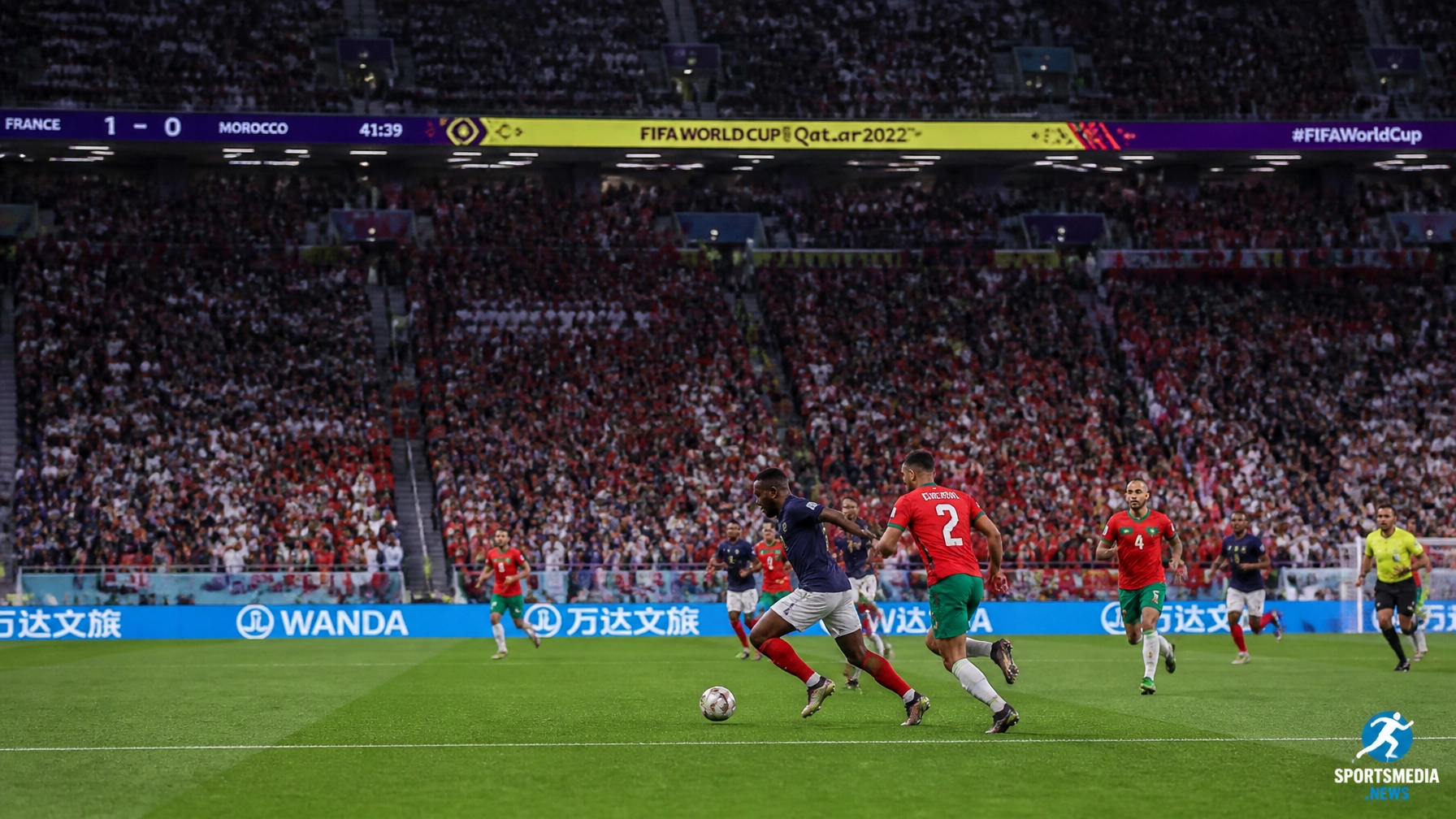
The 2026 FIFA World Cup enters its most critical phase this week as the quarterfinal matchups begin in the United States. On Thursday, July 9, at 4:00 PM ET, defending powerhouse France will meet Morocco at Gillette Stadium in Foxborough, Massachusetts. This high-stakes encounter is followed on Friday, July 10, by a tactical clash between Spain and Belgium at SoFi Stadium in Los Angeles, scheduled for 3:00 PM ET.
Both fixtures represent significant shifts in the international football hierarchy. While France and Spain remain the statistical favorites to advance, their opponents arrive with unprecedented momentum and historical narratives that suggest an "arms race" of tactical innovation is currently underway in global football.
Jacob Potter
July 9th, 2026
Seeking legitimacy: France vs Morocco
The matchup at Gillette Stadium serves as a highly anticipated rematch of the 2022 World Cup semifinal. France, currently the tournament’s heavy favorite with a 62.2% win probability according to Opta metrics, enters the match with an offensive arsenal led by Kylian Mbappé. The forward has already secured seven goals in the tournament, reinforcing his status as the premier attacking threat in the world.
However, Morocco is no longer the defensive-minded underdog of the previous cycle. The Atlas Lions enter the quarterfinals on a staggering 34-match unbeaten run. This streak has fundamentally changed the perception of African football on the global stage.
Morocco has evolved from a team that survives to a team that dictates. Their ability to maintain tactical discipline over 34 matches is not just a hot streak; it reflects a structural shift in the team’s footballing identity. France will be facing a side that believes it belongs on the podium, not just in the top eight.
The match is not without its complications for both squads. France is currently monitoring midfielder Aurélien Tchouaméni, who remains doubtful with a recurring calf issue. Similarly, Morocco’s Ismael Saibari is facing a late fitness test following an ankle knock sustained in the Round of 16. The absence of these key figures could force a shift in the midfield dynamics that both managers have relied upon throughout the group stages.

The friendship duel: Mbappé vs Hakimi
Perhaps the most compelling subplot of the Thursday slate is the individual battle between Kylian Mbappé and Moroccan defender Achraf Hakimi. The two players, who have famously shared a close bond as teammates at Paris Saint-Germain, will find themselves directly pitted against each other on the right flank.
Hakimi has been instrumental in Morocco's transition play, creating 12 chances throughout the tournament. His familiarity with Mbappé’s movement patterns could be the decisive factor in whether Morocco can neutralize the French attack. Conversely, Mbappé’s ability to exploit any space left behind by Hakimi’s offensive runs represents France’s clearest path to the semifinals.
When two players of this caliber know each other's every move, it becomes a game of psychological chess. It is a rare instance where friendship and tactical necessity collide on the biggest stage.
Defensive Mastery: Spain vs Belgium at SoFi Stadium
The action shifts to the West Coast on Friday as Spain faces Belgium at the state-of-the-art SoFi Stadium. Spain enters the contest with a statistical anomaly: six consecutive World Cup clean sheets. This defensive record is the bedrock of their current campaign, allowing their midfield to operate with a degree of freedom that has stifled every opponent they have faced in North America.
Belgium, meanwhile, brings its own 18-match unbeaten streak into Los Angeles. However, the Red Devils are grappling with a significant roster loss. Midfield anchor Amadou Onana has been ruled out for the remainder of the tournament with an ACL injury, a blow that shifts the tactical burden onto the veteran shoulders of Kevin De Bruyne and Romelu Lukaku.

Tactical battle: Control vs. Chaos
The match is expected to be a classic conflict of styles. Spain’s midfield trio of Rodri, Pedri, and Dani Olmo has averaged 68% possession throughout the tournament, focusing on sustained pressure and territorial dominance. Their strategy relies on exhausting the opposition through technical superiority and precise ball movement.
Belgium’s approach under manager Domenico Tedesco has shifted toward a more reactive, counter-attacking model. With the pace of Jérémy Doku and the clinical finishing of Romelu Lukaku, Belgium aims to exploit the high defensive line that Spain typically employs.
The issue for Belgium is the vacuum left by Onana. He provided the physical presence needed to disrupt Rodri and Pedri. Without him, Belgium must rely on a "bend but don't break" philosophy, hoping that De Bruyne can find a narrow window to launch a counter-attack.
The matchup between Mikel Oyarzabal and Kevin De Bruyne will likely determine the tempo of the game. While Oyarzabal has been the focal point of Spain’s high-press system, De Bruyne remains the world’s most dangerous playmaker in transition.

Lasting impacts
The outcome of these two matches will define the narrative of the 2026 tournament. Should France and Spain progress, it would reinforce the traditional dominance of European football. However, a Moroccan victory would cement their status as a legitimate global power, while a Belgian win would provide a fairy-tale ending for their "Golden Generation" veterans.
The tournament is at a crossroads. The next 48 hours will indicate whether this World Cup belongs to the established giants or whether the gap between the traditional elite and the rest of the world has narrowed significantly.
As the teams take the pitch in Foxborough and Los Angeles, the focus remains on whether tactical discipline can overcome individual brilliance. The winners of these two matches will move one step closer to the final at MetLife Stadium, carrying the hopes of their respective nations into the final four.
Jacob Potter
July 9th, 2026