


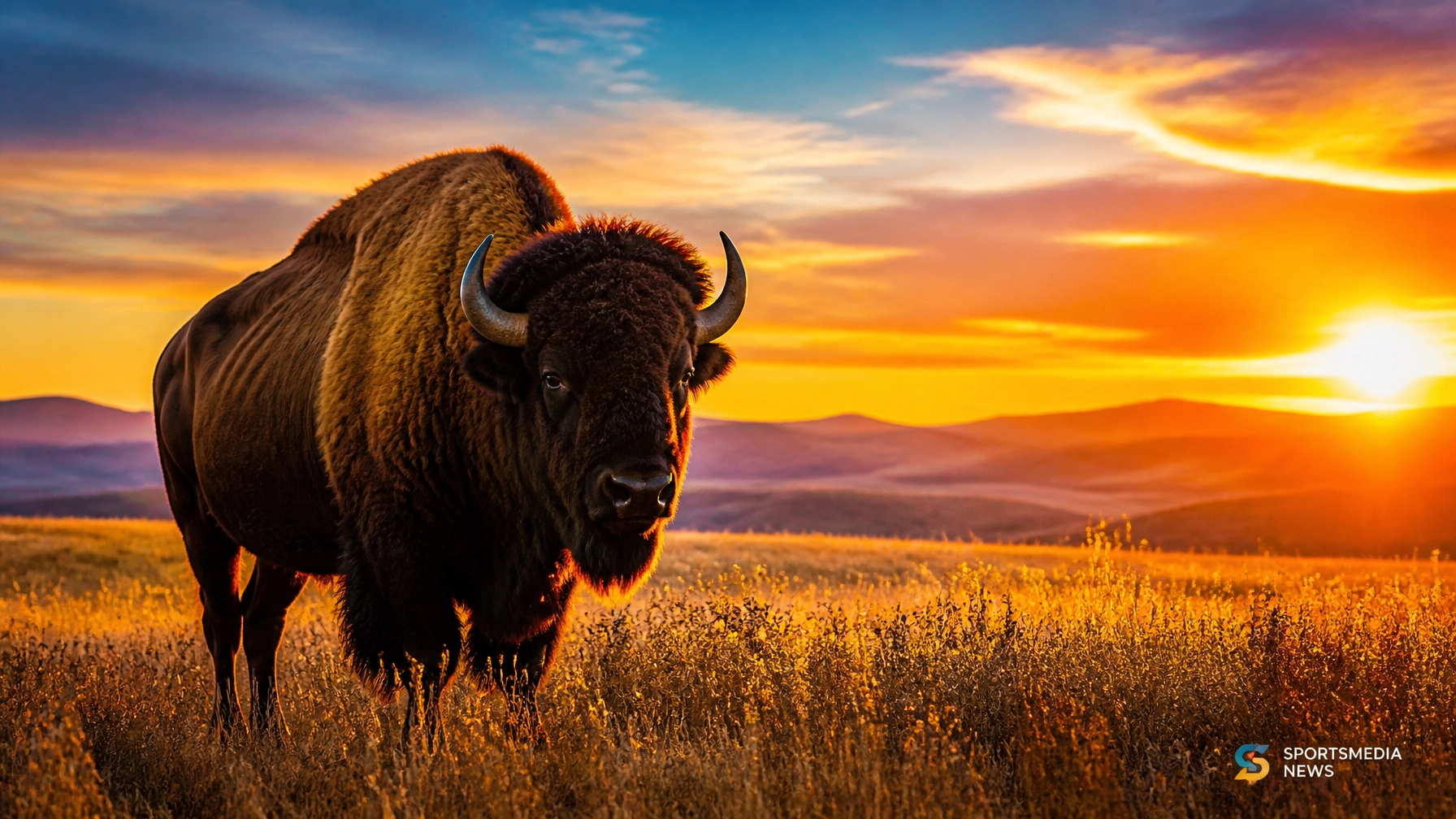
Once pushed to the brink of extinction, the return of bison is proving to be a powerful ecological engine for rebuilding soil health, capturing carbon, and restoring biodiversity across the continent's grasslands.
By Nicolas Dorigatti | July 9th, 2026
For thousands of years, bison shaped the landscapes of North America. Before European settlement, an estimated 30 to 60 million bison roamed the continent, influencing ecosystems from the tallgrass prairies of the Midwest to the shortgrass steppe of the Rocky Mountain foothills. Their hooves aerated the soil, their grazing sculpted the grasses, and their sheer numbers helped drive nutrient cycles across an area covering roughly a fifth of the continent.
By the late 1800s, that relationship had been violently severed. Commercial overhunting, habitat destruction, and a deliberate U.S. government campaign to eliminate the bison herds as a means of subjugating Plains Indigenous nations pushed the species to the brink of extinction — from tens of millions of animals down to only a few hundred by 1900. Today, conservationists, tribal nations, ranchers, and federal agencies are working to return bison to parts of their historic range, and a growing body of research is putting hard numbers behind what many Indigenous communities have always understood: bison are not just a species to be saved, but an ecological engine that helps rebuild the land around them.
Restoring Grassland Health
Bison graze differently than cattle, and that difference matters ecologically. Cattle tend to settle into an area and graze it fairly evenly and repeatedly, which over time flattens plant diversity. Bison move in large, restless groups, grazing intensely in one patch and then moving on, leaving the vegetation time to recover. Ecologists call the result a "grazing lawn" effect: a shifting mosaic of closely cropped patches next to areas of tall, undisturbed grass. That patchwork structure creates niches for birds, insects, and small mammals that a uniformly grazed field cannot support, and it's a big part of why researchers increasingly describe bison as poor substitutes for cattle — and cattle as poor substitutes for bison.

Healthier Soil and More Carbon Storage
As bison graze, trample, wallow, and move across the land, they cycle nutrients back into the soil through dung and urine rich in nitrogen, acting as a natural, slow-release fertilizer. But the soil benefits go deeper — literally. Because bison are selective grazers that favor grasses over deep-rooted wildflowers and other forbs, their grazing pattern encourages plants to invest more heavily in root growth. At the Tallgrass Prairie Preserve in Oklahoma, researchers have found that bison-grazed prairie develops significantly greater below-ground root mass than either ungrazed land or land grazed by cattle — and since grasslands store the majority of their carbon underground in root systems rather than above ground in biomass, deeper roots mean more durable carbon storage.
This matters more than it might first appear. Grasslands are estimated to hold roughly a third of the world's terrestrial carbon, mostly below the surface, which makes them more resistant to releasing that carbon during wildfires than forests. As droughts and wildfires intensify with climate change, some researchers argue that grasslands — properly managed with grazers like bison — may become an increasingly reliable carbon sink relative to forested land. A 2024 study of a rewilded bison herd in Romania's Țarcu Mountains estimated that around 170 bison grazing roughly 19 square miles of grassland were helping the ecosystem capture nearly 60,000 additional tons of carbon a year — comparable to taking tens of thousands of cars off the road. While researchers caution that results vary by climate and soil type and that U.S. prairies are generally less productive than that particular mountain grassland, the study added weight to a growing case that large grazers are a genuine climate tool, not just a biodiversity one.

Wallows, Water, and Biodiversity
Few bison behaviors do more ecological work per square foot than wallowing. By rolling in dirt and dust to fend off insects and shed fur, bison create shallow depressions called wallows that collect rainwater and snowmelt. These pockets become miniature wetlands in an otherwise dry landscape, supporting amphibians, aquatic insects, and moisture-loving plants that couldn't otherwise survive on the open prairie. Bison also trample and reshape eroded stream banks, in some cases helping restore the function of waterways degraded by decades of heavy cattle grazing.
Above ground, the varied grass heights created by bison grazing support birds like meadowlarks and grasshopper sparrows, along with the prairie dog colonies that many grassland food webs depend on. Because bison remove deep snow while foraging in winter, they also make forage more accessible to elk, pronghorn, and other wild herbivores sharing the same range — a ripple effect that extends the ecological benefits of a single bison herd well beyond the animals themselves.
Recent remote-sensing research in Yellowstone National Park has even documented bison "engineering the green wave" — timing their movements and grazing pressure in ways that extend the availability of the most nutritious new plant growth across the landscape, a level of ecological sophistication that underscores just how tightly bison and North American grasslands co-evolved.

Climate Resilience
Diverse grasslands generally weather droughts, heat waves, and invasive species better than simplified ones, and bison-grazed prairie tends to be exactly that: structurally diverse, deep-rooted, and adapted to local extremes. Bison themselves are also simply tougher animals for the job than introduced livestock — they use lower-quality forage more efficiently, need less water, and tolerate harsher winters and summers, all traits built up over tens of thousands of years of adaptation to North American conditions that cattle, as a domesticated species imported from elsewhere, never had reason to develop.

Cultural and Economic Renewal
The return of bison is as much a story about people as it is about ecology. Bison are sacred to many Indigenous nations, and tribal-led restoration has become one of the most significant forces in the animal's recovery. The InterTribal Buffalo Council (ITBC), founded in 1992 with 19 member tribes, now represents roughly 80 to 90 Native nations across about 20 states, collectively managing well over 20,000 buffalo on more than 30 million acres of tribal land — with active buffalo habitat restored across close to a million of those acres. In 2025 alone, ITBC and its partners transferred more than 1,500 buffalo to over 20 tribal nations, part of a broader push that has moved thousands of animals from federal and conservation herds back into tribal stewardship over the past several years.
That work is bundled with tangible community benefits: buffalo meat distribution programs for elders and families, youth education initiatives, and food sovereignty efforts that reduce dependence on external food systems. Restoration projects like the Wind River Tribal Buffalo Initiative in Wyoming — working to eventually support 1,000 buffalo across 100,000 acres of the Wind River Indian Reservation — pair ecological goals with the recovery of land access and tribal sovereignty. Beyond tribal lands, bison-related ecotourism at parks and preserves has also become a genuine economic driver for surrounding communities and conservation organizations.
Progress, and the Work Still Ahead
Successful restoration projects — from Yellowstone and the American Prairie Reserve in Montana to tribal herds across the Great Plains and Southwest — have documented real gains: increases in native plant cover, greater bird and mammal diversity, and measurably healthier grassland ecosystems compared to ungrazed or cattle-grazed land nearby.
The challenges are real, too. Suitable habitat is limited and fragmented by agriculture, roads, and private land ownership; disease management (particularly around brucellosis) complicates herd transfers; and funding for tribal programs has at times been inconsistent, even as demand for surplus buffalo from federal and conservation herds continues to outpace supply. Some conservationists also caution against over-relying on carbon-credit markets tied to grassland restoration, which can create funding opportunities but also risk enabling "greenwashing" by industries elsewhere.
A Keystone Species, Restored
As climate change and habitat loss continue to reshape ecosystems worldwide, restoring native species has become one of conservation's most promising strategies — and few restorations carry the ecological weight of the bison's. Its return is not simply the recovery of a single species; it is the reintroduction of an ecological engineer that spent millennia shaping the plants, soils, water, and wildlife of an entire continent. Bringing bison back to the land is, at its core, an investment in more resilient grasslands — and in the communities whose futures are tied to them.
Nicolas Dorigatti is a senior contributor for Sportsmedia News, covering conservation, climate policy, and the ecological impacts of land restoration.