


By Nicolas Dorigatti | July 16th, 2026
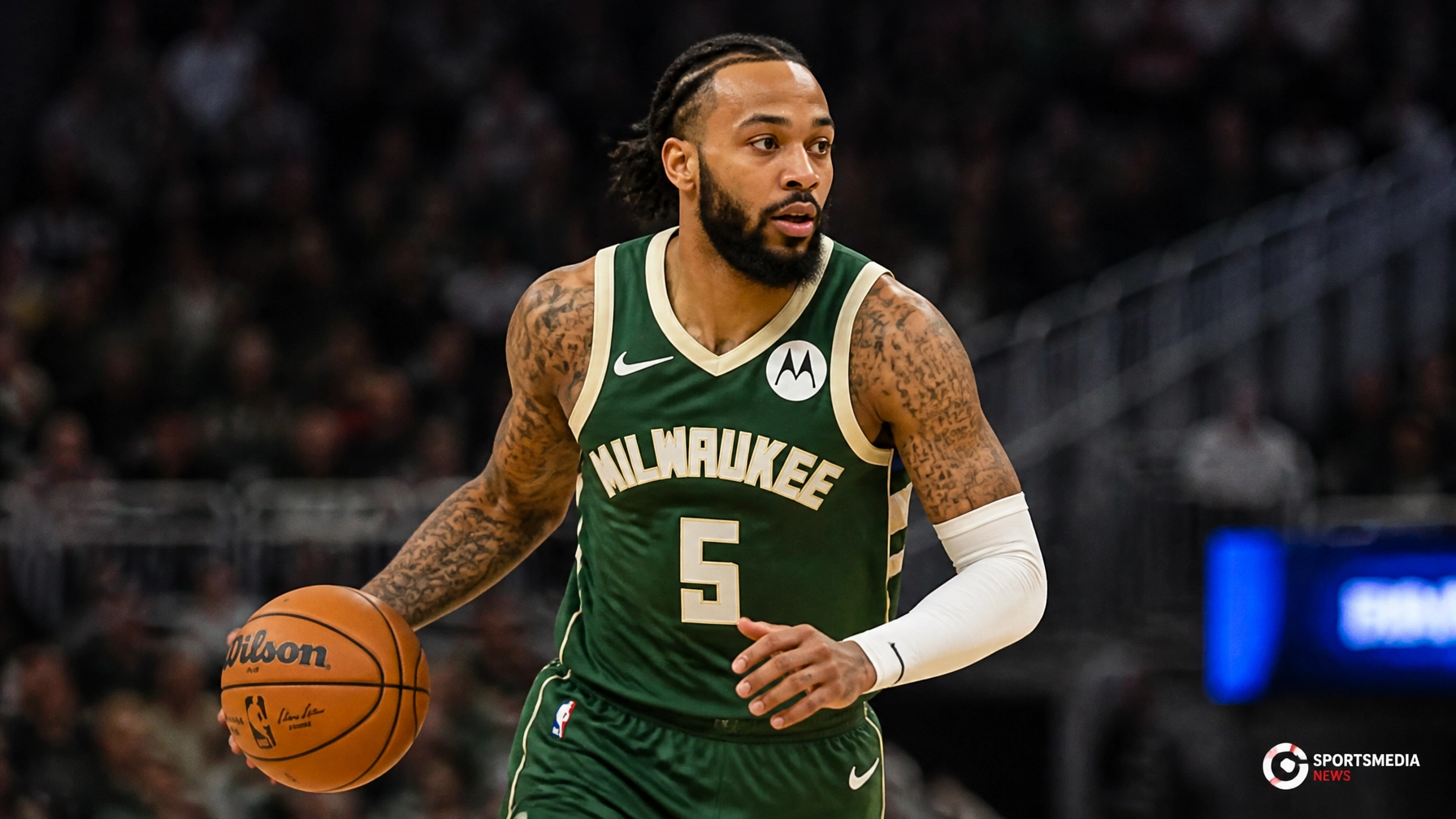
The NBA has opened a formal investigation into the Milwaukee Bucks' four-year, $64 million contract with guard Gary Trent Jr., with a league spokesperson confirming the probe to ESPN's Shams Charania. The deal was officially announced and submitted to the league on Thursday morning, and almost immediately became one of the most scrutinized transactions of the NBA offseason.
At the center of the inquiry is the NBA's collective bargaining agreement, which contains language allowing the league to rule that a cap violation occurred if cap circumvention is the only possible explanation for a contract. League investigators are examining whether Milwaukee and Trent had a prior understanding — commonly called a "handshake agreement" — that he would accept below-market salaries in exchange for a lucrative payday once he became eligible for a bigger deal.

A Steep Pay Jump After Two Bargain Contracts
The suspicion stems largely from the trajectory of Trent's recent salaries. Trent signed for the league minimum with Milwaukee in the summer of 2024 after a strong debut season with the team. He then signed a two-year, $7.5 million contract before last season, which paid him $3.7 million in 2025-26 — a deal that, crucially, established his Early Bird rights, allowing the Bucks to go over the salary cap to re-sign him this summer.
That mechanism is exactly what has drawn scrutiny. The theory is that Trent accepted less money over the past two seasons to help the Bucks manage tight cap space, with an understanding that the team would reward him with a far more lucrative contract once his Bird rights kicked in. If proven, such an off-the-books arrangement would constitute cap circumvention and a violation of NBA rules.
The new deal itself is fully guaranteed, with a year-to-year breakdown of roughly $15.2 million in 2026-27, jumping to $16.4 million in each of the next two seasons, before settling back to $16 million in the final year — an average annual value of about $16 million.

A Down Season Fuels the Scrutiny
What has made the contract so controversial isn't just its size, but the timing. Trent averaged just 8.1 points on 38.7 percent shooting in 2025-26, his lowest production since his rookie season with Portland in 2018-19. He opened the season in a starting role but was quickly relegated to the bench for much of the year, a stark contrast to the strong first year he'd had in Milwaukee.
The reaction across the league was swift and largely critical. Longtime salary-cap analyst Nate Duncan called the deal "obvious circumvention" that should be punished by the league, arguing it fits the CBA's provision for contracts with no reasonable non-circumvention explanation. Rival executives had reportedly expected Trent to re-sign with Milwaukee for months, since he had spent the previous season playing well below his perceived market value.

The Case for Milwaukee's Bet
Supporters of the deal point to a different stretch of Trent's résumé: the 2025 playoffs. In Milwaukee's first-round series against the Indiana Pacers, Trent averaged 18.8 points, 2.2 rebounds and a league-leading 2.6 steals per game, shooting 52 percent from the field and 50 percent from three on nearly nine attempts a night.
The signature moment came in Game 3 of that series. Trent, making a rare start, tied a franchise playoff record with nine three-pointers and scored a playoff career-high 37 points, going 9 for 12 from beyond the arc to match Hall of Famer Ray Allen's mark for most threes in a Bucks postseason game, in a 117-101 win that cut Indiana's series lead to 2-1. Giannis Antetokounmpo also scored 37 that night, and afterward praised Trent's two-way impact, calling it "incredible" and crediting him for setting the tone on both ends. That kind of postseason upside — paired with Trent's fit as a floor-spacer alongside Antetokounmpo — is the argument Milwaukee is likely to lean on if the league's review moves forward.

Precedent: The Joe Smith Case
If the NBA determines Milwaukee and Trent had a prior agreement, penalties could range from fines to voided contracts to forfeited draft picks — though the league has only handed down that kind of punishment once. The precedent dates back to 2000, when the Minnesota Timberwolves were caught in a secret arrangement with forward Joe Smith. Smith signed a series of minimal one-year deals with Minnesota specifically so the team could later use his Bird rights to offer him a lucrative long-term contract. When the scheme came to light, the league stripped the Timberwolves of their next five first-round draft picks (one was later returned), suspended general manager Kevin McHale and owner Glen Taylor for a year, fined the franchise $3.5 million, and voided Smith's existing contracts along with his Bird rights. It remains, by a wide margin, the only instance in which the NBA has actually penalized a team for cap circumvention.
Notably, the Trent situation isn't the only cap-circumvention question hanging over the league this summer. The NBA has also been conducting a lengthier, higher-stakes investigation into the Los Angeles Clippers and Kawhi Leonard, a probe that has reportedly held up a proposed trade sending Leonard to Toronto. That parallel case has only heightened league-wide attention on how aggressively the NBA might enforce circumvention rules this offseason.
What Comes Next
For now, Trent's contract remains in effect while the league's review continues, and there's no clear timeline for when it might conclude. Given how rarely the NBA has actually punished circumvention — and how difficult it is to prove a secret agreement without hard evidence, as was ultimately uncovered in the Smith case through unrelated litigation — significant sanctions are far from guaranteed.
Still, the outcome carries weight beyond Milwaukee. A finding against the Bucks could reshape how front offices approach retaining players who take team-friendly "prove it" deals in hopes of a bigger long-term payoff — a common and previously uncontroversial practice around the league. Until the NBA reaches a conclusion, Milwaukee will be hoping its handling of Trent's Bird rights is viewed as smart cap management rather than a rules violation.
Nicolas Dorigatti is a senior contributor for Sportsmedia News, covering the NBA, sports business, and league labor and salary-cap policy.