


By Mark Ricci
May 18th, 2026
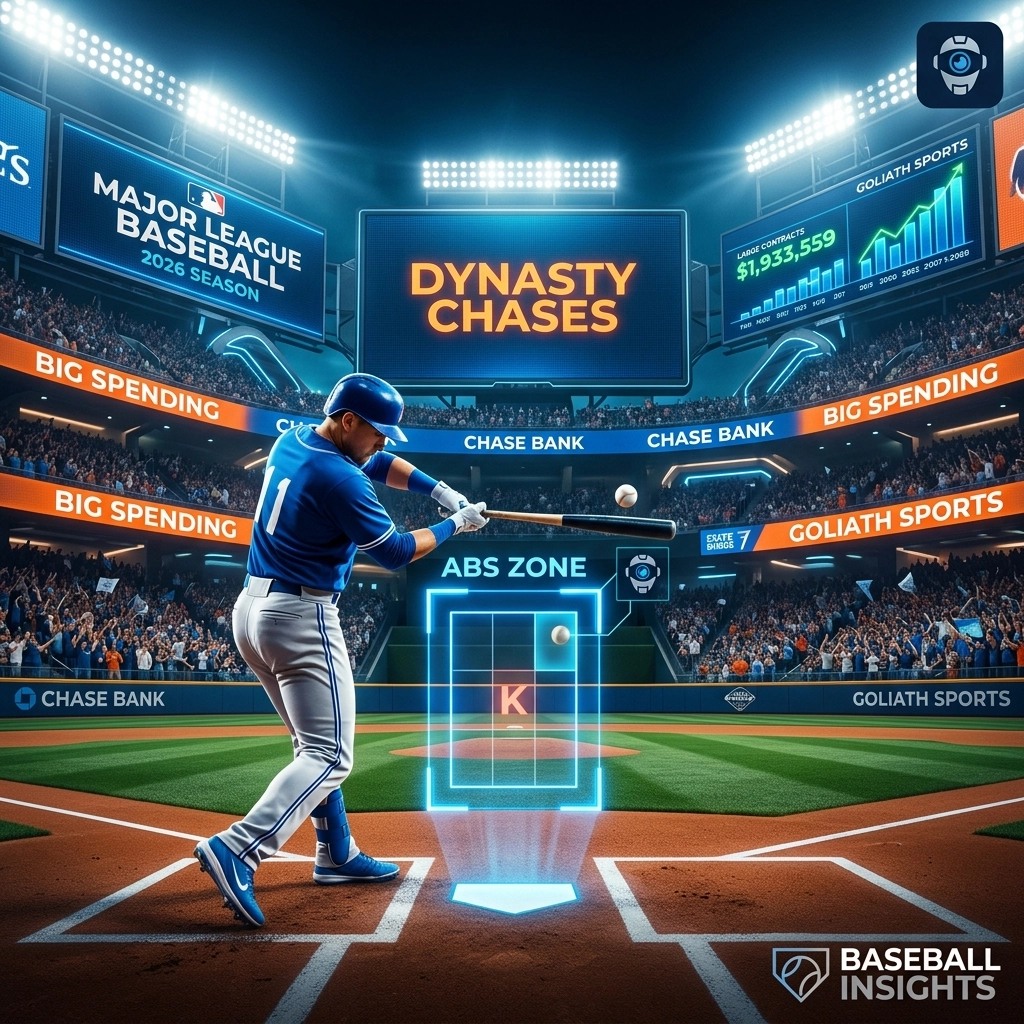
As the Los Angeles Dodgers hunt a historic three-peat and the Toronto Blue Jays look to avenge a Game 7 heartbreak, Major League Baseball has officially entered the automated strike zone age. The 2026 season opened with unusually high expectations and historic context, reshaping the competitive map before the first summer heatwave. From the rollout of the Automated Ball-Strike (ABS) Challenge System to a record-breaking financial arms race in the American League, the business of baseball is undergoing a rapid modernization.
The Dodgers’ Pursuit of a Modern Dynasty
The Los Angeles Dodgers entered the 2026 campaign chasing a milestone that has eluded every franchise for over a quarter-century. After securing World Series titles in both 2024 and 2025, the club is attempting to become the first team to "three-peat" since the New York Yankees’ legendary run from 1998 to 2000.
At the center of this pursuit is Shohei Ohtani, who continues to defy traditional aging curves and league parity. Coming off back-to-back MVP seasons, Ohtani is currently aiming for his third straight and fifth in six years. According to industry analysts, the Dodgers' success is not merely a product of high payroll, but a "permanent contention" model that blends massive commercial revenue with a top-tier player development machine.
"The Dodgers have created a template where the luxury tax is viewed as a calculated business expense rather than a deterrent," noted one sports business consultant. "By locking in Ohtani and surrounding him with a rotating cast of elite supplemental talent, they’ve mitigated the traditional boom-and-bust cycle of MLB rosters." This sustained presence at the top of the sportsmedia.news power rankings has made them the most scrutinized franchise in the sport.

Toronto’s $337 Million Response to Heartbreak
While the Dodgers represent stability, the Toronto Blue Jays represent the volatility of "all-in" spending. After suffering a devastating Game 7 loss in the 2025 World Series, the Blue Jays’ front office responded by outspending the rest of the league in free agency.
To push for their first title since 1993, Toronto committed approximately $337 million to a suite of high-impact additions. The spending spree included landing ace Dylan Cease, high-leverage reliever Tyler Rogers, international sensation Kazuma Okamoto, and veteran Cody Ponce. This aggressive strategy underscores the widening financial gap between the league’s top spenders and the middle class, as the Blue Jays look to capitalize on a competitive window that many believe is at its absolute peak.
The pressure on the Blue Jays is immense. National coverage entering Opening Day suggested that anything short of a deep October run would be categorized as a fiscal and organizational failure. The Toronto model is a direct contrast to the early-extension strategies seen in markets like Atlanta, opting instead for immediate, high-AAV (Average Annual Value) veteran acquisitions to bridge the gap to a championship.
The Arrival of the ABS Challenge Era
The most significant structural change to the game in 2026 is the official rollout of the Automated Ball-Strike (ABS) Challenge System at the Major League level. After years of testing in the minor leagues, MLB has implemented a model where umpires call the game as usual, but pitchers, hitters, and catchers can challenge calls in real-time.
Under the current 2026 rules:
- Each team receives a limited number of challenges per game.
- The challenge is instantly verified by Hawk-Eye tracking technology.
- Successful challenges are retained, while failed ones are lost.
This move marks a shift toward technological transparency. "The goal is to eliminate the egregious miss while maintaining the human element and the pace of play," an MLB operations executive stated in a league memo. The implementation has already begun to shift player valuations. Framing-first catchers, who once held significant market value for their ability to "steal" strikes, are seeing their stock drop in favor of bat-first catchers who can provide offensive production without the need for framing gymnastics.

A Historical Statistical Anomaly: The No-Hitter Drought
While the technology for tracking pitches has improved, the frequency of one of baseball's most celebrated feats has vanished. One of the more surprising storylines of the 2026 season is the continuation of a Major League no-hitter drought.
Data shows that MLB went through the entire 2025 season without a single regulation no-hitter, marking the first full-season blank since 2005. As of mid-May 2026, that drought remains intact at the big-league level. While no-hitters have occurred in the minors: such as Minnesota Twins prospect Jake Murray’s gem for Single-A Fort Myers on April 26, 2026: the Major League drought has become a point of fascination for fans and oddsmakers alike.
Experts suggest several reasons for this "dry spell":
- Managed Workloads: Pitchers are rarely allowed to chase history past the 100-pitch mark in the modern era.
- Offensive Adjustments: Despite high strikeout rates, the "all-or-nothing" approach of modern hitters occasionally results in late-inning home runs that break up shutouts.
- Elite Bullpens: The frequent use of high-velocity relievers often leads to "combined" no-hitters, which some traditionalists argue do not carry the same weight as a solo performance.
Central Divisions and Rising Stars
Beyond the coastal giants, the 2026 landscape is being shaped by emerging stars and internal divisional pressure. In the American League Central, Tarik Skubal has solidified his status as a perennial Cy Young candidate, leading a Detroit Tigers rotation that is attempting to end a long postseason drought. Similarly, Paul Skenes has become the face of pitching in the National League, providing the Pittsburgh Pirates with a legitimate anchor.
The Central divisions in both leagues are under intense pressure to prove they can compete with the spending of the East and West. Teams like the Cleveland Guardians and St. Louis Cardinals are leaning heavily on "development machines" to counter the massive free-agent contracts handed out by Toronto and Los Angeles. This "arms race" between pure capital and organizational efficiency remains the defining business conflict of the 2026 season.

Looking Ahead: The Road to October
As the summer of 2026 unfolds, the narratives established in the opening months will frame the lead-up to the trade deadline. Will the Blue Jays’ $337 million gamble pay off, or will they be forced to pivot if the standings don’t reflect their investment? Can the Dodgers maintain their health long enough to secure the first three-peat of the 21st century?
The integration of the ABS system will continue to be monitored for its impact on game times and player ejections. Early data suggests that while the "challenge" adds a brief pause, it has significantly reduced the time spent on mid-inning arguments between managers and umpires.
The 2026 season is more than just a collection of games; it is a test of MLB’s ability to modernize while maintaining the historical prestige of its records. Whether it is a rookie breaking a no-hitter drought or a veteran like Ohtani adding to an unprecedented trophy case, the stakes have rarely been higher for the business of baseball.
About the Author:
Mark Ricci is a senior contributor for SportsMedia News, specializing in NFL analysis and sports business trends. With experience covering front-office strategy, he provides deep-dive reporting on the intersection of roster construction and commercial growth in professional sports. For more updates on the business of sports, visit sportsmedia.news.