


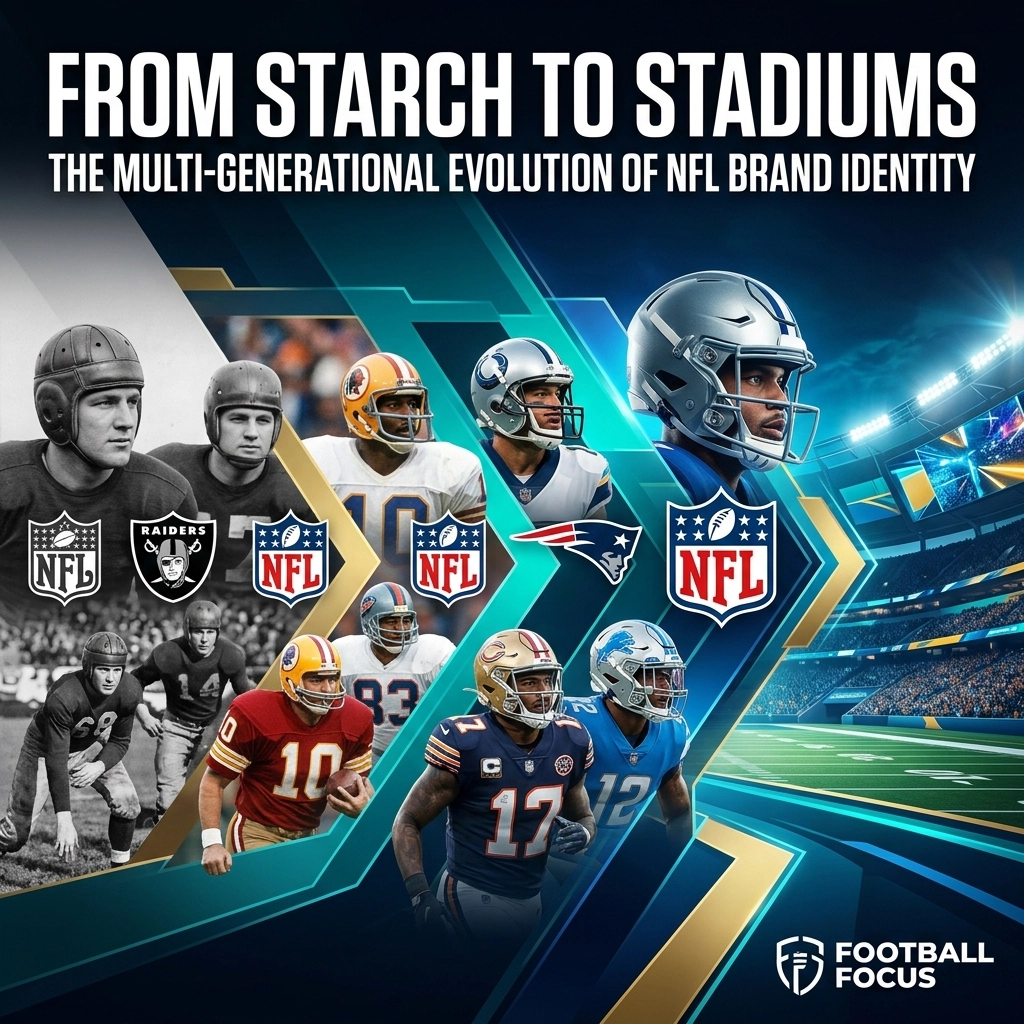
A deep dive into how team names and mascots transitioned from simple industry labels to the complex, culture-shifting symbols of the modern era.
By Mark Ricci | May 18th 2026
The National Football League (NFL) of 2026 is a global commercial powerhouse, yet its visual soul remains anchored in a century of branding evolution. What began as a loose collection of teams named after starch companies and local industries has transformed into a multi-billion-dollar ecosystem of logos, mascots, and trademarks. Today, an NFL franchise's identity is more than just a name on a jersey; it is a sophisticated financial vessel designed for high-definition broadcasts, digital "innovation," and multi-generational consumer loyalty.
The shift from the "starch" era of the 1920s to the "stadium" era of today reflects broader changes in American culture and corporate strategy. nearly $2 billion annually from tech, gambling, and alcohol partnerships: the role of the team brand has never been more central to the league's bottom line.
Early Years: Simple Nicknames and Local Roots
In the NFL’s formative decades, branding was a matter of convenience rather than a strategic exercise. Names were literal, often tied to the sponsors who paid for the equipment or the local industries that fueled the city’s economy.
The Chicago Bears, for instance, began their life in 1920 as the Decatur Staleys. The team was named after the Staley Starch Company, which employed the players. It was only after George Halas moved the team to Chicago and took full ownership that he rebranded them as the "Bears." Halas chose the name to complement the city’s baseball team, the Cubs, suggesting that football players were the larger, more formidable version of their baseball counterparts.
Similarly, the Arizona Cardinals, the oldest continuously run professional football team in the United States, found their name by accident. In 1901, founder Chris O'Brien purchased a shipment of "faded maroon" jerseys from the University of Chicago. He described the color as "cardinal red," and a legendary brand was born out of simple necessity.
In Pittsburgh, the team was originally the "Pirates," mirroring the city’s baseball club. However, in 1940, owner Art Rooney Sr. sought a distinct identity that resonated with the city’s blue-collar workforce. He settled on the "Steelers," a name that reflected the regional steel industry. This move signaled an early understanding that a team's brand could serve as a mirror to its community’s industrial heritage.

Name Changes: Moves, Rebrands, and New Identities
As the NFL matured, franchise relocations and the pursuit of larger television markets forced a more "news"-worthy approach to branding. Rebranding became a tool to reset a franchise’s narrative or to capture the spirit of a new home.
One of the most successful rebrands in league history occurred when the Houston Oilers moved to Nashville. After playing as the Tennessee Oilers for two seasons, owner Bud Adams realized the brand didn't resonate in Music City. In 1999, the team became the Tennessee Titans. This change allowed the organization to decouple from Texas oil culture and embrace a name that suggested power and mythology, perfectly timed for a run to Super Bowl XXXIV.
Other franchises have used name changes to avoid confusion or enhance marketability. The Dallas Cowboys were nearly the "Steers" and then the "Rangers," but adopted "Cowboys" before their 1960 debut to avoid a conflict with a local baseball team. The name tapped into the romanticized history of the American West, providing a bedrock for what would become "America's Team."
The New York Jets also rebranded to signal modernity. Originally the New York Titans, the team changed its name in 1963 to reflect the "Space Age." The proximity of Shea Stadium to LaGuardia Airport made "Jets" a logical choice, aligning the team with the sleek, high-speed future of air travel.
The Rise of Official Mascots
While names like the Bears and Steelers were established early, the rise of the costumed mascot is a relatively recent phenomenon. In the league’s early years, a "mascot" was often a live animal or simply a logo. The transition to human performers in oversized foam suits began in earnest during the 1980s and 90s as teams looked for family-friendly ways to drive engagement.
The Atlanta Falcons introduced Freddie Falcon in the 1980s, decades after a local teacher had won a naming contest by describing the bird as one with "great courage and fight." In 1995, the expansion Carolina Panthers launched Sir Purr alongside the team, ensuring that the brand had a tangible, approachable presence from day one.
Interestingly, even the most traditional teams eventually leaned into this trend. The Chicago Bears didn’t introduce "Staley Da Bear" until 2003, nearly 80 years after dropping the Staley Starch name. The mascot served as a clever bridge to the team’s industrial history while providing a character for youth marketing. The Pittsburgh Steelers followed suit in 2007 with "Steely McBeam," a construction worker figure designed to celebrate the team's 75th anniversary and its connection to the city's steelworking roots.
Logo and Mascot Modernization
The digital age has brought a new set of challenges for NFL branding. Logos must now be legible on everything from a massive 100-yard stadium jumbotron to a 40-pixel fantasy football app icon. This has led to a trend of simplification: removing intricate details in favor of clean lines and bold colors.
The New England Patriots’ shift from "Pat Patriot" (a detailed illustration of a minuteman) to the sleek "Flying Elvis" profile in 1993 is often cited as the gold standard for "innovation" in sports design. The old logo was difficult to reproduce and felt like a relic; the new one was built for the vector-based digital world.
The Seattle Seahawks have also refined their visual identity, keeping the core "Seahawk" name but sharpening the logo’s aesthetics to align with Pacific Northwest indigenous art and modern design trends. These updates ensure that mascots like "Blitz" and the live hawk "Taima" remain part of a cohesive, modern brand package that sells across all media platforms.

Cultural Pressure and Contested Identities
The most significant evolution in NFL identity in the 21st century has been driven by cultural pressure and a shifting understanding of racial representation. For decades, several franchises used Native American imagery as the basis for their names and mascots, often in the face of growing protest.
In 2020, the Washington franchise finally retired the "Redskins" name and logo. After two seasons as the "Washington Football Team," a period of visual minimalism that some designers found refreshing, the organization rebranded as the Washington Commanders in 2022. This change was not just a response to social pressure but a business necessity, as major sponsors like FedEx and Nike began to distance themselves from the previous brand.
The Kansas City Chiefs remain at the center of this ongoing debate. While the team has kept the "Chiefs" name, they have made incremental changes, such as banning headdresses in the stadium and modifying the "tomahawk chop" gesture. Marketing experts suggest that the Chiefs' massive success on the field has, to some extent, insulated the brand, but the pressure for a complete visual overhaul remains a constant undercurrent in league "news."
Conclusion: From Simple Labels to Layered Symbols
As we look toward the future of the NFL in 2026 and beyond, it is clear that team names and mascots have moved far beyond their humble origins. A team like the San Francisco 49ers now integrates its Gold Rush-era typography across every touchpoint, from jersey numbers to the infrastructure of the stadium
These symbols have become shared family heirlooms. A grandfather wearing a vintage "Oilers" hat and a grandson wearing a new "Titans" jersey are participating in the same historical narrative, bridged by decades of branding strategy. In an era where crypto sponsorships and global streaming rights dominate the conversation, these logos serve as the emotional anchor for fans. They are the faces of billion-dollar corporations that still, somehow, feel like home.
By Mark Ricci
Mark Ricci is a senior contributor for SportsMedia News, specializing in NFL analysis and sports business trends. With experience covering front-office strategy, he provides deep-dive reporting on the intersection of roster construction and commercial growth in professional sports.