


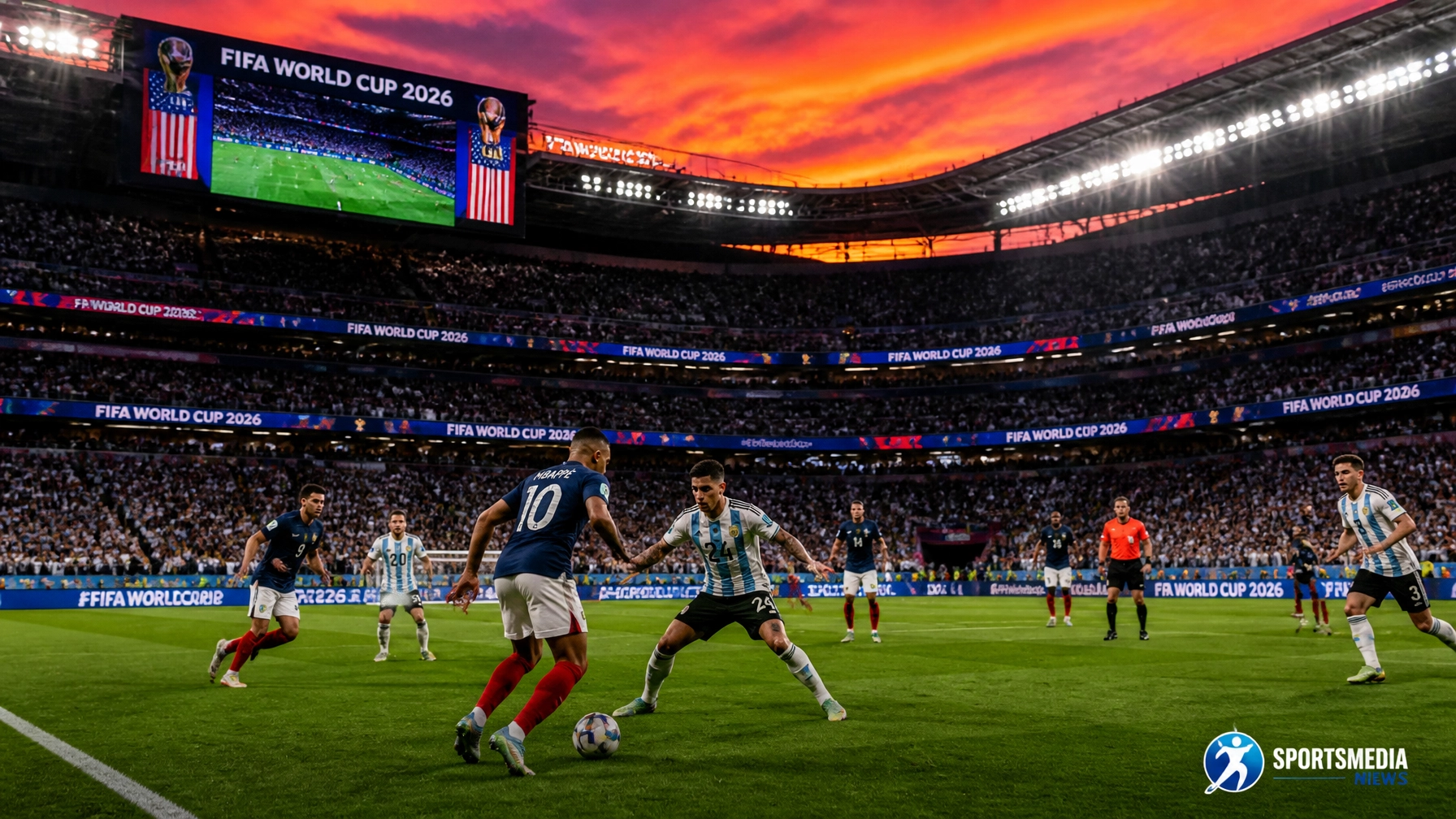
From Argentina's dramatic comeback to Switzerland's penalty heroics, the quarterfinal field is set after a round of 16 defined by fine margins and raw emotion.
By Mark Ricci | July 8th, 2026
At the 2026 FIFA World Cup, every game is a global audition. Players and teams are not only competing for a trophy; they’re shaping how fans, clubs, sponsors, and media will talk about them for years. Whether a side reaches the quarterfinals or goes out in the earlier rounds, performances at this tournament have a direct and lasting impact on reputations—individual and collective.
The path into the quarterfinals
This World Cup’s expanded format brings 48 teams into 12 groups, then a round of 32 and a round of 16 before the quarterfinals. That structure means the last eight are decided only after multiple knockout hurdles, including late comebacks and penalty shootouts that have already defined 2026.
France, Morocco, Norway, England, Spain, Belgium, Argentina, and Switzerland have all secured places in the quarterfinals, with matchups such as France vs Morocco, Spain vs Belgium, Norway vs England, and Argentina vs Switzerland. These pairings follow dramatic round‑of‑16 games, including Norway’s win over Brazil, England’s 3–2 victory over Mexico, Belgium’s 4–1 defeat of the USA, and Argentina’s 3–2 comeback against Egypt, as well as Switzerland’s penalty‑shootout win over Colombia.
For players, the step from the round of 16 into the quarterfinals marks a clear psychological shift—from simply surviving the tournament to being two wins away from the final.
Switzerland’s historic moment and player emotion

Switzerland’s penalty‑shootout win over Colombia is a good example of how players reacted to reaching the quarterfinals. After 120 minutes without a goal, Switzerland advanced 4–3 on penalties, with goalkeeper Gregor Kobel making a crucial save and substitute Rubén Vargas scoring the winning kick.
Swiss players reacted with visible relief and joy on the pitch, celebrating Kobel’s stop and Vargas’ decisive penalty in front of their supporters. In Switzerland, fan celebrations and media coverage framed the result as a landmark achievement, highlighting how much the players’ composure under pressure meant for the country’s World Cup story.
Colombia’s heartbreak and narrow exit
For Colombia’s players, the same match produced the opposite emotion. Their side created chances and pushed Switzerland throughout regulation and extra time but failed to score, then saw two penalties missed in the shootout. The narrow nature of the defeat added to the sense of frustration and heartbreak among the squad, who knew they had been close to a quarterfinal berth but fell short at the final hurdle.
Such exits often leave players visibly disappointed at full time, a reaction that reflects both the effort invested and the fine margins that decide knockout football.
Argentina’s comeback and experienced composure

Argentina’s 3–2 win over Egypt in Atlanta was another emotionally charged path into the quarterfinals. Trailing deep into the second half, Argentina rallied to complete a comeback that kept their title defense alive.
After the final whistle, Argentina’s players showed a mix of joy and relief. Senior figures, including Lionel Messi, celebrated with teammates and fans but also displayed the kind of composed leadership expected from experienced champions, knowing there is more work ahead in the last eight. Their reactions underscored how defending a World Cup title magnifies both pressure and satisfaction in knockout wins.
USA’s disappointment and Belgium’s surge

The USA’s 4–1 loss to Belgium in the round of 16 ended the hosts’ hopes of reaching the quarterfinals. As Belgium’s fourth goal went in, cameras captured U.S. players’ expressions of frustration and resignation, reflecting the realization that their home World Cup run was over earlier than they had aimed for.
Belgian players, by contrast, celebrated an emphatic win that reinforced their status as contenders. Their celebrations and post‑match interviews emphasized confidence and belief heading into the quarterfinal clash with Spain.
Mexico’s late heartbreak against England

Mexico’s 3–2 defeat to England at Estadio Azteca in the round of 16 showed how near‑misses shape emotions just before the quarterfinals. England’s win ended Mexico’s tournament, and the reaction among Mexican players and fans mixed pride in a spirited performance with deep disappointment at seeing the World Cup dream end on home soil.
On the pitch, some Mexico players dropped to their knees or were visibly tearful at full time, while England’s squad celebrated progressing in one of the tournament’s loudest stadiums.
Emotional patterns as teams enter the final eight
From these matches, several clear emotional patterns emerge as teams reach—or miss—the quarterfinals:
- Relief and joy for teams advancing. Players from Switzerland, Argentina, Belgium, England, France, Morocco, Norway, and Spain have celebrated progression with group hugs, jubilant shouts, and extended time acknowledging their supporters.
- Frustration and heartbreak for teams eliminated. Colombia’s missed penalties, the USA’s heavy defeat to Belgium, Egypt’s comeback loss to Argentina, and Mexico’s late reverse against England produced visible disappointment: players sitting or lying on the turf, heads in hands, and quiet walks off the pitch.
- Composed leadership from star players. Senior figures on top teams often balanced emotion with responsibility—celebrating the win but quickly turning to teammates, staff, and fans to keep focus on the next challenge.
These reactions matter because they feed directly into narratives about mentality, leadership, and resilience.
Why player reactions at this stage matter
How players react around the quarterfinals shapes more than just highlight packages:
- It influences how pundits and fans judge their mentality under pressure—who appears calm, who shows raw emotion, and who steps forward as a leader in moments of triumph or defeat.
- It becomes part of national memory, as images of jubilation or heartbreak are replayed whenever future tournaments are discussed.
- It contributes to individual and team reputations, reinforcing stories of heroic comebacks, painful near‑misses, or dominant wins.
As the 2026 FIFA World Cup moves into its quarterfinal phase, the emotional responses of players—whether celebrating progression or processing elimination—are becoming an integral part of how this tournament will be remembered, shaping narratives that will endure well beyond this summer.
Mark Ricci is a senior contributor for Sportsmedia News, specializing in the intersection of international soccer, sports business, and global player development.