


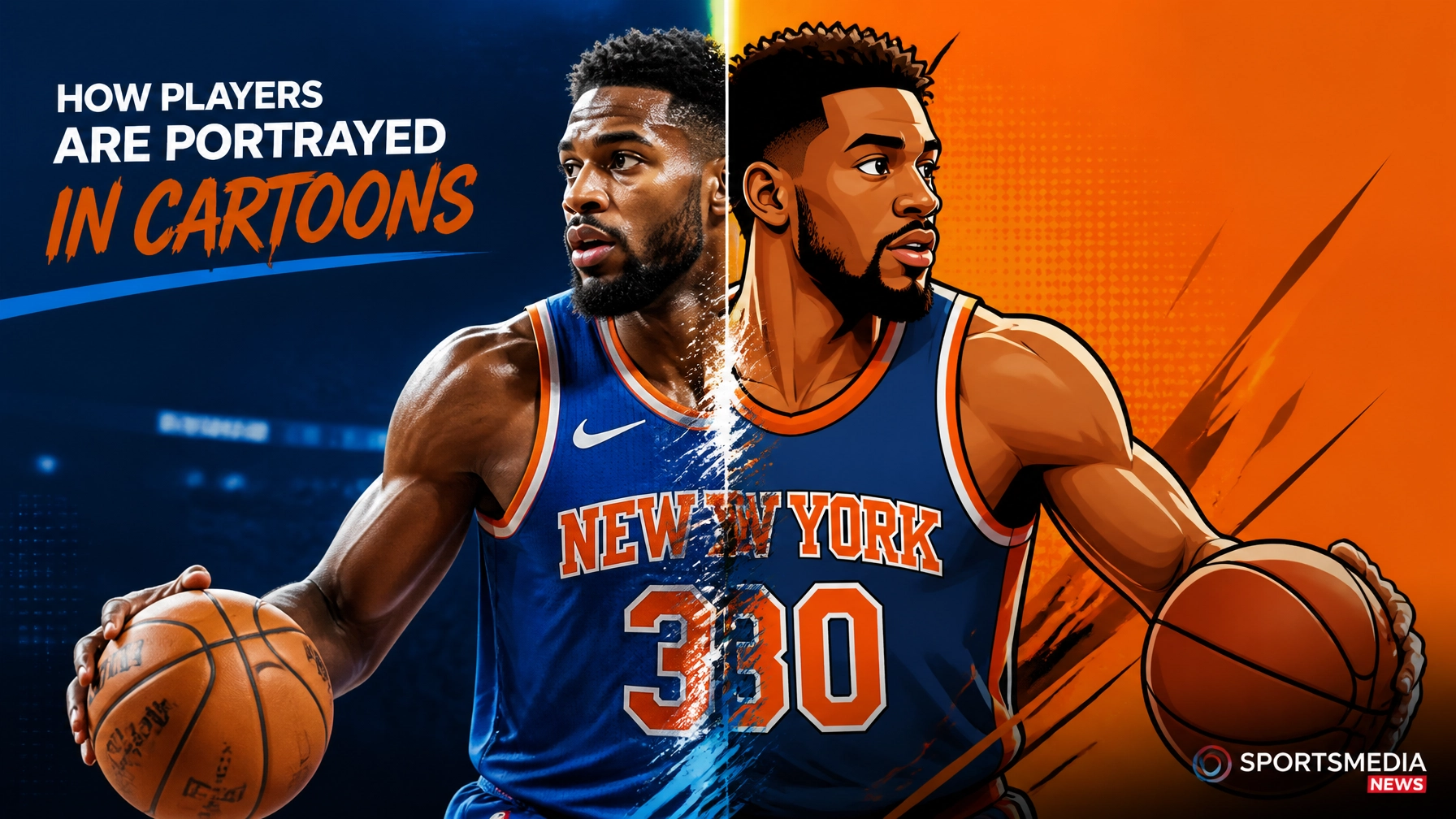
From cameos to starring roles, animated sports figures shape how children connect with athletes and the values of the game.
By Mark Ricci | July 8th, 2026
Sports players have been appearing in cartoon media for decades, moving from simple caricatures and brief cameos to starring roles and fully developed animated personas. In cartoons, they can be heroes, mentors, comic figures, or even exaggerated versions of themselves, and these portrayals help extend their influence far beyond the field or court.
Cameos as themselves
One of the most common ways athletes appear in cartoons is as animated versions of themselves. In these appearances, they usually keep their real name, sport, and basic personality, but join the cartoon’s world for a single episode or short storyline.
They might be drawn into the main characters’ adventures, playing in fictional games or helping solve a problem. Their signature skills or catchphrases are often highlighted—an iconic shot, a famous celebration, or a well‑known nickname. These cameos let fans see familiar sports stars in a playful, exaggerated setting, and they often introduce kids to athletes they might not yet watch in real matches.
Fictionalized versions and “cartoon selves”
Cartoons also like to use fictionalized versions of sports players—animated characters who clearly resemble a real athlete but are given new traits, powers, or story arcs.
The character might share the athlete’s name and sport but be placed in fantastical situations: flying through space, fighting cartoon villains, or playing in imaginary leagues. Writers can exaggerate certain personality traits (confidence, shyness, clumsiness) to make the story fun and accessible to children. This approach allows creators to celebrate an athlete’s fame and skills while telling stories that fit the tone of the cartoon, whether it’s comedic, adventurous, or educational.

Athlete‑led cartoon series
In some cases, sports players don’t just guest‑star—they lead the cartoon. These shows build entire story worlds around a small group of athletes transformed into animated heroes.
The athletes become recurring main characters with distinct roles: team leader, strategist, comic relief, or powerhouse. Episodes often blend sports action with broader themes such as teamwork, courage, fairness, and environmental or social messages. By anchoring the series on recognizable sports figures, these cartoons give children a set of role models who combine athletic talent with positive values and problem‑solving skills.
Mentors and coaches in children’s cartoons
Sports players in cartoons frequently appear as mentors or coaches, guiding younger characters through challenges.

They teach the basics of the sport—practice, persistence, and learning from mistakes—while also modeling good sportsmanship. Their advice often extends beyond the game: dealing with fear, coping with failure, valuing education, or treating others kindly. For young viewers, seeing a star athlete calmly explain that “everyone gets scared sometimes” or that “quitting isn’t the answer” can reinforce life lessons in a memorable way.
Sports players as humorous or exaggerated characters
Cartoon media also uses athletes as sources of humor. In these portrayals, familiar sports traits are pushed to extremes.

A famously strong player might be drawn as impossibly powerful, performing outrageous feats that would be impossible in reality. A known quirk or stereotype—like a pre‑game ritual or a favorite snack—might become a running joke. This playful exaggeration helps humanize athletes, making them approachable and entertaining rather than distant or serious.
Thematic roles: teamwork, courage, and fairness
When sports players appear in cartoons aimed at children, they often carry specific thematic responsibilities.
- Teamwork: Showing that winning requires cooperation, passing the ball, and supporting teammates.
- Courage: Demonstrating how to face tough opponents, try new things, or admit mistakes.
- Fairness: Emphasizing rules, respect for referees, and kindness toward opponents.
Through stories that mix games and everyday situations, these animated athletes help children connect sports values with school, friendships, and family life.
Visual style and recognizability
Cartoon portrayals of sports players usually lean into recognizable visual cues:
Distinctive jerseys, numbers, hairstyles, or accessories make it easy to identify the athlete. Animators capture signature moves—a particular shot, swing, or celebration—so the character feels “authentically” like the real person. Even when the style is highly stylized or simplified for younger audiences, these details maintain a link to the athlete’s real‑world persona.
Impact on young viewers
Seeing sports players in cartoon media does more than entertain:

It introduces children to different sports and athletes in a friendly, non‑intimidating way. It reinforces positive messages about practice, effort, kindness, and resilience. It allows kids who don’t regularly watch live games to still feel connected to the broader world of sports. By combining familiar animated storytelling with recognizable athletic figures, cartoons help turn sports players into accessible heroes, teachers, and companions on the screen—shaping how children understand both sports and character.
Mark Ricci is a senior contributor for Sportsmedia News, specializing in the intersection of sports, media, and youth culture.