


By Mark Ricci | July 8th, 2026
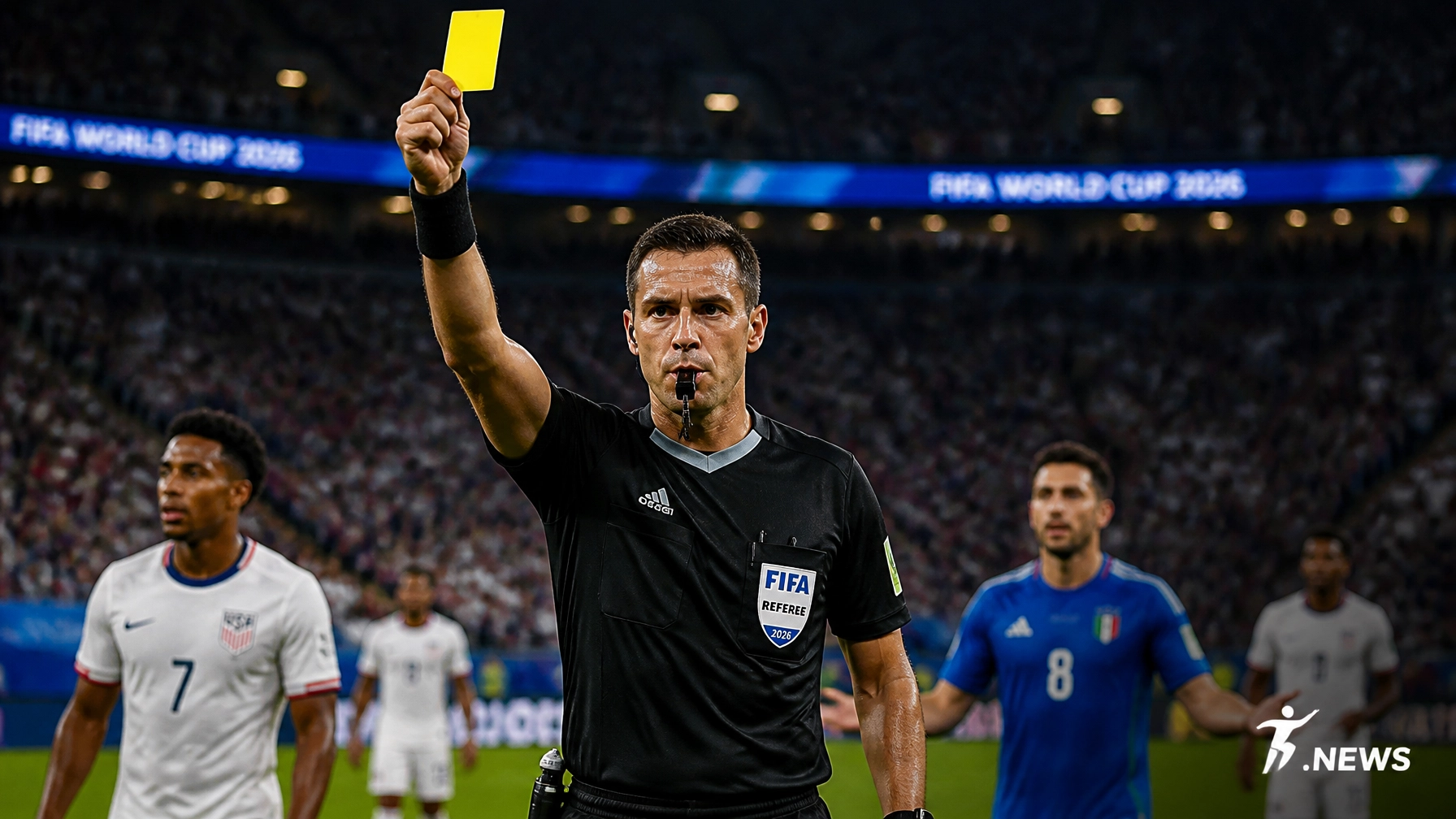
Referees at the FIFA World Cup sit at the heart of the tournament's drama. Their job is to apply the Laws of the Game under intense pressure, keep matches flowing, and make split‑second decisions that can decide who advances and who goes home. In 2026, their work has been widely praised in some quarters and sharply criticized in others, highlighting how complex and visible modern officiating has become.
What World Cup referees are asked to do
To reach a World Cup, referees must pass through years of elite officiating, fitness tests, and performance reviews. Only a small fraction of the world's top officials are selected, and FIFA monitors them closely throughout the tournament. There are clear expectations:
- Maintain control of high‑stakes matches featuring some of the world's fastest and most skillful players.
- Apply updated rules intended to reduce time‑wasting and improve game flow, such as strict handling of delays on substitutions, goal‑kicks, and injury treatment.
- Work seamlessly with assistant referees and the video assistant referee (VAR) team to correct clear errors without unnecessarily stopping the game.
In 2026, rules analysts and former referees have noted that referees are balancing physicality with discipline, issuing straight red cards for serious physical fouls and confrontation while letting robust but fair challenges stand. This has contributed to matches that feel faster and more end‑to‑end than some past tournaments.

Evidence that many referees are doing their jobs well
Independent ratings and commentary suggest that, overall, World Cup referees are performing at a high level:
- Performance tables that track referees through the knockout rounds have given top officials scores around 9 out of 10, praising their advantage management, communication with players, and willingness to let games flow when possible.
- Detailed referee statistics show consistent patterns in foul calls, cards, and added time across multiple matches, indicating that officials are applying guidelines in a broadly uniform way rather than improvising from match to match.
- Pundits on major broadcasts have highlighted how new time‑wasting rules, like temporary exclusion for slow substitutions or turning overly delayed goal‑kicks into corners, have been enforced effectively, discouraging tactical delays without constantly interrupting play.
These positives support the view that the 2026 referee group is well‑prepared and that FIFA's instruction and training programs are having real effects on match quality.
VAR and increased accuracy
Video review has become central to World Cup refereeing. In 2026, VAR is used not only for goal‑line decisions and penalties, but also for offsides, who last touched the ball for restarts, and potential red‑card incidents.

When it works as intended:
- Clear mistakes, like missed handballs in the box or wrongly disallowed goals, can be corrected quickly.
- Officials gain confidence that their match‑deciding calls have been checked against multiple camera angles.
- Fans see more transparency around major decisions, especially when broadcasters explain what was reviewed and why a call stood or changed.
Supporters of VAR and current refereeing argue that this system, combined with on‑field experience, makes World Cup officiating more accurate than at any point in the tournament's history.
Criticisms and controversy
Despite these strengths, opinions on referees at the World Cup vary widely, and 2026 has had its share of controversy.
High‑profile complaints
Some matches have generated anger and formal protests:
- Egypt's elimination at the hands of Argentina prompted strong accusations from Egyptian players, coaches, and the media about unfair refereeing and inconsistent VAR use. They argued that key decisions: penalties, disciplinary calls, and added time, favored Argentina and filed a complaint with FIFA, saying the tournament felt "directed" toward the defending champions.
- Fans and commentators have pointed to other examples in which they believe clear fouls were missed or yellow cards should have been upgraded to red, citing specific incidents to claim bias or incompetence.
These reactions show how a single match can shape perceptions of refereeing, even when most games pass without major incident.

Fan frustration with inconsistency
Beyond specific matches, many supporters express general dissatisfaction:
- Some feel that referees are inconsistent in how they use VAR: intervening for borderline incidents in one game while ignoring apparently similar situations in another.
- Online discussions frequently mention missed red cards, debatable penalty decisions, and differing thresholds for physical contact, arguing that these issues erode trust in officials.
- When many knockout matches are decided by a single goal, every perceived error or inconsistency can feel decisive, intensifying criticism.
For these fans, the promise of video review was to eliminate "clear and obvious" mistakes, and any remaining controversy feels like a broken promise.
Balancing flow and fairness
One of the central tensions in evaluating World Cup referees is the balance between keeping matches fluid and policing every infringement:
- Referees who "let the game flow" are praised for avoiding constant whistles and letting stars show their skills, but they may be accused of missing fouls or failing to protect players.
- Officials who call more fouls and use cards more frequently can be criticized for disrupting the rhythm, even if they are technically correct.
In 2026, rule changes to deter time‑wasting and faked injuries give referees more tools, but also more decisions to make. Supporters of the new approach say matches feel less cynical and more dynamic; critics argue that additional rules introduce new gray areas where judgment and discretion can differ from official to official.
Overall opinions: respect, skepticism, and recognition
Taken together, views on World Cup referees in 2026 fall into a few broad camps:
- Respectful but realistic: Many fans and analysts acknowledge that refereeing is extremely difficult at this level, and that most officials perform well. They see occasional errors as inevitable and believe VAR and training have raised the overall standard.
- Skeptical and critical: Others focus on high‑profile controversies and inconsistencies, particularly when their own teams are affected. For them, perceived bias or repeated mistakes overshadow the majority of correct decisions.
- Institution‑focused: Some observers note that pressure comes not only from individual referees but also from tournament organizers, rule changes, and technology frameworks. They argue that any serious critique must consider how FIFA's systems and directives shape what referees can and cannot do.
In the end, referees at the 2026 FIFA World Cup are doing complex, demanding work under the brightest possible lights. Many decisions are correct and quietly accepted; a smaller number are disputed and loudly debated. How well they are judged depends not just on accuracy, but on the stakes of each call, the transparency of the process, and the emotions invested by millions of supporters around the world.
Mark Ricci is a senior contributor for Sportsmedia News, specializing in international soccer, tournament officiating, and the business of sport.