


By Jacob Potter | July 17, 2026
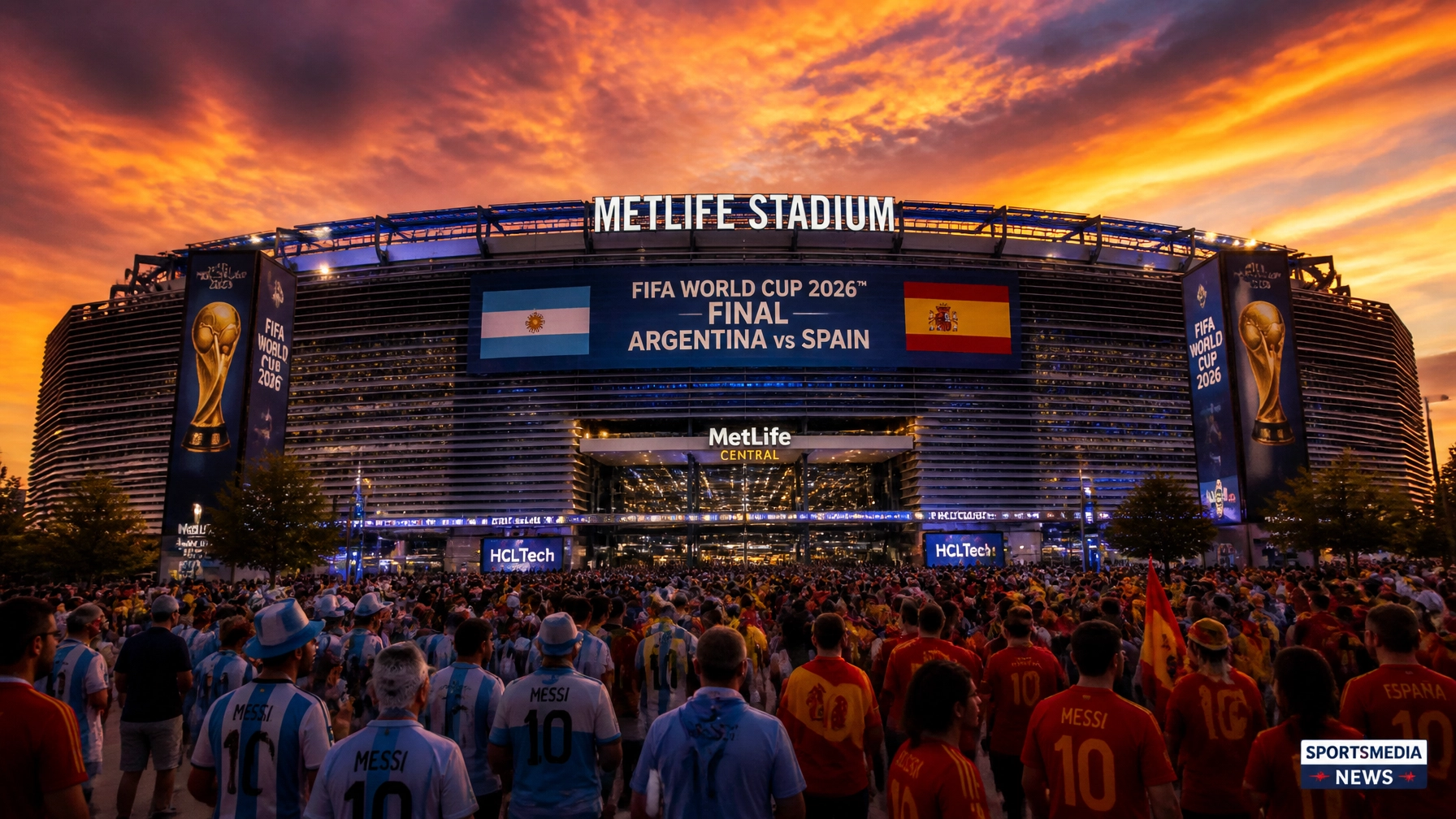
The pinnacle of global sport returns to North American soil this Sunday as Argentina and Spain prepare to face off in the 2026 FIFA World Cup final. Kickoff is scheduled for 3:00 p.m. ET at MetLife Stadium in East Rutherford, New Jersey, where an expected crowd of 82,500 will witness a match that transcends mere athletic competition. For Argentina, it is a chance to secure back-to-back world titles for the first time since Brazil achieved the feat in 1962. For Spain, it is an opportunity to reclaim the throne they last occupied in 2010.
At the center of this hurricane is Lionel Messi. At 39 years old, the Argentine captain enters his sixth and final World Cup final not merely as a participant, but as the tournament’s most dominant force. With eight goals in seven matches and a statistical record that has rewritten history books, Messi stands on the precipice of a second consecutive World Cup victory: an achievement that many believe would finalize his status as the greatest athlete to ever live.
The road to MetLife
Both finalists arrive in New Jersey having navigated high-stakes semi-finals that showcased their contrasting identities. Argentina’s path was defined by the late-game resilience that has become their hallmark under manager Lionel Scaloni. Facing England in the semi-final, the Albiceleste trailed until the closing stages before a masterclass in opportunistic finishing turned the tide. Enzo Fernández found the equalizer in the 85th minute, followed by a stoppage-time winner from Lautaro Martínez in the 90+2 minute to secure a 2-1 victory.
Spain, meanwhile, reached the final through a display of cold, clinical dominance. Their 2-0 semi-final victory over France was a tactical strangulation, featuring a penalty from Mikel Oyarzabal and a strike from Pedro Porro. While Argentina is the tournament’s highest-scoring team, Spain is its most impenetrable. The Spanish defense has allowed only one goal in the entire tournament, recording six clean sheets in seven games.

A passing of the torch
Beyond the tactical battle lies a narrative of generational transition. The final pits 39-year-old Lionel Messi against Spain’s 19-year-old sensation, Lamine Yamal. The age gap — two full decades — represents one of the most significant veteran-versus-prodigy matchups in the history of the sport.
Yamal, who was only five years old when Messi won his fourth Ballon d'Or, has been the creative engine for a Spanish side that is currently on an unbeaten run of more than 37 matches. This clash is viewed by many as a symbolic "passing of the torch," though Messi has shown little interest in relinquishing his flame.
The statistical case for the GOAT
If Argentina emerges victorious on Sunday, the argument for Messi as the greatest athlete of all time moves from the realm of opinion to the territory of statistical certainty. A win would give Messi a trophy cabinet containing two World Cups, two Copa Américas, and eight Ballon d’Ors — a resume that rivals or exceeds the peak achievements of icons like Michael Jordan, Tom Brady, Pelé, and Diego Maradona.
Messi already holds the record for most World Cup goals (21) and most World Cup assists (12) in history. In this tournament alone, he has contributed to 13 goals, leading all players in goal involvements.

Tactical battle: Possession vs. Counter-attack
Sunday’s final marks the first time the top two teams in the FIFA rankings have met in a World Cup final since the ranking system began in 1992. The tactical matchup is a purist’s dream: Spain’s relentless possession-based system against Argentina’s explosive counter-attacking brilliance.
The individual battle for midfield control will likely center on Spain’s Rodri and Argentina’s midfield engine. Rodri has been the tournament’s most efficient distributor, acting as the shield for a defense that has conceded just once. His primary task will be to deny Messi the space "between the lines" where the Argentine captain typically orchestrates play.
Impact on the sporting landscape
The 2026 final is also a massive commercial and cultural milestone for North American sports. Broadcasted on FOX and Telemundo in the United States, the match is expected to shatter viewership records for soccer in the region. The choice of MetLife Stadium highlights the industry's shift toward large-scale, high-capacity venues capable of hosting "mega-events" that blend sport with entertainment.

Lasting impacts
As the sun sets over East Rutherford on Sunday, the result will dictate the narrative of football for the next generation. A Spanish victory would herald a new era of dominance for a young, disciplined squad that has mastered the modern game. An Argentine victory would cement a legacy of greatness that may never be replicated.
Regardless of the outcome, the 2026 World Cup final promises to be a definitive moment in sporting history — a day when immortality is finally within reach.