


By: Gianna Postiglione, Intern Journalist
Publication date: June 3, 2026
Wednesday, March 25, 2026, was a historic day for Major League Baseball and New York. The introduction of the Automatic Ball-Strike System, otherwise known as the ABS Challenge System, was implemented for the first time in a Major League game.
New York was heavily involved, with the first ABS challenges coming from the Yankees and the Mets. Jose Caballero of the Yankees had the first-ever ABS challenge, though it was unsuccessful (the pitch was a strike). The first successful challenge came the next day, on March 26, with Francisco Alvarez of the Mets.
The ABS Challenge System is a technology-based challenge system that allows each team two challenges per nine-inning game. The pitcher, catcher, and batter are allowed to challenge a call roughly within two seconds after the call is made. The time constraint is intended to prevent players from getting help from the bench or other players. A challenge is only retained if it is successful; otherwise, it is lost. To initiate a challenge, the player must tap their hat or helmet within two seconds of the pitch being called a ball or a strike.

If the umpire thinks the player got outside help or took too long to challenge, they are allowed to deny the challenge. When a game goes into extras, if a team is out of challenges, they are granted one challenge for the beginning of the 10th. If they use that challenge before the 11th inning, they are granted another challenge in the 11th inning. This system will continue until the game is complete. A team will not receive an extra challenge in extra innings if they already have a remaining challenge when they start the inning.
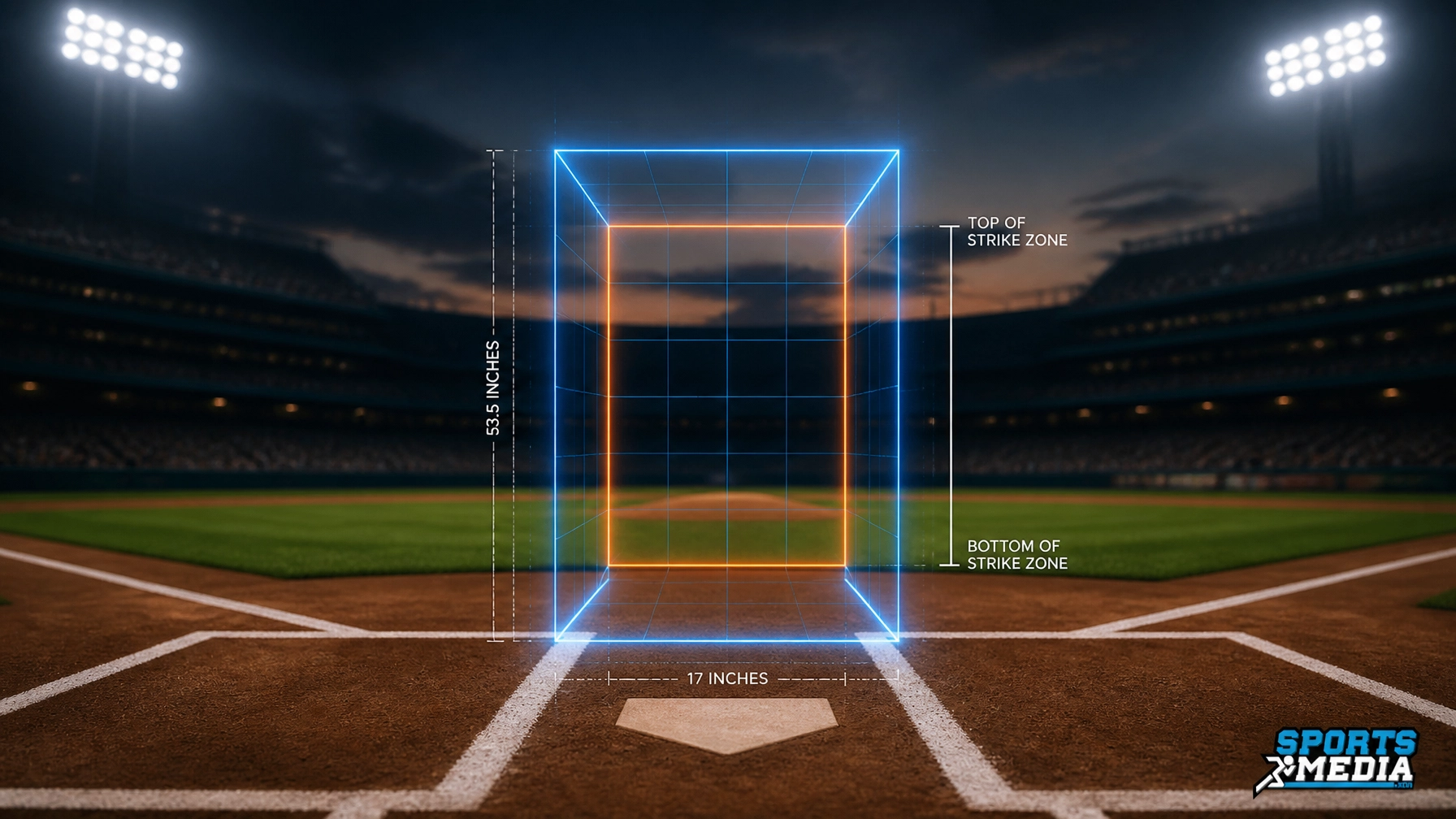
What is the criteria used to determine a ball or a strike? The strike zone is different for each player. During Spring Training, each player had their height measured: no shoes on, no hat, no helmet. With that measurement, each player’s strike zone was calculated and input into the technology system. Horizontally, each player has the same zone, 17 inches wide; this is the width of home plate. Therefore, each player's vertical strike zone is dependent upon their height. The top of the zone is 53.5% of their height, while the bottom of the zone is 27% of their height.

If Aaron Judge is measured at 6 feet 7 inches (79 inches), the top of his zone is about 42.3 inches off the ground, while the bottom of his zone is about 21.3 inches off the ground. On the other end, Jose Altuve is 5 feet 6 inches. The top of his zone would be roughly 35.3 inches off the ground, and the bottom of his zone would be about 17.8 inches off the ground. If the ball touches any part of this “box” that is created with the dimensions of the player's height, then the ball is considered a strike. It does not have to be completely inside the box.
Since the system has been put in place, there have been 3,740 challenges across the Major Leagues. There have been 1,975 successful challenges and 1,765 lost challenges. This shows that the league as a whole has a 53% success rate with the new system.
Data shows that pitchers and catchers show a greater success rate than hitters do. Hitters show a 47% success rate, while pitchers and catchers show a 58% success rate.

The speed of the process is a key factor in this being so effective in the league this year. According to the MLB, it takes, on average, 13.8 seconds for the ball to be challenged and for the result of the call to be received from the ABS.
Could this be a gateway to fully automated umpiring? The ABS system does not completely remove the human element. However, amid the ongoing debate over umpire accuracy, this could be a step in that direction. While we only have a small sample size with ABS thus far, early data show its effectiveness. This offers a glimpse into how ABS could shape the future of Major League Baseball.