


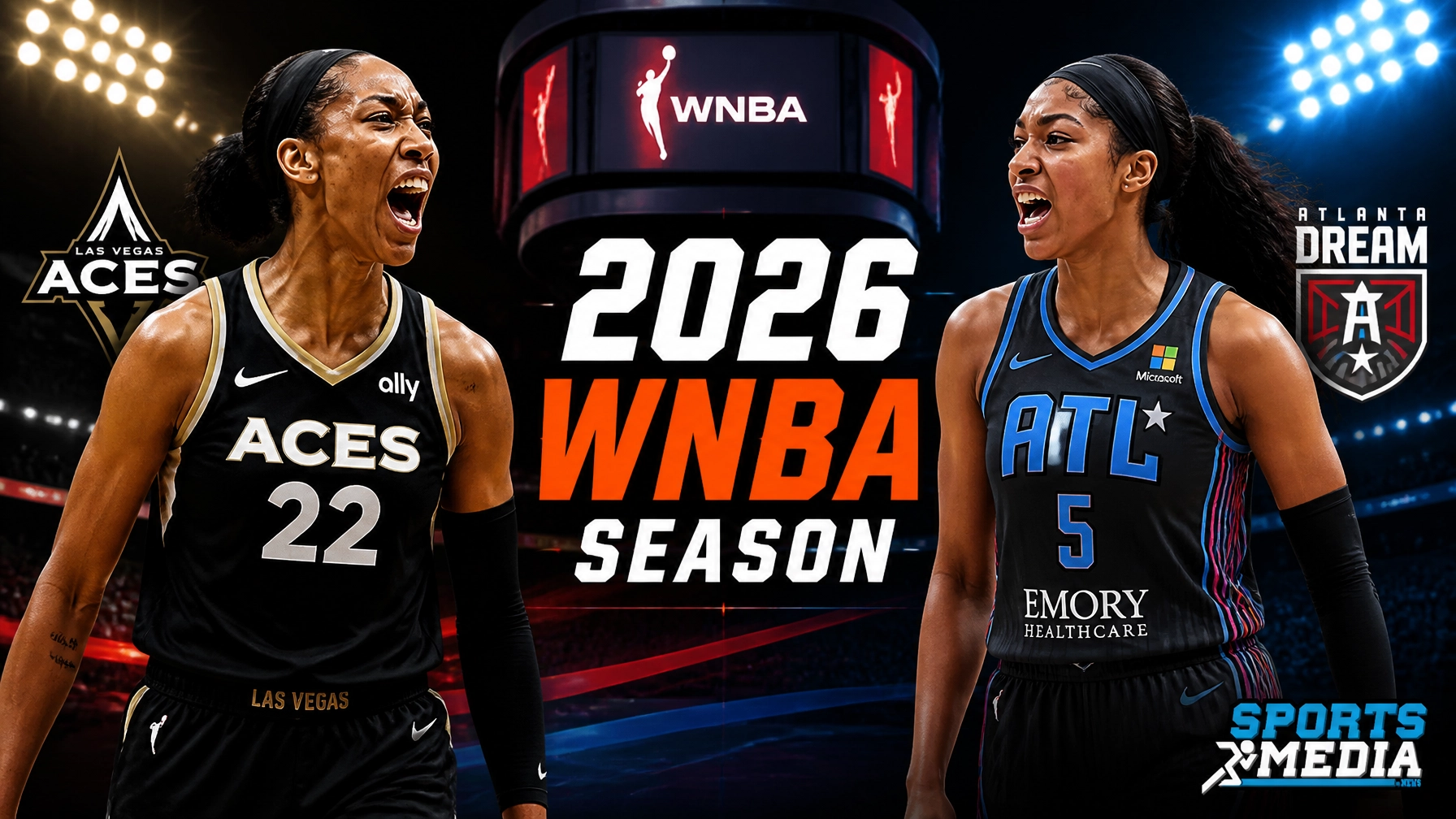
The 2026 WNBA season has already delivered expansion milestones, superstar dominance, and a wave of young talent producing viral moments. It’s shaping up as a year where the league’s growth off the court is matched by the quality and drama on it.
By Mark Ricci
June 4, 2026
The 2026 WNBA season has crossed a significant threshold, evolving from a period of steady growth into a full-scale transformation of the professional sports landscape. With the league expanding to 15 teams and revenue streams reaching record highs, the "W" is no longer just a rising property: it is a dominant force in the global sports business. From the high-stakes arrival of new franchises in Portland and Toronto to the historic individual achievements of established superstars, the opening weeks of the 2026 campaign have set a blistering pace for what many analysts believe will be a watershed year for women’s athletics.
Expansion Era: Portland Fire’s Instant Drama
The league entered 2026 with a bold new look, adding the Portland Fire and Toronto Tempo as expansion franchises. This growth marks the WNBA's first foray into a 15-team structure, a move that league executives suggest is only the beginning of a larger roadmap for mass adoption. The revival of the Portland Fire brand, in particular, has struck a chord with legacy fans and new enthusiasts alike, returning professional basketball to a city that has been without a WNBA presence since the original Fire franchise folded in 2002.

"The return to Portland isn't just about nostalgia; it’s about tapping into one of the most sophisticated basketball markets in North America," says Dr. Elena Rodriguez, a professor of Sports Management who specializes in league expansion. "By reviving the Fire name, the league leveraged existing brand equity while launching into an era where the financial infrastructure for women's sports is vastly superior to what it was twenty years ago."
In the 2026 expansion draft held in early April, Portland focused on building a versatile, defensive-minded foundation. The Fire’s inaugural roster features established contributors like Bridget Carleton and Megan Gustafson, as well as high-upside players such as Nika Mühl and Emily Engstler. This strategic mix of veteran leadership and young talent was designed to ensure the team remained competitive from opening night: a goal they achieved in spectacular fashion.
Toronto followed a parallel trajectory with the Tempo, making an aggressive splash in the free-agent market. By securing playmakers like Julie Allemand and scoring threats like Marina Mabrey, the Tempo signaled its intention to be an immediate contender in the Eastern Conference. The broader business implication of this expansion is reflected in the league's rising sponsorship valuation. As noted in recent industry reports, sports sponsorship spending has seen a significant uptick, with social-media-adjusted ad values reaching new heights as brands scramble to align with the WNBA’s diverse and engaged fan base.
Buzzer-Beaters and Late-Game Chaos
While business expansion has dominated boardrooms, the on-court product has delivered parity and drama that have kept social media feeds perpetually refreshed. The 2026 season has already seen a higher frequency of games decided by five points or fewer than the same period in 2025, a testament to the deepening talent pool.
One of the signature early-season moments occurred in Portland, where the Fire secured their first win in franchise history against the powerhouse New York Liberty. With the game tied and the clock winding down, Sarah Ashlee Barker drove the lane and sank a contested layup at the buzzer. The resulting "walk-off" win became an instant viral sensation, serving as the definitive "we’re here" moment for the expansion club.
This "clutch" theme has become a league-wide phenomenon. A recent marketing campaign under the tagline “records climbed and highlights followed” highlighted a four-game slate in early June that featured three separate final-minute lead changes. "The pace of the game is significantly higher this year," notes veteran scout Marcus Thorne. "We’re seeing teams lean into a high-volume, high-efficiency style that mirrors the evolution of the modern game, and the fans are responding to that intensity."
Star Power: A’ja Wilson, Breanna Stewart, and a Deep Top Tier
At the summit of the league’s hierarchy, the 2026 MVP race is already shaping up as a clash of titans. A’ja Wilson of the Las Vegas Aces continues to set the gold standard for individual excellence. Entering the 2026 season, Wilson made history as the first player in WNBA history to win four MVP awards, a feat that has placed her firmly in the conversation for the greatest of all time.

Wilson’s dominance is being challenged nightly by the New York Liberty’s Breanna Stewart, creating a rivalry that serves as the league’s primary narrative engine. However, the 2026 season is defined by more than just a two-player race. A recent ranking of the top 25 WNBA players highlights an unprecedented depth of elite talent:
- A’ja Wilson (Las Vegas Aces)
- Napheesa Collier (Minnesota Lynx)
- Breanna Stewart (New York Liberty)
- Alyssa Thomas (Phoenix Mercury)
- Jackie Young (Las Vegas Aces)
The presence of stars like Sabrina Ionescu, Kelsey Plum, and rising sensations like Caitlin Clark and Paige Bueckers in the top 25 underscores a "super-team" era in which talent is distributed across multiple championship-caliber rosters. This concentration of star power has led to an arms race for mass adoption, as teams and the league office leverage individual players' brands to secure high-value endorsement deals and broadcast partnerships.
Breakout Performances: The Angel Reese Factor
Beyond the established superstars, the 2026 season has been defined by the rapid evolution of its younger stars. Angel Reese of the Atlanta Dream has emerged as a statistically dominant force, blending a relentless rebounding style with an improved playmaking arsenal.
In a recent 86–66 victory over the Portland Fire, Reese delivered a masterclass performance, posting 18 points, 12 rebounds, and 5 assists. This outing marked her fourth double-double in just seven games, a level of consistency that has silenced skeptics regarding her transition to the professional level.

"What we're seeing from Reese isn't just a hot streak; it's the result of a player whose physical tools are now being matched by her basketball IQ," says Thorne. "When you have a player who can anchor a defense and facilitate the break, you have a cornerstone for a championship-contending franchise."
Reese’s performance is emblematic of a broader trend: the "sophomore slump" has largely disappeared in the 2026 WNBA. Players are entering the league more prepared than ever, thanks to improved player development pipelines and the increasing professionalism of collegiate programs.
Why 2026 is a Turning Point
The convergence of expansion, peak superstar performance, and viral young talent has positioned the 2026 season as a pivotal moment in the league’s 30-year history. The WNBA is no longer seeking legitimacy; it is asserting it. The business metrics: ranging from jersey sales to arena attendance: all point toward a league that has successfully navigated the transition from a niche interest to a mainstream cultural staple.

As the Finals approach later this summer, the narrative will likely continue to shift between the legacy-defining pursuits of Wilson and Stewart and the disruptive energy of the expansion teams. Regardless of who lifts the trophy, the 2026 season will be remembered as the year the WNBA's infrastructure finally rose to meet the immense talent of its athletes.
Mark Ricci is a senior sports business analyst for Sportsmedia News. Covering league dynamics, event analytics, and industry trends, Mark provides in-depth insights into the intersection of athlete performance and sports commerce.