


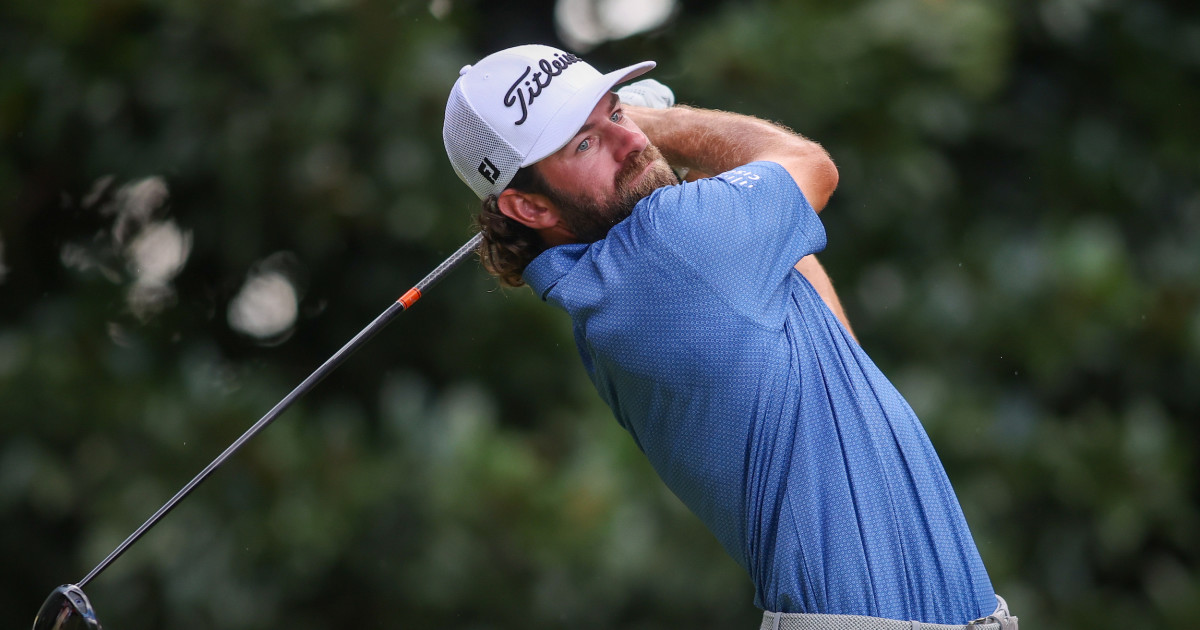
Cameron Young’s one of the longest hitters on the PGA Tour, with the one-time winner averaging a whopping 313.2 yards off the tee during the 2025 season — which ranked him 20th in driving distance.
While Young can bomb his drives, he doesn’t always need to. So like any great golfer, he has to have the ability to mix and match different types of shot shapes — from draws to fades, and higher-flighted to lower-flighted tee shots.
During a recent golf lesson on the driving range at Panther National in Jupiter, FL., Young showed me some of the differences between his tee shots, explaining when he may use a fairway finder versus an all-out bomb.
Cameron Young’s Driving Range Lesson
As a former pitcher in baseball, I’ve always understood the importance of mixing in off-speed pitches with a straight fastball. Not only does it keep the hitter guessing, but it’s a good way to still pound the strike zone to avoid trouble.
During my lesson with Cameron Young, the PGA pro pretty much echoed that same strategy on the golf course, explaining how, why, and when he might used a different type of tee shot — like a knockdown shot — depending on the hole’s layout or the weather conditions.
When I describe a pretty relatable scenario to Young — trying to “go for it” by bombing a drive on a short par-4 — he actually says his preference is hitting a safer fairway finder instead.
“I’ve got two different [types of tee shots] that I’ll hit that are a little off-speed and different shapes,” Young says. “I’ll sometimes hit a lower fade if the wind or the hole [layout] calls for that, and then I’ve got one that I basically tee on the ground that wants to come out right-to-left.”
Having the discipline to pull back from “gripping it and ripping it” can be a struggle for amateur players, so Young shows how he utilizes the two different types of tee shots, specifically explaining the importance of his fairway finder.
“On the [fairway finder], it’s catching [the ball] on the bottom of the face on purpose — because it’s teed up low enough that you can’t really hit the center,” Young explains. “The keeps the ball speed down a little bit, the spin goes up, and it carries about 20 yards shorter than a normal one.”
While Young might be sacrificing distance on this fairway finder shot, it gives him the opportunity to avoid risks, which, in return, can lead to lower scores.
“I think of that as a 280-to-285-yard carry, and since it has so much spin, it tends to stop pretty quick,” he adds. “So it’s almost like hitting a 2-wood or strong 3-wood, with the shape being really playable; especially in wind, where it wants to hold its shape into the wind.”
By incorporating this type of lower-flighted tee shot like Young does, you’ll hit (and hold!) more fairways, while overcoming any nasty weather conditions — especially as we enter fall and winter golf season — which, ultimately, can reduce your scores.