


By Mark Ricci
July 6th, 2026
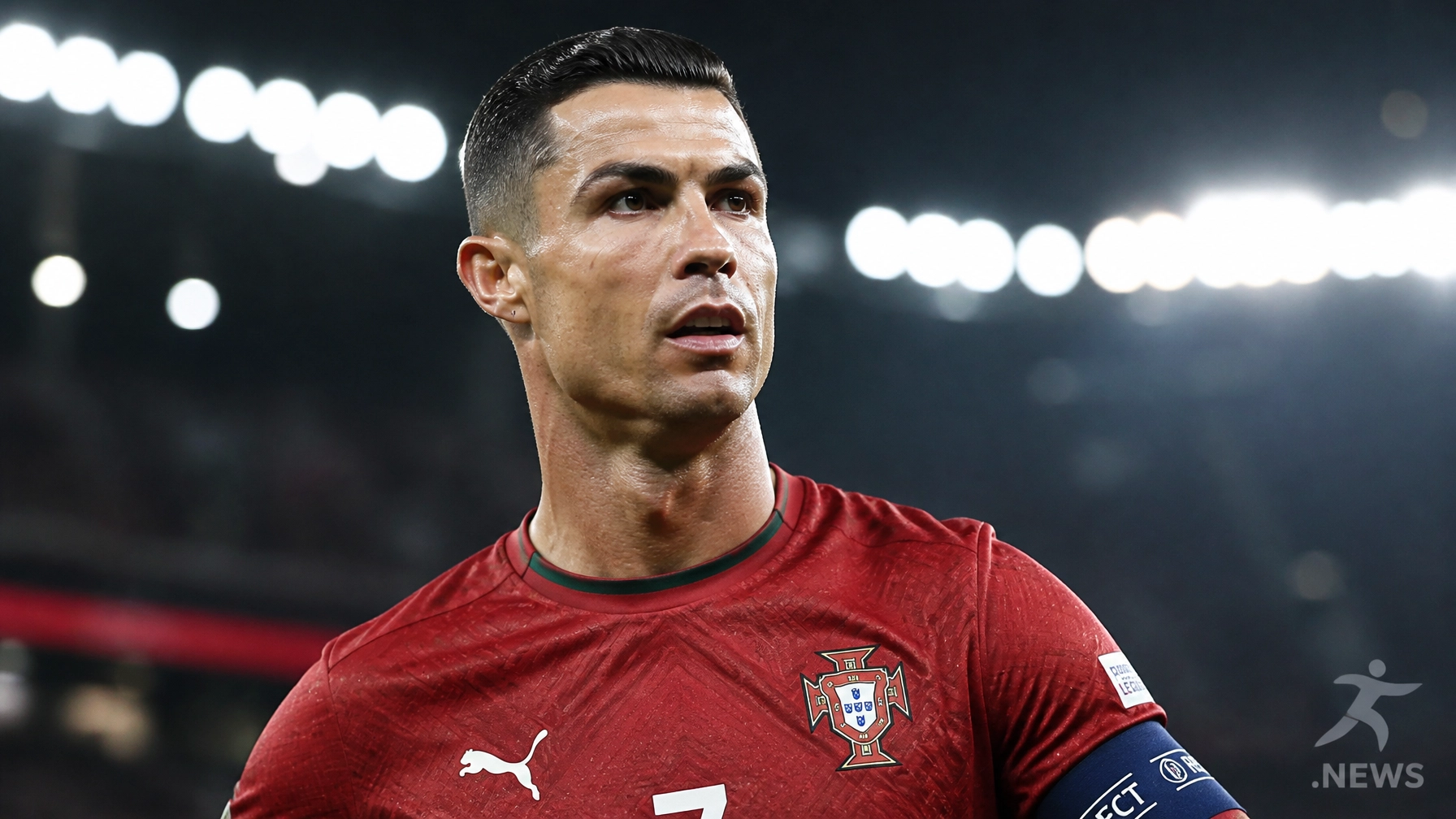
Cristiano Ronaldo's reputation has evolved more than that of most modern footballers—shifting from raw, flamboyant prodigy to dominant global superstar, polarizing icon, and, eventually, aging legend whose fame exists alongside his late‑career performances.
Cristiano Ronaldo's reputation has evolved more than that of most modern footballers—shifting from raw, flamboyant prodigy to dominant global superstar, polarizing icon, and, eventually, aging legend whose fame exists alongside his late‑career performances. Across that arc, three themes have strongly shaped how people see him: extraordinary achievement, visible self‑confidence, and notable longevity.
Early years: flashy prodigy and polarizing talent
Ronaldo emerged at Sporting CP and then Manchester United as a technically brilliant, athletic winger known for stepovers, dribbling, and eye‑catching skill. As a young player at United in the mid‑2000s, his reputation was mixed: fans and pundits admired his potential and ability but often criticized perceived diving, over‑dribbling, and an emphasis on flair over efficiency.

Under Sir Alex Ferguson, he gradually transformed his image. As his goals, assists, and physical dominance increased, criticism of immaturity gave way to respect for his work ethic and development. His finest season with United came in 2007–08, when he scored 42 goals in all competitions, helped the club win the Premier League and Champions League, and earned the Ballon d'Or and FIFA World Player of the Year honors.
Real Madrid era: from star to global phenomenon
Ronaldo's move to Real Madrid in 2009 marked the beginning of his peak and a major shift in public perception. At Madrid he evolved from a wide attacker into an exceptionally efficient goalscoring forward, breaking multiple club and competition records and winning several Champions League and La Liga titles.

Across nine seasons, he became Real Madrid's all‑time leading scorer and added four more Ballon d'Or awards (2013, 2014, 2016, 2017), widely cementing his status as one of the greatest players of his generation. Commentators and fans often describe this period as one of unprecedented individual dominance, with his goal numbers and trophy haul cited as evidence that he redefined expectations for a modern forward.
Reputation‑wise, this period did two things:
- Globally, he became an icon of professionalism, intense training, and competitive mentality—frequently cited as a role model for dedication and physical conditioning.
- At the same time, he gained a polarizing image: admired for his brilliance but criticized by some for perceived arrogance, dramatic reactions on the pitch, and a highly cultivated personal brand that was constantly compared with that of Lionel Messi.
Despite that polarization, his mainstream status was clear. He was included on lists of the world's most influential people, regularly ranked among the most famous and highest‑paid athletes, and became one of the most followed individuals on social media.
Juventus and late‑prime: respect, debate, and shifting expectations
Ronaldo's move to Juventus in 2018 extended his top‑level career and reinforced his reputation for adaptability and longevity. He continued to score prolifically and won domestic trophies in Serie A, but opinions about his impact became more divided.

Supporters pointed to his goals, his fitness at an age when most forwards have declined, and his ability to deliver in key moments. Critics argued that his playing style—focused heavily on finishing rather than all‑round contribution—could make teams highly dependent on him and sometimes less flexible tactically. As his career progressed beyond his early thirties, some analysts suggested that debates about his legacy increasingly invoked his earlier achievements, even though his scoring output remained strong.
Manchester United return and controversy
Ronaldo's 2021 return to Manchester United came with enormous attention and expectations. He scored important goals and produced dramatic moments, but the relationship between his status and the club's broader project quickly became controversial.
During a difficult spell, his reputation took a hit in some quarters. Public frustration, reported disagreements with manager Erik ten Hag, and incidents such as leaving the pitch before full‑time and an apology‑prompting clash with a young fan whose phone he damaged all drew heavy media scrutiny.
This period amplified existing divides:
- Admirers emphasized his professionalism, desire to win, and willingness to speak frankly when he felt standards were dropping.
- Critics saw increasing ego, difficulty accepting a reduced role, and behavior they believed could undermine team cohesion, contributing to more negative commentary than earlier in his career.
Al‑Nassr and the late‑career icon phase
Ronaldo's move to Al‑Nassr in Saudi Arabia and his continued appearances for Portugal pushed him firmly into a late‑career phase where his reputation is shaped as much by his long history as by current performances. He has remained a prolific scorer and central figure for his club and national team, while his global fame continues to be among the highest of any footballer.

At this stage, his image generally includes:
- Legendary status: Widely viewed as one of the greatest players of his era, with major records at club and international level and a career spanning multiple leagues and competitions.
- Polarization: A sizable group of fans and commentators who view him as emblematic of modern sports celebrity—carefully managed branding and strong self‑belief—and who criticize aspects of his late‑career decisions and public behavior.
Global brand and social media reputation
Beyond the pitch, Ronaldo's reputation as a global brand has grown continuously. He is one of the most followed people on platforms like Instagram, and analyses of sports marketing consistently place him among the most famous and commercially powerful athletes.
This prominence has two main effects on how he is perceived:
- It reinforces his status as a symbol of success, discipline, and ambition, especially for younger fans and aspiring players.
- It heightens scrutiny and criticism, as every action and statement is amplified, and some observers see his media presence as part of a broader commercialization of football.
Reputation over time: key shifts
Summarizing Ronaldo's reputation trajectory:
- Youth (Sporting/early United): Talented, flashy, sometimes frustrating; admired for potential and skill but often criticized for perceived immaturity and over‑emphasis on showmanship.
- Prime (United peak/Real Madrid): One of the world's best and then an all‑time great; widely hailed for professionalism and competitiveness, yet polarizing due to perceived arrogance and constant comparison with Messi.
- Late prime (Juventus): Respected for longevity and adaptation; debates grow about tactical fit and how much his teams should be built around him.
- Late career (second United spell, Al‑Nassr, continued Portugal): Iconic but divisive; legendary record contrasted with incidents and conflicts that fuel criticism, while global popularity and brand power remain extremely high.
Over time, his reputation has become less about whether he is "good enough" as a footballer—history strongly supports his place among the greats—and more about how people interpret his personality, choices, and the balance between individual star power and collective football values. For many, he will always represent relentless work, ambition, and excellence; for others, he illustrates some of the tensions of modern sports celebrity. In either case, very few players have had a reputation as wide‑reaching, long‑lasting, and intensely debated as Cristiano Ronaldo's.
About the Author:
Mark Ricci is a sports business journalist covering the intersection of athletics, media, and commerce. His work has appeared in multiple sports industry publications.