


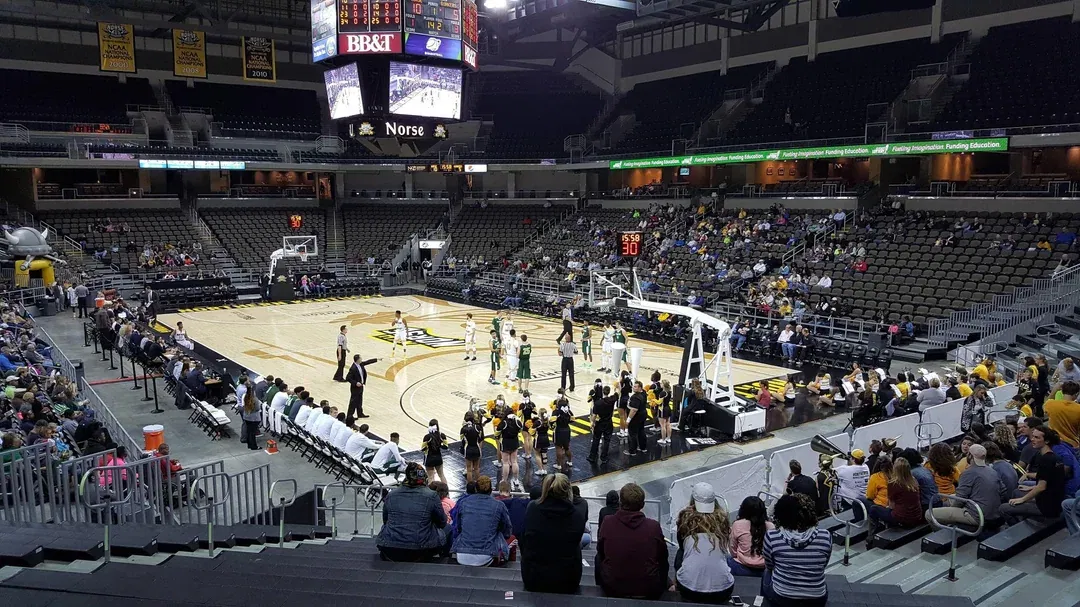
As the new season of college basketball is around the corner, the hype is like never before. With all the top teams vying for the championship and the underdogs trying to upset the big-time teams, we are in for a season full of electrifying performances. While the players and their performances are set to light up the hard court, the fans will also have a big role to play. Their role will, of course, be setting to fill up the arenas and create an atmosphere that can make the opponents feel like they’re up against more than just five players on the court.
If the fans are the lifeline of the teams, the arena is their home. While to ordinary folks an arena may be just a building, for the passionate fans among us, it is the soul of the team. This is why it is highly important to build an arena that complements the fan base’s passion. The size, the design, and how close the fans are to the court are some of the factors that make an arena historic. With all that said and done, let’s look are some of the largest arenas in the college basketball landscape.
Which arenas are the largest in college basketball?
JMA Wireless Dome (Carrier Dome) – Syracuse University
Capacity- 35,446
Field Name- Jim Boeheim Court
Opened- September 20, 1980
Home Team- Syracuse University
KFC Yum! Center- University of Louisville
Capacity- 22,090
Field Name- Denny Crum Court
Opened- October 10, 2010
Home Team- University of Louisville
Read Top Stories First From EssentiallySports
Click here and check box next to EssentiallySports
Dean E. Smith Center- University of North Carolina
Capacity- 21,750
Field Name- Roy Williams Court
Opened- January 18, 1986 (last renovation in 2018)
Home Team- University of North Carolina
Thompson-Boling Arena- University of Tennessee
Capacity- 21,678
Field Name- The Summit
Opened- December 3, 1987
Home Team- University of Tennessee
Rupp Arena- University of Kentucky
Capacity- 20,545
Field Name- Cawood Ledford Court
Opened- November 27, 1976
Home Team- University of Kentucky
Capital One Arena- Georgetown University
Capacity- 20,356
Opened- December 2, 1997
Home Team- Georgetown University
Madison Square Garden- St. John’s University
Capacity- 19,812
Opened- February 11, 1968 (Last Renovated in 2013)
Home Team- St. John’s University
PNC Arena- North Carolina State University
Capacity- 19,722
Opened- October 29, 1999
Home Team- North Carolina State University
Bud Walton Arena- University of Arkansas
Capacity- 19,368
Opened- November 29, 1993
Home Team- University of Arkansas
Marriott Center- BYU
Capacity- 19,000
Opened- 1971
Home Team- BYU
Why does arena size matter for college basketball?
For as long as one can remember, it has seemed that bigger is better. In the college basketball landscape as well, a bigger arena is always a big advantage to have. Having a bigger arena allows a team to pack the arena and have fans screaming at the top of their lungs to cheer (or boo against the opponents) for their home team. This creates an atmosphere that can give the home team momentum and an added boost to carry the team to wins. While it’s just five players on the court at a time, when the fans are cheering with so much passion, it feels like you have an extra boost to win.
Having a larger arena is also a great asset when recruiting new talent. It’s no secret that everybody wants to be part of a historic program. If your arena is shrouded in history and famous for an electric environment, a recruit can be swayed to commit to your program over your rivals. A bigger arena will also result in increased revenue. From ticket sales to merchandise sales, everything can add to the program’s income. This additional income will further help the college basketball programs to provide better facilities and hire better staff that will not only help the team compete well but also prepare the players for a career in the professional leagues.