


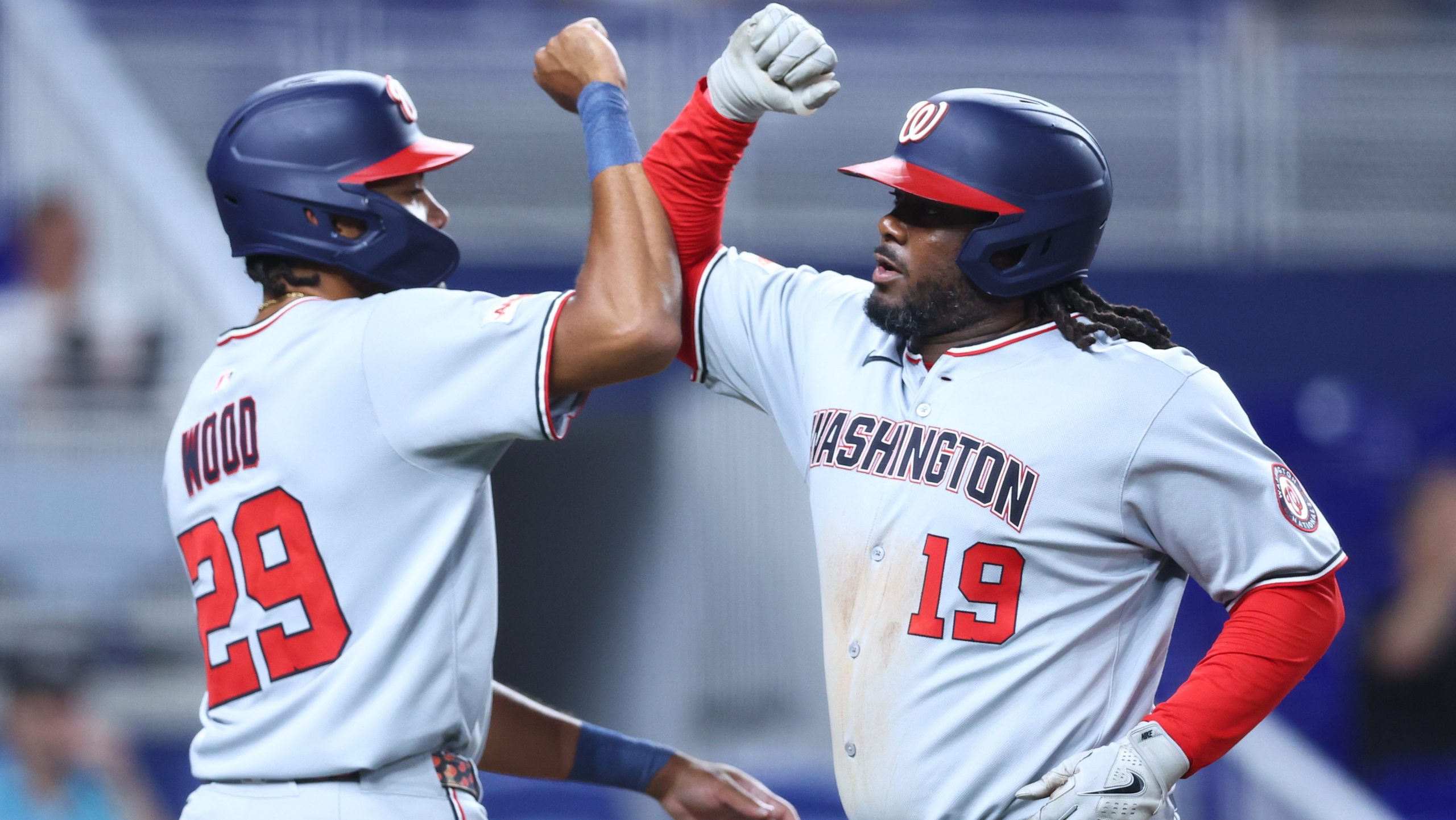
If you thought professional athletes just “eat big and train hard,” the Nationals are here to complicate that narrative. Washington’s clubhouse reveals a wildly diverse culinary universe–a mix of high-performance nutrition, personal quirks, and “whatever works today” improvisation.
Daily calorie estimates mostly depend on position, level of activity, and how close they are to game time. But within that rough range, we see wildly different eating philosophies–even within the same clubhouse. Some players follow strict diets, while others treat the food situation more like a buffet with “eat what feels good” guidelines.
Diet by Personality: Josh Bell vs. CJ Abrams
Take Josh Bell, for example. The veteran opted out of processed foods midseason, swapping bread and junk carbs for fruits, rice, and potatoes. Bell says the result has been better sleep, more energy, and a simple realization: “What a concept: Eating fruit is good for you.”
Contrast that with shortstop CJ Abrams, who (when nobody’s watching) can be found walking to his locker with two cheeseburgers on his plate. Another player, Dylan Crews, once darted to the training room with a PB&J “Uncrustable” in hand. That’s not necessarily “bad,” but it shows a more relaxed approach to fueling.
Then there are the outliers. Infielder Paul DeJong famously experimented with a raw carnivore diet–eating almost exclusively raw animal products, butter, and milk. He ultimately moved away from it because it felt like a chore, although he admits to continuing a mostly meat-focused diet. On the flip side, reliever Clayton Beeter takes a “work hard, eat hard” approach: “If I look in the mirror and I’m like, ‘Damn, I’m getting fat,’ I’ll turn it down for a little bit,” he says.
Nutrition Science Meets Baseball
Behind the scenes, Nationals sports performance nutritionist Marie Spano is crafting individualized plans that range from laser-focused to pragmatic. She estimates that most big leaguers consume between 3,500 and 5,000 calories per day, but the composition of those calories varies wildly depending on role, timing, and preferences.
Breakfast? It’s optimized for protein, fiber, and slow-burning carbs. Pre-game meals lean lighter and easier to digest, especially for pitchers or players who might “take a nap” between warm-up drills and first pitch. That might mean fruit snacks, juice, or sports bars during games–quick, clean fuel with minimal stomach disruption.
After the game, players often lean into higher-protein, higher-carb meals–especially if they had a long outing or a night they knew they’d need recovery fuel. Spano keeps an eye out: if energy flags, it might just signal somebody needs more carbs, electrolytes, or better hydration.
Learning to Fuel Right
One of the most interesting parts of the story is how younger Nationals players–even ones with exceptional raw talent–are learning to eat smart as they climb the ladder. Take Robert Hassell III and Jacob Young, who reportedly had “poor nutrition” habits in the minors. They’ve refined things considerably since arriving in D.C. and being exposed to structured game-day fueling.
Outfielder James Wood, who once struggled to maintain weight in the lower levels, now targets 4,500 calories per day in the offseason. His go-to meals: heavy Taco Stand bowls and Chipotle, plus a steady diet of steak and potatoes when the season demands it. Young has his own path: lean proteins, minimal filler carbs, but even his wife teases him about how much he eats.
That kind of metabolic education is part of what separates a player who rides the bench from one who thrives in the big leagues. With proper fueling, recovery becomes more sustainable, fatigue is delayed, and swings stay sharp deeper into long seasons.
Fueling the Grind
The Nationals’ clubhouse food habits are a microcosm of modern baseball nutrition: deeply personalized, sometimes wildly different, and always evolving. One player’s burger might be another player’s fruit bowl, but the end goal is the same: keep enough energy in the tank to hit 130 mph fastballs, make diving catches, and run out grounders–even deep into September.
Spano isn’t trying to standardize everyone. Instead, she’s translating science into baseball. For some guys, that means ditching bread and embracing a fruit-forward carb strategy. For others, it means indulging a little when the body demands it, or when the mental reset calls for a cheeseburger.
If big league baseball is a war of attrition, good eating might be the unsung weapon. In a 162-game grind, discipline matters, but so does adaptability, and the Nationals seem to be figuring that delicate balance out, one burger, one fruit bowl, and one protein-packed breakfast at a time.