


By Jacob Potter
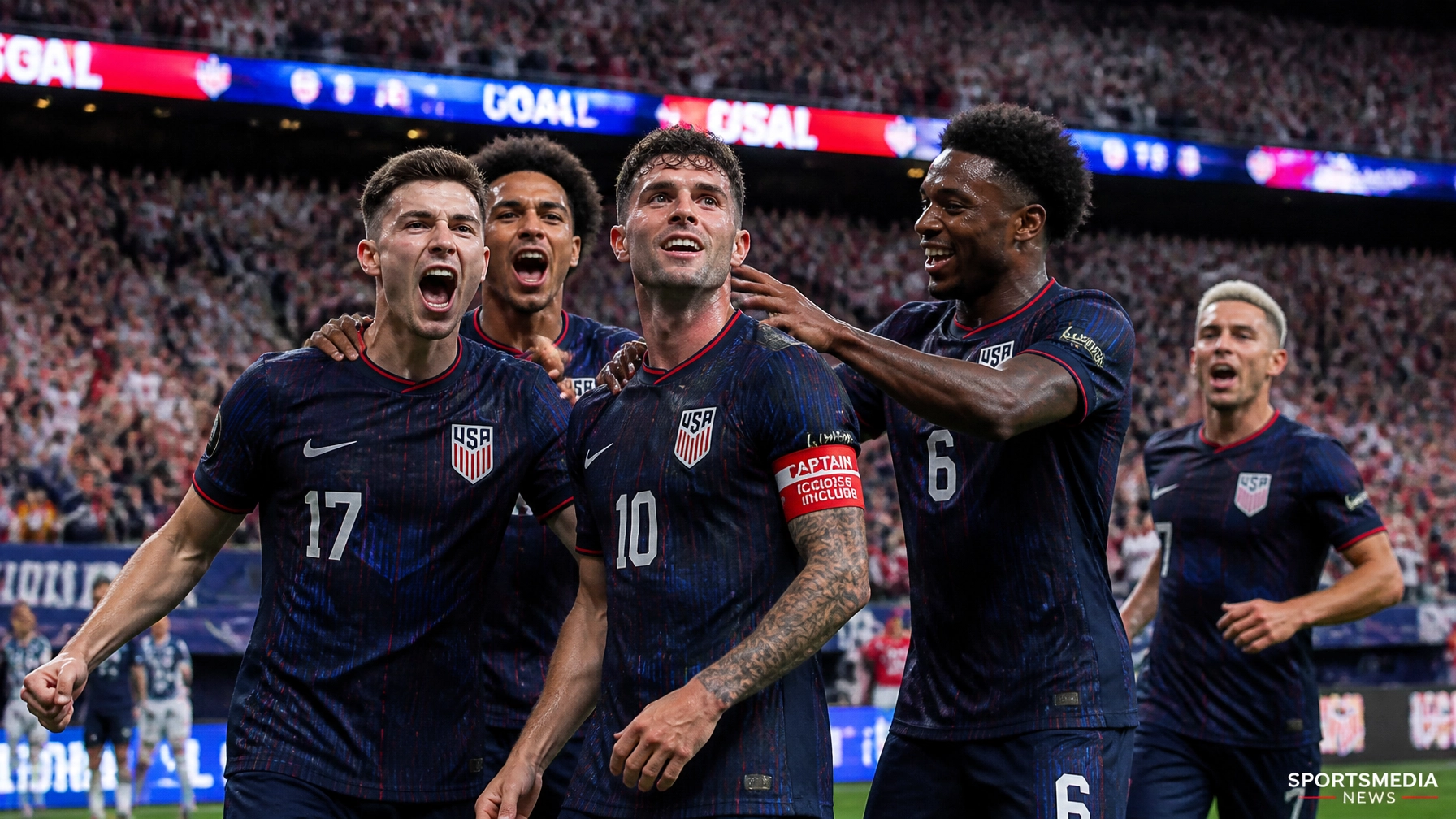
The United States Men’s National Team (USMNT) enters the knockout stages of the 2026 FIFA World Cup with a momentum not seen in decades. After sweeping through Group D with victories over Paraguay and Australia, followed by a hard-fought 3-2 win against Türkiye, Mauricio Pochettino’s squad has secured its place in the Round of 32. However, the path to a historic semifinal appearance: a feat the U.S. hasn't achieved in the modern era: remains a daunting "European gauntlet" of elite footballing nations.
According to data from the Opta supercomputer, the USMNT currently holds a 72–77% probability of winning their Round of 32 matchup, but those odds narrow significantly as the tournament progresses. To reach the "Final Four," the U.S. must navigate a projected path through Bosnia & Herzegovina, Belgium, and likely Spain.
"The group stage was about establishing identity; the knockout stage is about survival and tactical discipline," said one senior analyst at Sportsmedia News. "The U.S. has the talent, but the margin for error effectively disappears once you hit the Round of 16."
Navigating the Round of 32
The first hurdle on the roadmap is a July 1 clash against Bosnia & Herzegovina at Levi's Stadium. The U.S. enters the match as heavy favorites, buoyed by a tactical setup that has maximized its core players. Pochettino has largely moved away from a rigid 4-3-3, instead utilizing a fluid 3-4-2-1 or 4-2-3-1 that emphasizes high-pressing and aggressive transitions.

In the group stage, this system allowed captain Christian Pulisic to operate in a more central No. 10 role, reducing his defensive burden and allowing him to focus on 1v1 take-ons. "Pochettino has found the right balance for this specific roster," notes Dr. Liam Sterling, a professor of sports analytics. "By using three at the back in possession, he provides a security blanket for veterans like Tim Ream while allowing Antonee Robinson and Sergino Dest to play as high-flying wing-backs."
The Opta model suggests a dominant 77% chance of advancement past Bosnia, but the difficulty spikes immediately thereafter.
The European Gauntlet: Belgium and Spain
Should the U.S. advance, they are likely to face Belgium: the winner of Group G: in the Round of 16. This matchup represents a significant jump in quality. Opta's supercomputer places the U.S. win probability for this round at roughly 31–41%.
"Belgium remains a tactical powerhouse," says former international scout Marc van der Berg. "For the U.S. to win, they must rely on the double-pivot of Tyler Adams and Weston McKennie to disrupt play before it reaches the final third. It will be a game of transitions."
If the USMNT clears the Belgian hurdle, the quarterfinals likely feature a showdown with Spain. Historically, the U.S. has struggled against elite possession-based sides, and Spain represents the ultimate test of Pochettino’s defensive structure. The probability of a U.S. quarterfinal victory currently sits between 9% and 16%.
"Spain will test the U.S. team's patience," explains Sterling. "The key will be Folarin Balogun’s ability to act as a release valve. If he can hold up play and allow Gio Reyna or Pulisic to join the attack, the U.S. can exploit Spain's high line."
Pochettino's Tactical Blueprint
The foundation of this roadmap is Mauricio Pochettino’s "World Cup Plan." Since taking the helm, Pochettino has shifted the team's philosophy toward central overloads and attacking with a block of six players. This aggressive approach is designed to overwhelm opponents in the half-spaces: zones where players like Gio Reyna and Weston McKennie thrive.

Statistically, the 3-4-2-1 hybrid has stabilized a defense that previously looked vulnerable against top-25 opponents. Chris Richards has emerged as a de facto playmaker from the back, completing over 95% of his passes during the group stage. This ball-playing ability from the center-back position allows the U.S. to bypass initial presses and find Pulisic in dangerous positions.
"The issue is particularly relevant when you look at the defensive transition," says marketing and sports business expert Sarah Jenkins. "By maintaining a back three plus a holding midfielder, the U.S. is less likely to be caught out on the counter, which was their Achilles' heel in previous cycles."
The Numbers Game and Betting Outlook
For fans and bettors, the USMNT remains a high-reward underdog. ESPN currently lists the United States at +2800 odds to win the World Cup outright. While their probability of reaching the semifinals (the Final Four) is estimated at just 3–5% by some conservative models, market sentiment is slightly more optimistic.
The potential semifinal opponents: France, Germany, or the Netherlands: represent the "final boss" of the U.S. roadmap. These nations combine elite individual talent with deep tournament experience. To reach this stage, the U.S. would not only need tactical perfection but likely a standout performance from goalkeeper Matt Turner and clinical finishing from Balogun and Ricardo Pepi.

"This is an arms race of talent," says Jenkins. "The U.S. has narrowed the gap, but at the semifinal level, you are playing against rosters where every single player is a global superstar. The home-field advantage at venues like Levi's Stadium and eventually the bigger stages will be the U.S. team's 12th man."
Seeking Modern Legitimacy
A semifinal appearance would be the greatest achievement for the USMNT in the modern era. While the 1930 team finished third, that tournament featured a vastly different format and a much smaller field. In the context of the modern 48-team expansion, reaching the final four would signal the United States' arrival as a permanent global power in the sport.
The path is clear: Bosnia, Belgium, then Spain. It is a roadmap fraught with danger, yet the U.S. enters the knockouts with a clearer tactical identity than at any point in its history.
"We aren't just looking to participate anymore," Pochettino told reporters following the win over Türkiye. "We are looking to compete until the very last day of the tournament."
As the tournament moves to Levi's Stadium for the Round of 32, the eyes of a nation will be on Pochettino's men to see if they can turn this roadmap into a reality.
