


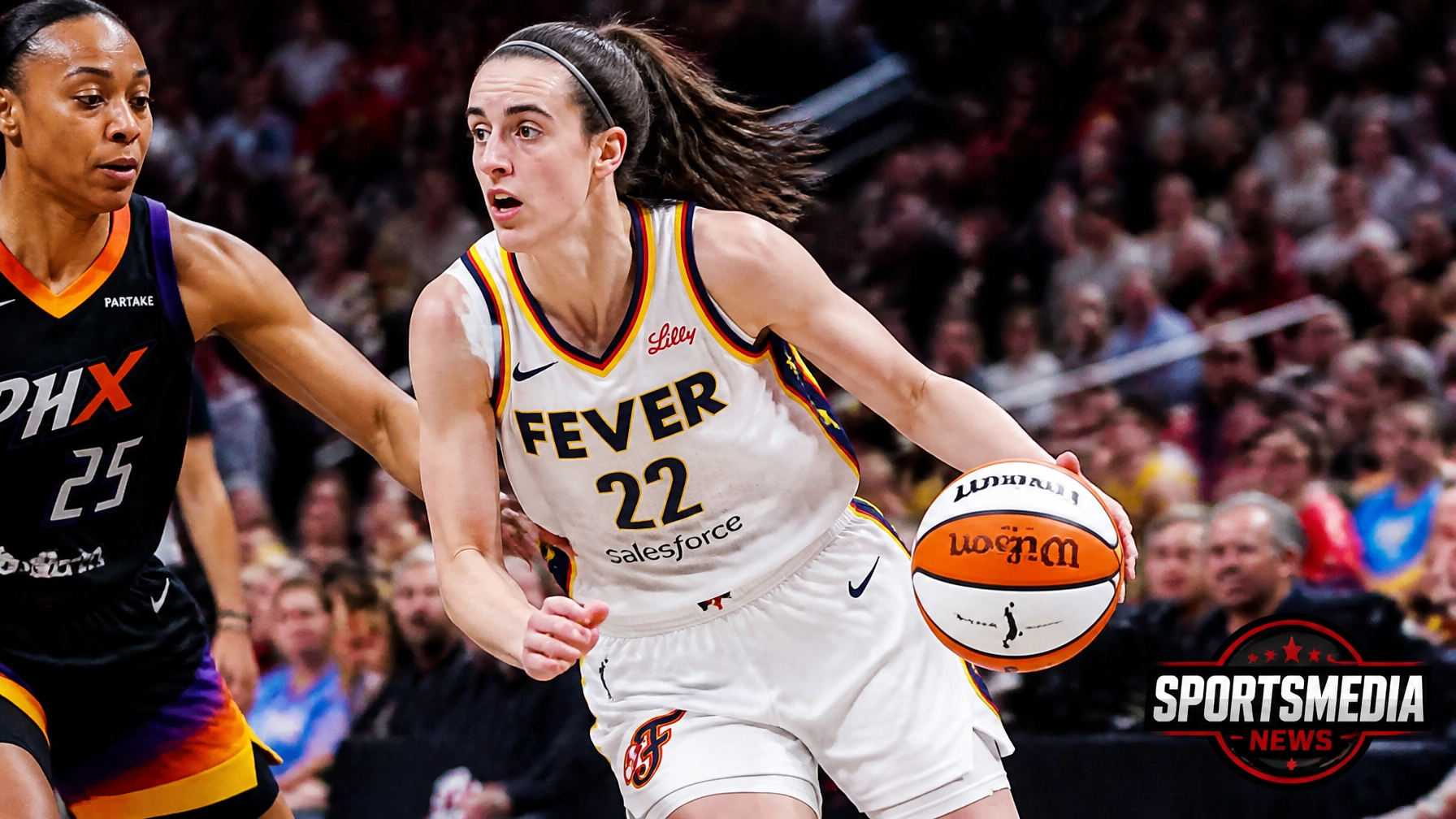
Caitlin Clark's June 24, 2026 game against the Phoenix Mercury became one of the most talked-about WNBA matchups of the season because it combined a close finish, a physical sequence, and a notable injury. Indiana fell 111-109, but the story of the night centered on Clark's exit in the third quarter after a back injury and the way the game's physicality shaped what followed.
By Mark Ricci
June 29, 2026
The 2026 WNBA season has been defined by an unprecedented surge in viewership and a heightened competitive "arms race" that has transformed the league's business landscape. As teams vie for dominance in an increasingly crowded media market, the rivalry between the Indiana Fever and the Phoenix Mercury has emerged as a focal point for fans and analysts alike. This latest chapter, however, shifted the conversation from box scores to player safety and league discipline, highlighting the growing pains of a league adjusting to its own success.
Clark's early impact
Clark entered the game as a game-time decision because of a lingering back issue, but she still gave Indiana an important offensive spark. She finished with 19 points and 8 assists in 20 minutes before leaving with 5:15 remaining in the third quarter and not returning.
Her early production helped Indiana build a first-quarter lead, with the Fever ahead 35-29 after the opening period. Clark had already scored 13 points and added 3 assists by that stage, showing how quickly she had become the focal point of Indiana's offense.

The efficiency of Clark's performance was underscored by the Fever's cohesive play in the first half. With Clark at the helm, Indiana's offensive rating peaked as she found teammates Kelsey Mitchell and Aliyah Boston for high-percentage looks. Mitchell, who finished the night with 30 points on an impressive 11-of-16 shooting, benefited early from the spacing Clark provided. "She changes the gravity of the floor," noted one sports business analyst. "When she's out there, the social media value of the game and the on-court production both skyrocket."
The physical sequence
The game turned chippier as the night went on, and one of the most discussed moments came when Clark went down while fighting for a loose ball. Video and game coverage drew attention to contact involving Phoenix forward Alyssa Thomas and Clark's neck and throat area during the scramble, which quickly became the central point of postgame debate.
That sequence heightened the sense that the game had become increasingly physical. It also drew scrutiny because many viewers believed the play was not properly addressed in the moment, adding to the tension around how the officials handled the possession.
Indiana Fever head coach Stephanie White did not mince words during the postgame press conference regarding the officiating. "I just saw it. I’m not sure if it had any impact on her health or not. But it was egregious," White stated. "The fact that it was a no-call… I brought it to the attention of the officials at halftime." The incident sparked a massive debate across digital platforms, where the intensity of sports sponsorships and the protection of marquee stars are frequently scrutinized by both fans and investors.
How the game changed
Once Clark exited, Phoenix gained control of the game. Kahleah Copper led the Mercury with 28 points, and Phoenix used a strong finish at the free-throw line to complete the comeback and escape with the two-point victory.
The closing minutes added even more intensity. Aliyah Boston was called for a flagrant foul with 2:12 remaining while Indiana trailed by two, and Copper converted the resulting free throws before Phoenix added to its lead at the line. That late sequence gave the game an especially tense finish and reinforced how physical the contest had become.

The statistical shift following Clark's departure was stark. Indiana, which had been shooting 48.1% from beyond the arc, struggled to maintain its rhythm without its primary facilitator. Meanwhile, Phoenix capitalized on the whistle discrepancy. Coach White pointed out that the Mercury shot 24 free throws in the second half alone. "We still had 11 fouls in the fourth quarter to their two," White remarked, highlighting a late-game imbalance that frustrated the Indiana bench and fueled the "chaos" narrative surrounding the matchup.
Consequences
The most immediate consequence was Clark's injury-related departure, which forced Indiana to finish the game without its primary creator and shot initiator. Losing her for the final quarter removed the player who had driven much of the Fever's early offense and changed the shape of the contest.
There was also a league disciplinary consequence tied to the incident. ESPN reported that Phoenix forward Alyssa Thomas was suspended one game after contact involving Clark's throat during the matchup, making the controversy linger beyond the final score.

The suspension of Alyssa Thomas serves as a significant marker for the WNBA's approach to player safety in a high-stakes environment. As the league continues to grow, the disciplinary committee faces increasing pressure to maintain a balance between allowing physical play and protecting the athletes who drive the league's billion-dollar sponsorship value. For Indiana, the focus now turns to Clark's recovery. "We got to make sure that she’s healthy," White said of the star rookie. "As far as adjustments, it’s next player up."
Why it mattered
The game mattered because it brought together three major storylines: Clark's injury, a narrow Fever loss, and a disciplinary response tied to one of the night's most controversial plays. It also showed how quickly any physical incident involving Clark becomes part of a much larger conversation about officiating, player safety, and the intensity of high-profile WNBA games.

Ultimately, the "chaos" of June 24th reflects the evolving identity of the WNBA. The league is no longer just a sporting competition; it is a major media property where every foul, injury, and disciplinary action has ripple effects across the sports business world. As the Fever navigate the remainder of the 2026 season, the management of Clark's health and the league's response to on-court physicality will remain critical indicators of the WNBA's maturity and its ability to sustain its historic upward trajectory.
Mark Ricci is a sports business analyst covering the WNBA, league expansion, and professional athlete performance for Sportsmedia News.