


By Jacob Potter | July 20, 2026
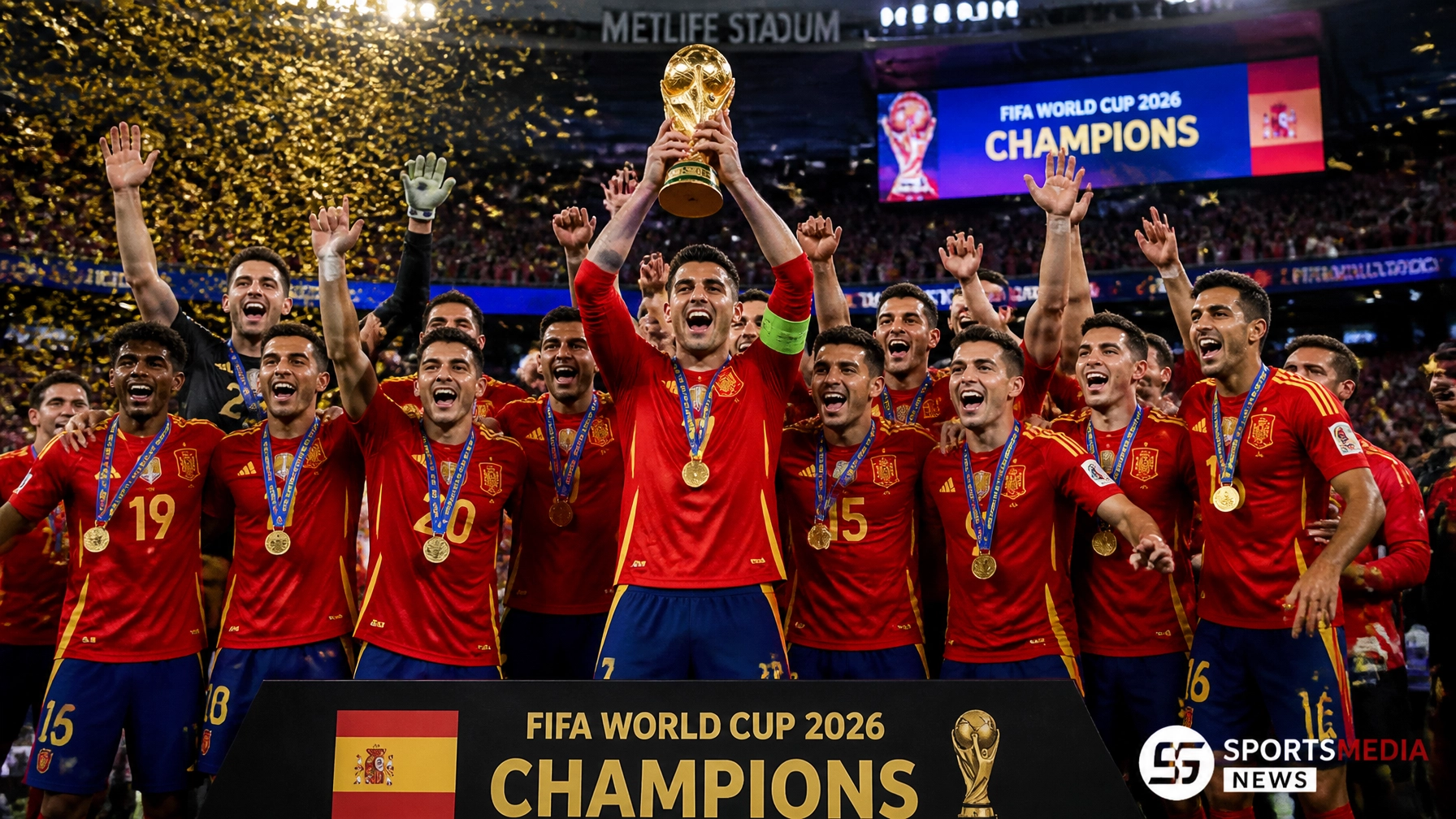
On a sweltering July evening at MetLife Stadium, the narrative of modern international football reached a definitive conclusion. Spain, a nation that has spent the last two years refining a blend of traditional possession and ruthless defensive structure, ascended to the pinnacle of the sport once more. With a 1-0 victory over Argentina in the 2026 World Cup final, "La Roja" secured their second world title, ending a 16-year wait and cementing their status as the most dominant force in the global game.
The match, played before a capacity crowd of 82,500, was a tactical masterclass that required 120 minutes to resolve. While the 106th-minute header from Ferran Torres provided the "golden moment" for Spanish fans, the victory was built on a foundation of statistical improbability: a defensive record that saw Spain concede only a single goal throughout the entire seven-match tournament.
A tactical siege at MetLife
From the opening whistle, the tactical blueprint of Luis de la Fuente was clear. Spain sought to monopolize the ball, utilizing Rodri and Fabián Ruiz to compress the pitch and trap Argentina in their own defensive third. The first 90 minutes were characterized by a Spanish "siege," as the Europeans maintained over 65% of possession, probing a deep Argentinian block that refused to buckle.
What unfolded was a total suffocation of Argentina's creative channels. Spain did not just play with the ball; they used it as a defensive tool. By keeping Argentina pinned, they effectively removed the threat of a counter-attack before it could even begin.
This approach saw Spain register 20 shots over the course of the match.
However, they found themselves repeatedly thwarted by the heroics of Emiliano "Dibu" Martínez. The Argentinian goalkeeper produced 11 saves in regular time, including three one-on-one stops that kept the match scoreless and pushed the contest into the tension of extra time.

The turning point: Fernández's departure
The complexion of the final shifted irrevocably in the closing seconds of second-half stoppage time. Enzo Fernández, already on a yellow card, was judged to have committed a tactical foul to break up a Spanish break. The subsequent second yellow card left Argentina with 10 men for the entirety of the extra-time period.
This numerical advantage allowed Spain to push even higher. The breakthrough finally arrived in the 106th minute. Pedro Porro, providing width on the right flank, delivered a lofted cross to the far post. Nico Williams rose above the defense to head the ball across the face of the goal, where Ferran Torres was waiting to hammer a header into the roof of the net.
The goal was a product of sustained pressure and depth. With a bench that included players like Torres, Spain had the luxury of testing a tired defense until it finally broke. It was the result of 106 minutes of sustained dominance.
The youth movement and defensive immortality
While Torres will receive the headlines, the 2026 tournament will be remembered as the arrival of Lamine Yamal on the ultimate stage. At just 19 years old, Yamal became the youngest player to feature in a World Cup final since Pelé in 1958. His ability to stretch the Argentinian defense opened the spaces necessary for Spain’s midfield to operate.
However, the most staggering statistic of Spain's run is their defensive record. By keeping a clean sheet in the final, Spain finished the tournament with seven clean sheets in seven matches, allowing only one goal in the entire competition (a 2-1 quarterfinal win over Belgium). This defensive solidity extended Spain’s unbeaten run to 38 matches, a European record that shows no signs of slowing down.

Spain has built a system where the ball is the best defender. If the opponent never has the ball, they can never score. It is a simple philosophy executed with surgical precision.
Looking toward a new era
The victory caps a remarkable cycle for Spanish football, following their Euro 2024 triumph. As the team celebrated on the MetLife pitch under a shower of golden confetti, the sense of a generational shift was palpable. With a core of young talent like Yamal, Gavi, and Pedri supported by the veteran stability of Rodri, Spain appears poised to maintain this level of control for years to come.
For Luis de la Fuente, the result is a validation of a system that prioritizes collective structure over individual flair. As the global football community reflects on this tournament, the takeaway is clear: Spain has found the formula for modern success, and it is a formula that few in the world have the tools to solve.