


By Jacob Potter
The Charlotte Hornets send the former All-Star point guard and Josh Green to Minnesota for Naz Reid, a 2033 unprotected first-round pick, three first-round pick swaps, and three second-round picks.
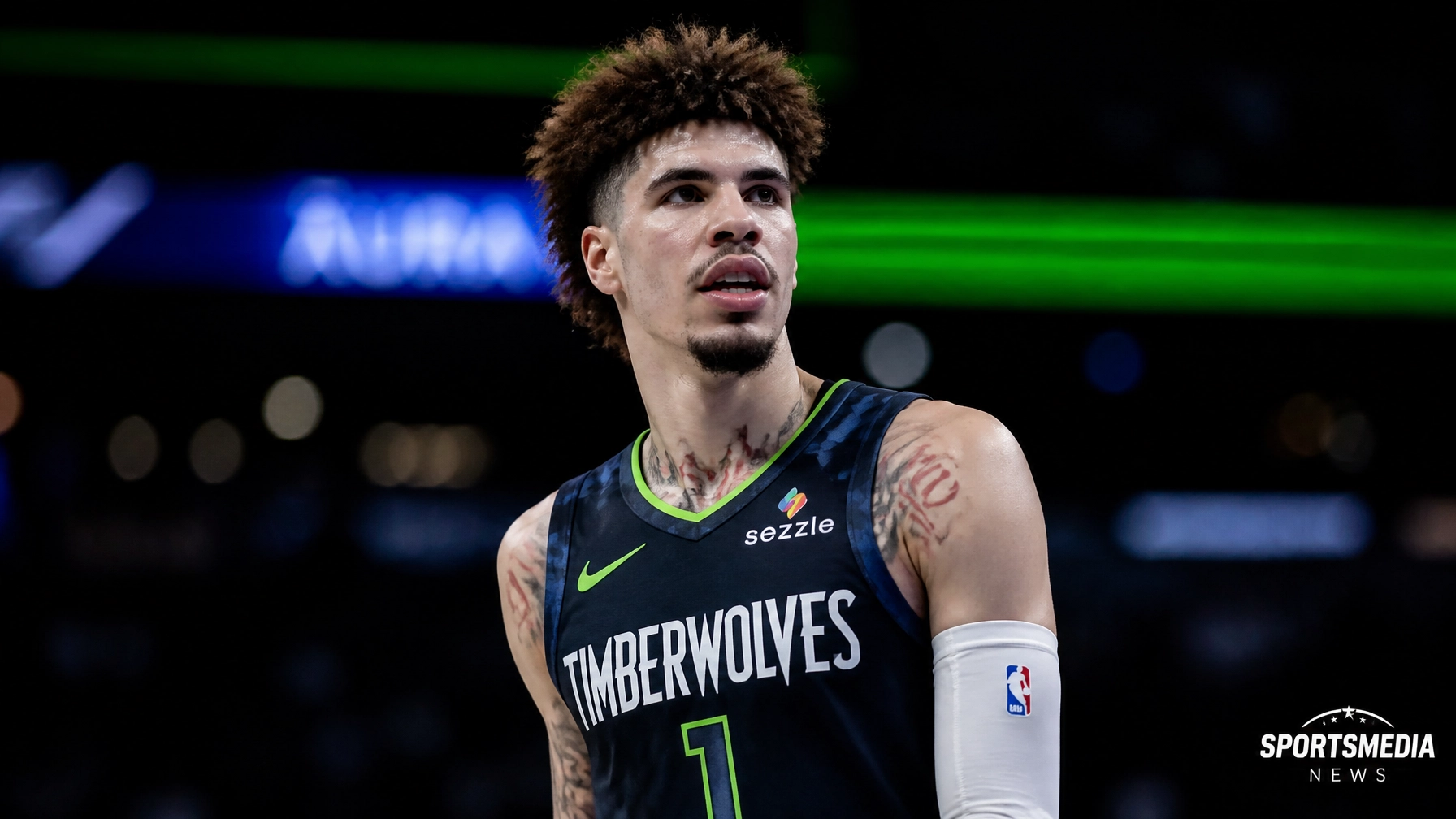
The landscape of the NBA shifted significantly on Thursday morning as the Minnesota Timberwolves and Charlotte Hornets agreed to a monumental trade that sends All-Star point guard LaMelo Ball to the Twin Cities. The deal, which comes amid one of the most volatile offseasons in league history, pairs Ball with superstar Anthony Edwards, creating what many league executives describe as the most dangerous young backcourt in professional basketball.
Under the terms of the agreement, the Timberwolves receive LaMelo Ball and wing Josh Green. In exchange, the Hornets acquire reigning Sixth Man of the Year Naz Reid, a 2033 unprotected first-round pick, first-round pick swaps in 2028, 2029, and 2030, and three second-round picks (2029, 2032, and 2033). The trade cannot be officially finalized until July 6, when the league’s annual moratorium on transactions lifts.
The move marks the end of an era in Charlotte and a massive gamble for a Minnesota team already pushing the boundaries of the league’s luxury tax system. "This is an arms race," said one Eastern Conference executive who spoke on condition of anonymity. "With Giannis in Miami and the Randle deal in Brooklyn, the Timberwolves felt they had to make a move to keep pace at the top of the Western Conference."
A New Era in Minnesota

The primary motivation for Minnesota is the creation of a transformative offensive engine. LaMelo Ball, 24, is coming off a productive season where he averaged 20.1 points, 7.1 assists, and 4.8 rebounds per game across 72 appearances. His ability to facilitate in transition and hit deep three-pointers is expected to complement Anthony Edwards’ downhill aggression and rim pressure.
"The synergy between Ball and Edwards is theoretically perfect," noted Sarah Jenkins, a senior NBA analyst. "LaMelo is a floor general who thrives on pace, while Edwards is perhaps the league’s premier one-on-one scoring threat. By putting a true 6'7" playmaker next to Edwards, the Timberwolves are betting that their offensive ceiling will finally match their defensive floor."
Adding Josh Green to the mix provides Minnesota with a versatile 3-and-D wing who can mitigate the loss of perimeter depth. Green’s ability to defend multiple positions and secondary playmaking provides a safety net as the team integrates Ball into their starting lineup. However, the success of this "New Era" rests almost entirely on Ball's health. While he played 72 games last season, his previous two campaigns were marred by ankle issues that limited his availability.
The Price of a Point Guard

To acquire a talent of Ball’s caliber, Minnesota had to part with a franchise favorite and a significant portion of their future draft capital. Naz Reid, who has blossomed into one of the league's most effective frontcourt players, heads to Charlotte as the center-piece of the return. Reid’s ability to stretch the floor and protect the rim makes him a highly sought-after commodity in the modern NBA.
The draft compensation, however, is what has industry insiders talking. The 2033 unprotected first-round pick is a "gold mine" asset, according to some analysts, given the long-dated nature of the pick and the uncertainty of Minnesota’s roster nearly a decade from now. When combined with three years of pick swaps, the Hornets have effectively secured a path to high-lottery talent regardless of their own win-loss record in the late 2020s.
"Charlotte didn't just trade a star; they bought a decade of insurance," said Dr. Marcus Thorne, a sports management professor who specializes in NBA draft valuations. "By securing unprotected picks and swaps so far into the future, the Hornets are positioning themselves to capitalize on any potential decline in Minnesota’s trajectory. It’s a classic high-leverage play."
Charlotte's Reset
The Hornets are pivoting toward a more balanced, multi-faceted rebuild. With Ball gone, the franchise is expected to hand the keys to Brandon Miller and Kon Knueppel, while re-signing Coby White to serve as the veteran starting point guard. This shift suggests a departure from the "heliocentric" style of play that defined the LaMelo era.
In addition to the incoming veterans and picks, the Hornets are also introducing their newest first-round selections, Hannes Steinbach and Christian Anderson Jr., during a press conference scheduled for later this week. The presence of Reid provides a stabilizing force in the paint that Charlotte has lacked for years.
The organization's strategy appears to be one of calculated patience. By moving off Ball’s max contract, they have cleared the way for Brandon Miller to develop into a primary scoring option. "We are committed to building a sustainable, winning culture with a group that fits our long-term vision," the Hornets' front office stated in a brief release. The team’s focus now shifts to the development of its young core and the utilization of its newfound assets.
The Financial Landscape

Financially, the deal has massive implications for both franchises. LaMelo Ball has three years remaining on his five-year, $203.9 million designated rookie contract. Taking on this salary puts the Timberwolves deep into the "second apron" of the NBA’s collective bargaining agreement, which restricts their ability to sign buy-out players and trade future first-round picks.
For Charlotte, the trade creates a near-record $41 million trade exception. This exception allows the Hornets to take on a significant salary in a future trade without sending back matching salary, providing them with immense flexibility to act as a "facilitator" in three-team deals or to acquire a disgruntled star at a later date.
"The $41 million exception is a weapon," explained Thorne. "In an era of strict cap penalties, having the ability to absorb a massive contract for the price of a second-round pick is an undervalued asset. The Hornets have the cleanest cap sheet they’ve had in years, and that’s just as valuable as the picks they received."
The Bigger Picture
This trade is not an isolated event but rather a piece of a chaotic NBA offseason puzzle. It follows the earth-shattering move of Giannis Antetokounmpo to the Miami Heat and is directly tied to the Julius Randle-to-Brooklyn deal that involved the Chicago Bulls. The league is currently undergoing a massive talent redistribution, with star players migrating toward established contenders or large-market resets.
The Timberwolves' move for Ball signifies a "win-now" urgency that has become the standard among Western Conference elites. With the Phoenix Suns and Denver Nuggets remaining competitive and the Sportsmedia News reporting on several other potential moves in the West, Minnesota felt compelled to solidify their core.
As the July 6 moratorium nears, the league awaits the official filing of these deals. For Minnesota, the goal is a championship parade. For Charlotte, the goal is a foundation that lasts. Whether the price paid by the Timberwolves is too high will only be known when the 2033 draft rolls around, but for now, the NBA has a new "must-watch" duo in Minneapolis.
"The league is constantly evolving," Jenkins concluded. "Today, we saw two teams decide exactly who they want to be for the next five years. One is gambling on stardom; the other is gambling on the future. Only time will tell who made the right bet."
Jacob Potter is a sports journalist covering the NBA, trades, and team-building strategy for Sportsmedia News. For more in-depth analysis of the 2026 NBA offseason, visit our latest articles.