


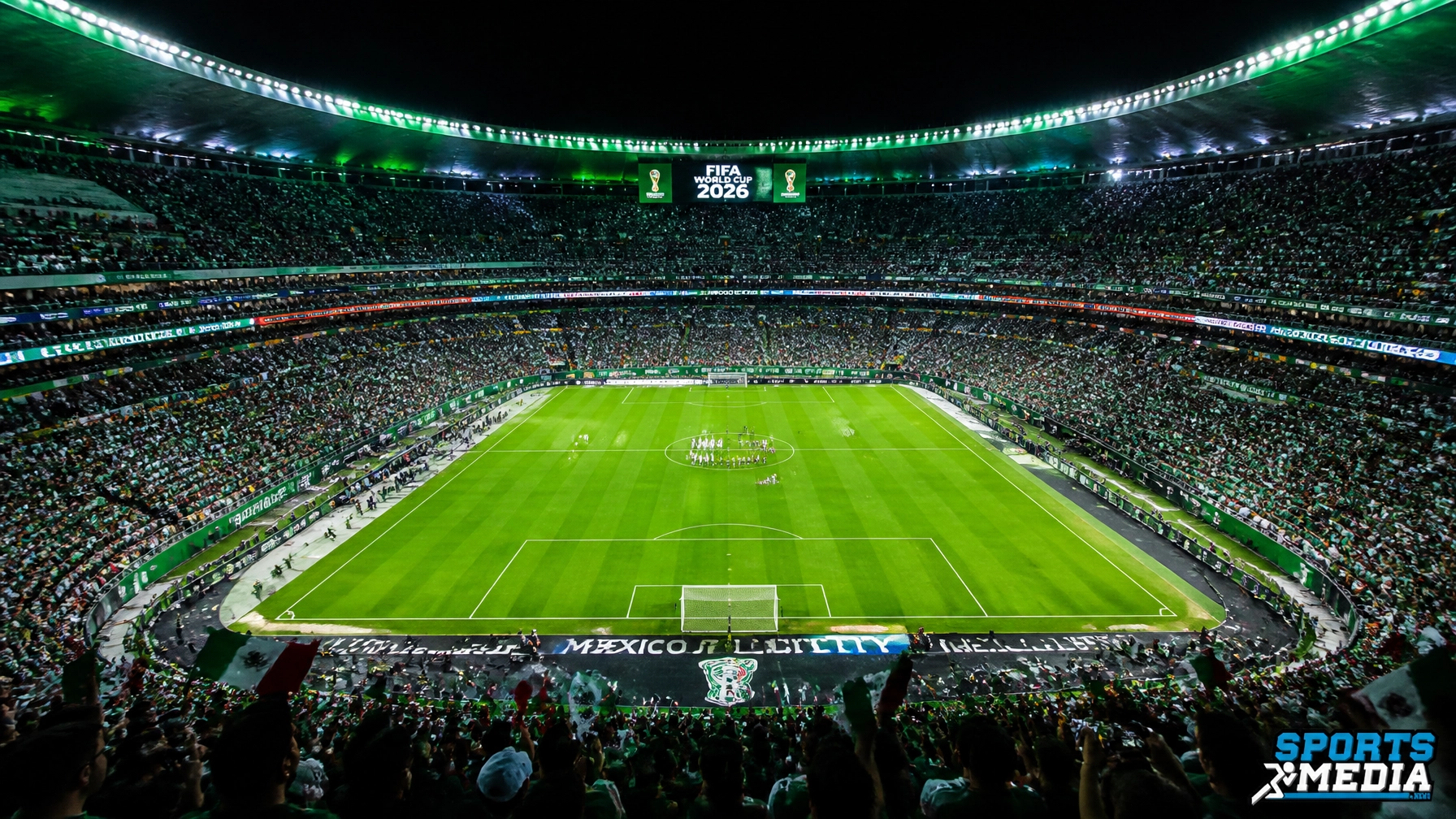
The host nation secures a decisive 2-0 victory over South Africa, setting a high bar for the expanded 2026 FIFA World Cup.
By Mark Ricci | June 12th, 2026
MEXICO CITY: The 2026 FIFA World Cup officially commenced on June 11, ushering in a new era of international football with a clinical 2-0 victory for Mexico over South Africa. Held at the historic Estadio Azteca, the match served as more than just a Group A opener; it was the global debut of an expanded 48-team format that has fundamentally reshaped the logistics and commercial landscape of the world's most-watched sporting event.
Mexico entered the pitch not just as a host, but as a side carrying the weight of a nation’s expectations. South Africa, representing the increased African contingent in this year's tournament, arrived as a competitive underdog. However, the experience and tactical discipline of the Mexican squad proved too much for the visitors to overcome in Mexico City's thin air.
A Masterclass Opening at 2,200 Meters
The atmosphere inside Estadio Azteca was described by spectators as electric, with a capacity crowd backing the home side from the opening whistle. Mexico controlled the tempo from the outset, utilizing a high-press system that took advantage of the 2,200-meter altitude: a factor that often tests the cardiovascular endurance of visiting teams.
Mexico’s first goal arrived in the first half, the result of a meticulously constructed build-up that saw the hosts exploit gaps in the South African mid-block. By keeping the ball moving and forcing quick transitions, Mexico effectively neutralized South Africa’s defensive shape.
"The tactical execution was a reflection of the preparation required for a tournament of this scale," noted one industry analyst observing from the press box. "Mexico didn't just win; they managed the game state with the maturity of a veteran contender."
The second goal, delivered late in the match, provided the necessary breathing room to secure the three points. South Africa struggled to create clear-cut opportunities, often finding their counter-attacks stifled by a disciplined Mexican backline. The final whistle confirmed a 2-0 result, placing Mexico at the top of Group A.
Seeking Legitimacy in the 48-Team Era
The significance of this match extends far beyond the pitch. As the first fixture of the new 48-team era, the game was a proof of concept for FIFA’s expanded vision. With the tournament inventory increasing from 64 to 104 matches, the logistical and commercial stakes have reached unprecedented levels.
"The expansion to 48 teams is a recalibration of the World Cup's commercial inventory," says Marcus Thorne, a senior logistics consultant for global sports events. "We are looking at a 68% rise in match inventory, which directly translates to increased media rights value and sponsorship matchdays. This opening match at the Azteca had to set a standard for legitimacy, and it succeeded."
The 2026 tournament, co-hosted by the United States, Mexico, and Canada, is projected to generate significant economic activity. According to a study by the Boston Consulting Group, the tri-nation event is expected to create more than $5 billion in short-term economic activity and support approximately 40,000 jobs across North America. For Mexico City, the influx of international fans and the global media spotlight represent a substantial micro-economic boost for the hospitality and retail sectors.
The Cathedral of Football: Estadio Azteca’s Third Act
Estadio Azteca made history yesterday as the first stadium to host matches in three different World Cup editions (1970, 1986, and 2026). Often referred to as the "Cathedral of Football," the venue underwent extensive renovations to meet modern FIFA standards for VIP hospitality, broadcast infrastructure, and player safety.
"Hosting at the Azteca for a third time provides a bridge between football’s heritage and its future billion-dollar expansion," Thorne added. "The stadium has evolved from a 20th-century icon into a 21st-century commercial powerhouse, capable of handling the sophisticated requirements of a modern global broadcast."
The modernization of the venue was essential for integrating high-level corporate sponsorship programs and premium fan experiences, which are central to FIFA’s revenue model. Despite the modern upgrades, the stadium retained the intimidating atmosphere that has made it one of the most difficult venues for visiting teams in world sports.
Lasting Impacts and Group A Outlook
With the first three points secured, Mexico heads into their remaining Group A fixtures against South Korea and Czechia with significant momentum. The 2-0 victory provides a goal-difference cushion that could be vital in the new tournament structure, where the eight best third-place teams also advance to the newly introduced Round of 32.
South Africa, meanwhile, must regroup quickly. The loss necessitates strong performances in their upcoming matches to remain in contention for the knockout stages. The margin for error has narrowed, even with more teams advancing than in previous iterations of the tournament.
As the latest sports news continues to flow from across the host cities, the opening night in Mexico City stands as a successful launch for the largest World Cup in history. The tournament now moves forward into a relentless schedule of matches, testing the logistical coordination of the three host nations and the endurance of the 48 competing squads.
"What we saw at Estadio Azteca was the starting gun for a marathon," said a spokesperson for the local organizing committee. "The business of football has never been bigger, and the world is now watching to see if the rest of the tournament can match the intensity of the opening night."
For more updates on the 2026 FIFA World Cup and in-depth analysis of the business of sports, visit our About Us page to learn more about our coverage.
By Mark Ricci
Mark Ricci is a senior sports business contributor for Sportsmedia News, specializing in the intersection of professional league logistics, stadium infrastructure, and global tournament branding. With experience covering FIFA and major North American sports, Ricci provides in-depth analysis on the economic and cultural impact of the world's largest sporting events.