


By Nicolas Dorigatti
Published June 23, 2026
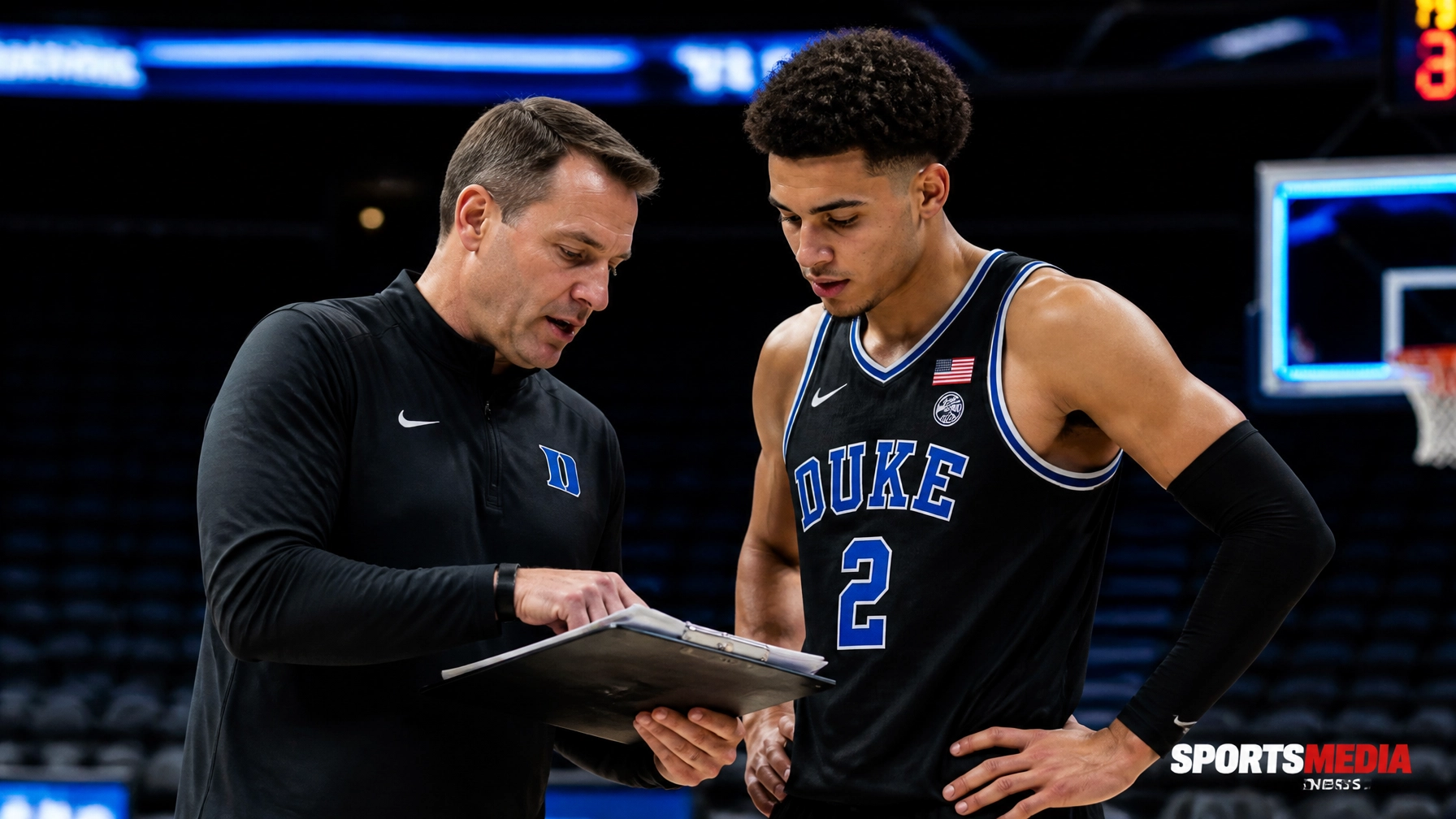
Every June, when the NBA holds its draft, the spotlight falls on the athletes—their measurements, their highlights, and their projected upside. But behind almost every highly drafted prospect is a coach whose fingerprints are all over that player’s development, reputation, and readiness. The best college coaches don’t just win games—they build careers.
The Development Pipeline
The most direct way a coach shapes a player's draft stock is through development—and in college basketball, the evidence is hard to ignore.
John Calipari’s Kentucky program has sent over 50 players to the NBA Draft since 2010. This success is not a mere coincidence of elite recruiting. Calipari deliberately structured his program around NBA readiness, drilling the footwork, spacing concepts, and defensive habits that NBA front offices evaluate. When a prospect sits down with a team at the Combine, scouts aren’t starting from zero. They already have a mental framework for what that player has been taught and how they’ve been prepared.

Similarly, Mike Krzyzewski’s legacy at Duke built a pipeline through a different philosophy—emphasizing IQ, poise, and the kind of team-first culture that NBA organizations associate with high-character, low-risk picks. Even after his retirement, the blueprint remains. Players like Jayson Tatum, Zion Williamson, and Paolo Banchero all spent a single year in Durham before becoming cornerstone lottery selections. What they left with wasn’t just a season of college ball; it was a foundation of professional habits.
Coaches who emphasize discipline, accountability, and professional-level preparation produce athletes who don’t just have talent—they have readiness. And in the eyes of front offices, readiness is what turns a mid-first-round pick into a top-five selection.
Scheme Fit: The Hidden Variable
A player’s draft stock isn’t just about what they can do—it’s about what scouts can see them doing. This visibility is almost entirely determined by the tactical system a coach employs.
Guards are perhaps the clearest example. A ball-dominant point guard in a dribble-drive system may post spectacular assist numbers, but NBA evaluators want to know: can he play off the ball? Can he handle half-court sets when the shot clock is winding down? Coaches who build NBA-style offenses—with off-ball movement, pick-and-roll reads, and defensive switching concepts—give their players a vocabulary that translates directly to the next level.

The effect runs the other way too. Bigs who play in perimeter-heavy systems that require them to set screens, roll hard, and operate in space generate far more appealing tape than those buried in traditional post-up schemes. A seven-footer with shooting range who spent four years hoisting threes in transition looks entirely different on film than one who only operated with his back to the basket—even if the raw physical talent is identical.
The Network Behind the Name
Professional scouting is not a purely objective exercise. It is, at its core, a business built on relationships and trust—and college coaches sit at the center of that web.
NBA scouts don’t just watch film; they make phone calls. They visit practice facilities and sit in coaches' offices, asking questions that never show up in a box score: Is he coachable? How does he handle adversity? What does he do when the cameras are off? A coach with credibility in those conversations can meaningfully move a prospect up a team’s board.

This dynamic is particularly amplified in the NBA, where rosters are small and a single bad character evaluation can derail a pick entirely. Coaches who have delivered trustworthy assessments to NBA front offices over the years—those who don’t oversell or hide problems—build a kind of institutional credibility that benefits every player they send to the draft.
Conversely, programs with reputations for overhyping prospects or concealing character issues eventually find that scouts discount their endorsements. In these cases, the players pay the price, often without ever knowing why their stock took a sudden tumble in the weeks leading up to draft night.
Exposure Is Not Equal
Talent distribution across college basketball is far wider than draft results suggest. What isn’t equally distributed is visibility—and visibility is largely a function of coaching and program prestige.
Players at blue-blood programs—Kentucky, Duke, Kansas, Gonzaga—receive more nationally televised games, more scout visits, and more media attention almost by default. That kind of evaluation density is simply unavailable to an equally talented prospect at a mid-major.

But the gap has been narrowing. Coaches at smaller programs have grown increasingly sophisticated at packaging film, organizing high-profile pre-draft workouts, and building direct relationships with front offices. The transfer portal has also allowed coaches to strategically place players in higher-visibility situations in their draft year—a well-timed move that, when executed correctly, can meaningfully boost a prospect’s stock.
Historical precedents prove that elite talent can be found anywhere if the advocacy is strong enough. Damian Lillard emerged from Weber State, and Ja Morant from Murray State. Both were products of coaches who developed them relentlessly and advocated loudly on their behalf—ensuring that NBA teams didn’t write them off simply because they weren't playing in a power conference every night.
Coaches Open Doors. Players Walk Through Them.
None of this diminishes the athlete. No coach can scheme an average player into a lottery pick, and no network can manufacture talent that isn’t there. At the end of the day, athleticism, skill, basketball IQ, and character are what NBA organizations are buying.
However, for players whose talent sits on the fence—those borderline prospects whose trajectories hinge on a single strong workout or evaluation—a great coach can be the difference between getting a shot and being overlooked entirely.
The path to the NBA has always run through the people who shaped those athletes long before draft night. It runs through early morning film sessions, through post-practice conversations about footwork and shot selection, through phone calls between a trusted coach and a scout who just wants to know: can this kid play at the next level?
Most of the time, the honest answer to that question was formed long before the draft — in a gym, inside a system, under a coach who saw something worth developing.
About the Author: Nicolas Dorigatti is a Senior Basketball Analyst at Sportsmedia News, specializing in NBA Draft scouting, collegiate player development, and the intersection of sports business and performance. With over a decade of experience covering the hardwood, Dorigatti provides in-depth analysis on the prospects and programs shaping the future of the game.