


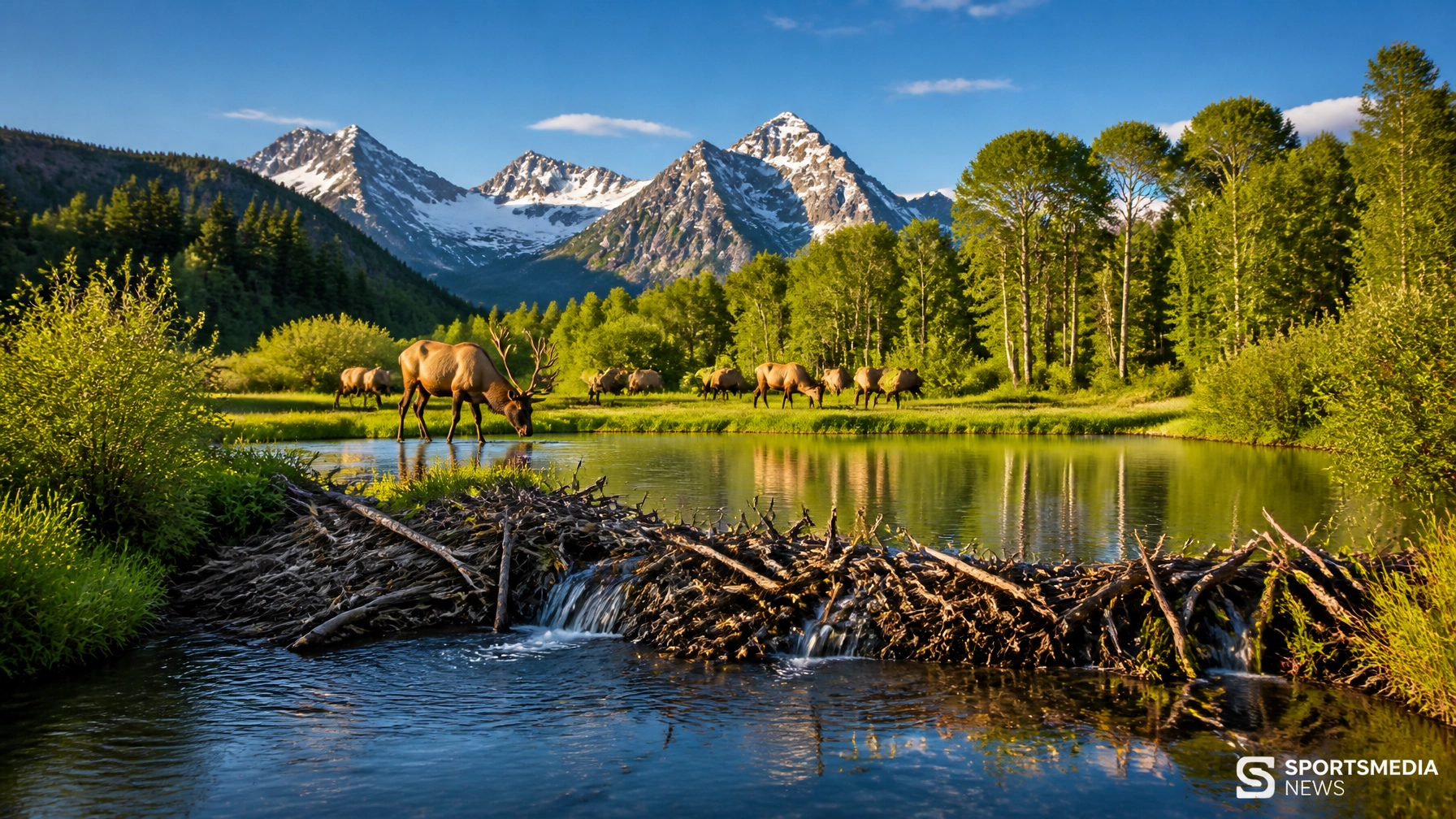
From restoring watersheds to strengthening wildlife corridors, multi-species conservation is helping create healthier and more resilient ecosystems across the American West.
By: Trinity Martin-Sadler, Intern Journalist
Publication Date: July 7th, 2026
A New Approach to Wildlife Restoration
Wildlife restoration now emphasizes whole ecosystems rather than targeting individual species. Conservationists, land managers, and government agencies are realizing that rebuilding the natural connections between animals, water, plants, and land is essential. This approach, known as multi-species restoration or trophic rewilding, aims to restore native species that enhance ecosystem health. Instead of depending solely on expensive infrastructure projects, wildlife can provide lasting ecological benefits through natural processes. This strategy combines habitat restoration and sustainable land management to boost biodiversity, improve water resources, and increase resilience to droughts and wildfires.

Why Beavers Are Essential to Healthy Watersheds
Beavers are among North America's most valuable wildlife as they are considered "ecosystem engineers." By building dams, they slow water flow, reduce erosion, trap sediment, and recharge groundwater. This creates wetlands that support fish, birds, amphibians, and many other species. These wetlands also store water during dry periods, making landscapes more resilient to drought.
The restoration proposal highlights the increasing use of Low-Tech Process-Based Restoration (LTPBR) and Beaver Dam Analogues (BDAs). These human-made structures mimic natural beaver dams, facilitating an ecosystem until beavers can naturally return to an area. Land managers in places like Oregon and Utah are already implementing these techniques to restore damaged watersheds.

Protecting Elk Means Protecting Entire Landscapes
While beavers enhance aquatic ecosystems, elk play a crucial role in maintaining healthy forests and grasslands. Large herds of elk require connected migration routes and seasonal habitats. Protecting these migration paths not only preserves biodiversity but also ensures a healthy food supply for wildlife. The proposal states that states like Colorado prioritize the protection of winter ranges, as habitat loss, drought, and development threaten vital elk populations.
The proposal also emphasizes areas like Montana’s Lolo and Bitterroot National Forests, where restoring river habitats alongside elk conservation can enhance ecosystem health and improve forage across the landscape.

Technology is Becoming a Conservation Tool
Modern wildlife restoration blends ecological science with technology. The proposal suggests creating digital platforms to track watershed restoration, groundwater recovery, wildlife habitat improvements, and plant health. These tools can assist conservation organizations, government agencies, and private landowners in assessing project outcomes and improving long-term planning.
Reliable environmental data also fosters collaboration among federal agencies, nonprofits, and private partners working toward shared conservation goals.

Investing in Long-Term Conservation
Wildlife restoration extends beyond merely protecting animals; it involves investing in healthier ecosystems and sustainable communities. As natural resource managers seek cost-effective, nature-based solutions, combining beaver restoration with elk habitat conservation can enhance water security, reduce wildfire risk, increase biodiversity, and strengthen ecosystem resilience. Allowing native species to fulfill their ecological roles can yield benefits that extend beyond individual landscapes.
As conservation efforts expand across the U.S., multi-species restoration presents a practical and science-based approach to protecting natural resources and ensuring healthier ecosystems for future generations.
For more in-depth analysis and the latest breaking news on Zoo Media & Sports, visit our Articles section or learn more about our team at Sportsmedia News About Us.
Sources Verified
- https://watershed.utah.gov/
- https://cpw.state.co.us/what-we-do
- https://www.fs.usda.gov/about-agency
- https://www.blm.gov/about
Media Contact
Trinity Martin-Sadler
Intern
martinsadlert2@mailbox.winthrop.edu
#EsportsInEducation
#FutureOfGaming
#ScholasticEsports
#GamingMeetsOpportunity
#FANZInnovation
#StudentSuccess