


Florida Panthers
Forward Matthew Tkachuk (United States) has eight points (three goals, five assists) in 10 games for the Panthers this NHL season after not making his season debut until Jan. 19 because of injuries. Tkachuk returns to the Panthers with momentum after having six assists and 16 shots on goal in six games to help the U.S. win the gold medal at the 2026 Olympics. Teammates Anton Lundell (won bronze medal with Finland), Sam Bennett and Sam Reinhart (won silver medal with Canada) can also help back-to-back Stanley Cup champion Florida rediscover its championship form down the stretch.
Per NHL EDGE stats, Tkachuk ranks in the 99th percentile among forwards in offensive zone time percentage (49.5) this NHL season. The Panthers, who are eight points out of the final Stanley Cup Playoff spot in the Eastern Conference, could feasibly rebound considering they are tied for fourth in midrange shots on goal (490) but only rank 27th out of 32 teams in midrange shooting percentage (10.2).
Nashville Predators
Workhorse goalie Juuse Saros (Finland) reminded the hockey world he’s still in his prime at 30 years old by going 4-2 with a .940 save percentage and one shutout in six games at the Olympics. Saros remains the clear No. 1 goalie for Nashville, which also returns key members of its core from the Olympics in defenseman Roman Josi (four points, 17 shots on goal in five games for Switzerland as the country’s captain), Filip Forsberg (Sweden) and surprising veteran Erik Haula (six points in six games for Finland).
Per NHL EDGE stats, Saros ranks third in the League in high-danger saves (281) and seventh in midrange save percentage (.923). The Predators, who are only four points out of the final playoff spot in the Western Conference, quietly rank third in the League in offensive zone time percentage (43.1) and ninth in 5-on-5 shot attempts percentage (51.4), two key metrics that could help them hang around in the race.
New Jersey Devils
Forward Jack Hughes (United States) scored the “Golden Goal” in his country’s gold medal game victory against Canada and had an impressive tournament with seven points (four goals, three assists) and 15 shots on goal in six games at the 2026 Olympics. Hughes, who has 36 points (12 goals, 24 assists) in 36 games for the Devils this season but missed significant time because of injury, was at the top of his game again at the Olympics and now looks to help the Devils make up ground in the Eastern Conference playoff race (11 points out of final spot).
Per NHL EDGE stats, Hughes, despite being limited to 36 of New Jersey’s 57 games this season, still ranks highly among forwards in midrange shots on goal (50; 91st percentile) and midrange goals (five; 82nd percentile). He also ranks in the 89th percentile among forwards in offensive zone time percentage (45.3) and has been a standout in max skating speed in previous NHL seasons.
Considering the Devils rank 10th in the NHL in 5-on-5 shot attempts percentage (51.1) this season, they have bounce-back potential down the stretch of the regular season. In addition to Hughes, the Devils had other Olympics standouts in goalie Jacob Markstrom (Sweden), forwards Timo Meier, Nico Hischier (Switzerland) and defenseman Simon Nemec (Slovakia), creating positive momentum across their lineup.
San Jose Sharks
Forward Macklin Celebrini (Canada), the youngest NHL player at the 2026 Olympics (19 years old), led the entire tournament in goals (five) and shots on goal (28) and was second in points (10 in six games) behind Connor McDavid (13 in six games). Celebrini ranks fourth in the entire NHL in points (81 in 55 games) this season, has found elite chemistry with fellow young forward Will Smith (39 points in 42 games), keeping San Jose within five points of the final postseason spot in the Western Conference.
Per NHL EDGE stats, Celebrini is second in the entire NHL in both midrange shots on goal (101; behind Nathan MacKinnon’s 110) and midrange goals (15; behind MacKinnon’s 16) and ranks sixth among forwards in hardest shot (97.89 mph). Celebrini also ranks in the 95th percentile among forwards in both average shot speed (62.39 mph) and 20-plus mph speed bursts (140) this season.
Although the Sharks were winless over their final four games (0-3-1) before the break, they are tied for the most games remaining (27) among all NHL teams and have new wrinkles in their lineup. Rookie forward Michael Misa (eight points in 18 games this season) recently returned in January and ranks in the 79th percentile among forwards in max skating speed (22.75 mph). Forward Pavol Regenda (Slovakia) has scored seven of his eight goals in 16 games from high-danger areas and was one of the biggest surprises at the Olympics (five points in six games).
It’s also worth noting forward Kiefer Sherwood (acquired from Vancouver Canucks on Jan. 19) made his Sharks debut in the final game before the Olympic break. Sherwood ranks in the 90th percentile or higher among forwards in hardest shot, average shot speed, high-danger goals and long-range shots on goal this season.
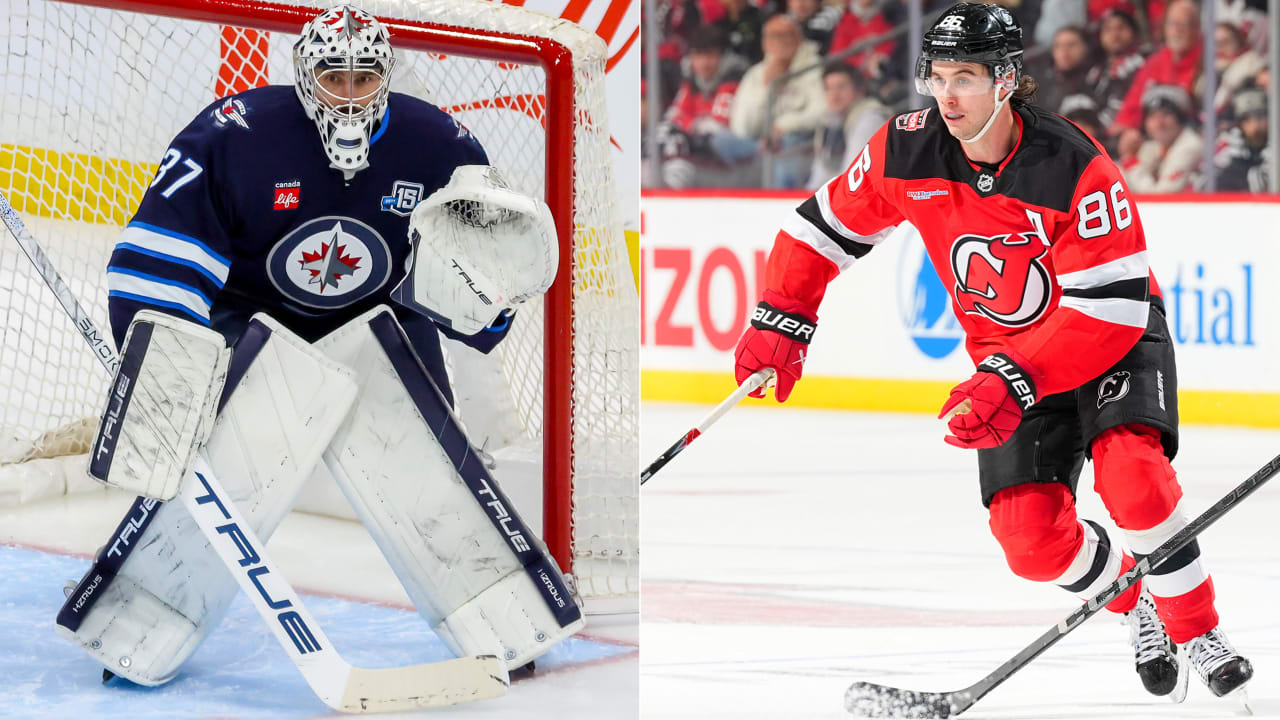
Per NHL EDGE stats, Hellebuyck’s high-danger save percentage (.806) ranks below the NHL average (.810) this season, but he finished fourth in that category last season (.848). Forward Kyle Connor was only included in the U.S. lineup for two of the six games at the Olympics but has a robust advanced stats profile in the NHL and could have extra motivation to help Winnipeg turn its season around. Connor ranks in the 85th percentile or higher among forwards in hardest shot, average shot speed, midrange goals, midrange shots on goal, long-range shots on goal and 20-plus mph speed bursts. Connor’s linemate Mark Scheifele, who was left off Canada’s roster at the Olympics, is tied for third in the NHL in midrange goals (14).
Defenseman Josh Morrissey was limited to one game for Canada at the Olympics because of injury but ranks in the 90th percentile or higher at his position in long-range goals, midrange goals, midrange shots on goal, long-range shots on goal, offensive zone time percentage and total skating distance this NHL season for the Jets. Winnipeg ranks 11th in offensive zone time percentage at even strength (40.9) this season and could rejoin the playoff conversation if their top players stay healthy and secondary scoring improves.
—