


More Than Basketball: What It Means to Have a Sitting President at a Knicks Finals Game
By Nicolas Dorigatti | June 20, 2026
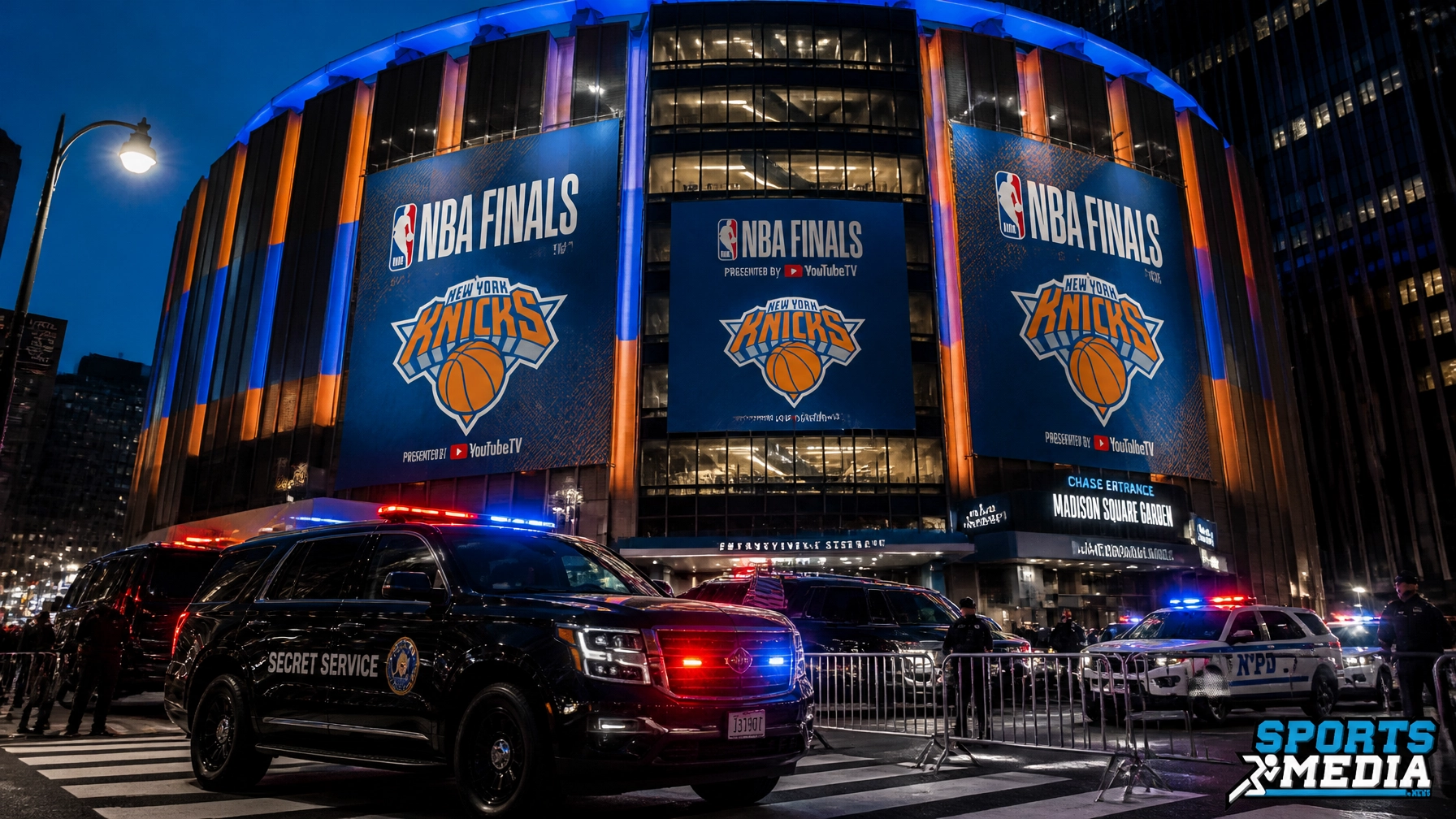
President Donald Trump made history on Wednesday night at Game 3 of the NBA Finals, marking a significant convergence of professional sports and national politics. According to official league statements, Trump became the first sitting U.S. president ever to attend an NBA Finals game. His appearance at Madison Square Garden (MSG) for the matchup between the New York Knicks and the San Antonio Spurs stepped into one of the most symbolic intersections of American culture in recent memory.
On the surface, the visit appeared straightforward. Trump, born and raised in New York, has been a lifelong Knicks fan. A local fan supporting his hometown team in their first Finals appearance since the turn of the century, specifically a high-stakes run against a powerhouse Spurs roster, would typically be standard sports fare. However, the logistical and cultural weight of a sitting president's attendance transformed the evening into a national spectacle that extended far beyond the box score.
A Historic First
While presidential appearances at sporting events are a long-standing American tradition, basketball has historically occupied a different space than "America's Game." Baseball has traditionally been the sport most closely associated with the presidency, defined by ceremonial first pitches and World Series appearances, such as President George W. Bush’s iconic 2001 appearance.
The shift is particularly notable given the NBA's history of player activism. Unlike the more traditional environments of MLB or the PGA, the NBA has often been a platform for social commentary. Trump’s presence at MSG, therefore, served as a landmark moment for a league that has frequently found itself at odds with political figures in the past.

Security and Logistics at "The World's Most Famous Arena"
The presence of the commander-in-chief immediately altered the operational landscape of Midtown Manhattan. Security measures transformed the area around Madison Square Garden into a heavily protected "frozen zone." The NYPD and U.S. Secret Service established a multi-block perimeter, resulting in street closures from West 30th to West 35th Streets between 6th and 8th Avenues.
The logistical impact was substantial for the 19,000 fans in attendance. Ticket holders were advised to arrive at least three hours before the 8:00 PM tipoff to clear intensified screening checkpoints.
- Frozen Zone: A two-block radius around MSG was restricted to ticket holders and credentialed personnel.
- Screening: Fans passed through multiple layers of magnetometers and TSA-style security.
- Transit Impact: Nearby Penn Station remained open, though commuters faced restricted bag policies and heavy police presence.
The business of the game was also impacted. With the cheapest tickets for Game 3 reportedly exceeding $6,000 on secondary markets, the added security costs only heightened the "event of the year" atmosphere. This high-security posture is reminiscent of the restrictions surrounding major sporting events often seen in international competitions, highlighting the immense value of the NBA's premier brand.

The Pulse of the Crowd
Inside the arena, the reaction reflected the broader political landscape of 2026. When President Trump appeared on the video boards during the national anthem, the crowd responded with a mixture of cheers and boos. This split reaction captures the reality of his public life; few figures in American history generate more polarized responses.
Despite the mixed reception, the energy inside the Garden remained at a fever pitch. The Knicks' path to the Finals: defeating the Atlanta Hawks, Philadelphia 76ers, and Cleveland Cavaliers, has been the dominant sports story in New York for months. The presence of a sitting president only underscored the magnitude of the series.
A New York Story
The symbolism of the night was inextricably linked to the setting. The Knicks are not merely a basketball team; they are a cultural institution in New York. Trump himself is a product of New York City, having built his public identity in the city’s real estate and media sectors long before entering politics.
His return to Madison Square Garden during the franchise's first Finals appearance in decades created a uniquely local narrative. It reminded many of the days when sports and celebrity in New York were heavily intertwined with the city's business elite. Today, that intersection is even more complex, involving billion-dollar sponsorship deals and global media rights that make the NBA a titan of the sports business industry.

Lasting Impacts
Ultimately, the significance of Trump's attendance depends on one's perspective. Supporters see a president celebrating an iconic American sports moment and connecting with a massive television audience through a shared passion. Critics, conversely, point to the logistical headaches and the potential for political shadow to loom over the championship series.
What cannot be disputed is the historic nature of the moment. As the final buzzer sounded in Game 3, the conversation remained split between the action on the court and the figure in the executive suite. Historians and sports fans alike will likely remember this as the night the NBA Finals became a centerpiece of the national political dialogue.
Long after the series concludes, Game 3 will stand as a reminder that in the modern era, sports are rarely just sports. They are a reflection of the culture, the politics, and the passions of the nation itself. The "arms race" for mass adoption and cultural relevance in sports continues, and as leagues like the NBA continue to grow, the presence of global leaders at their pinnacle events may become the new standard.