


By: Hannah Vore, Journalist Intern
Publication Date: July 8, 2026
Restoring Ecosystems
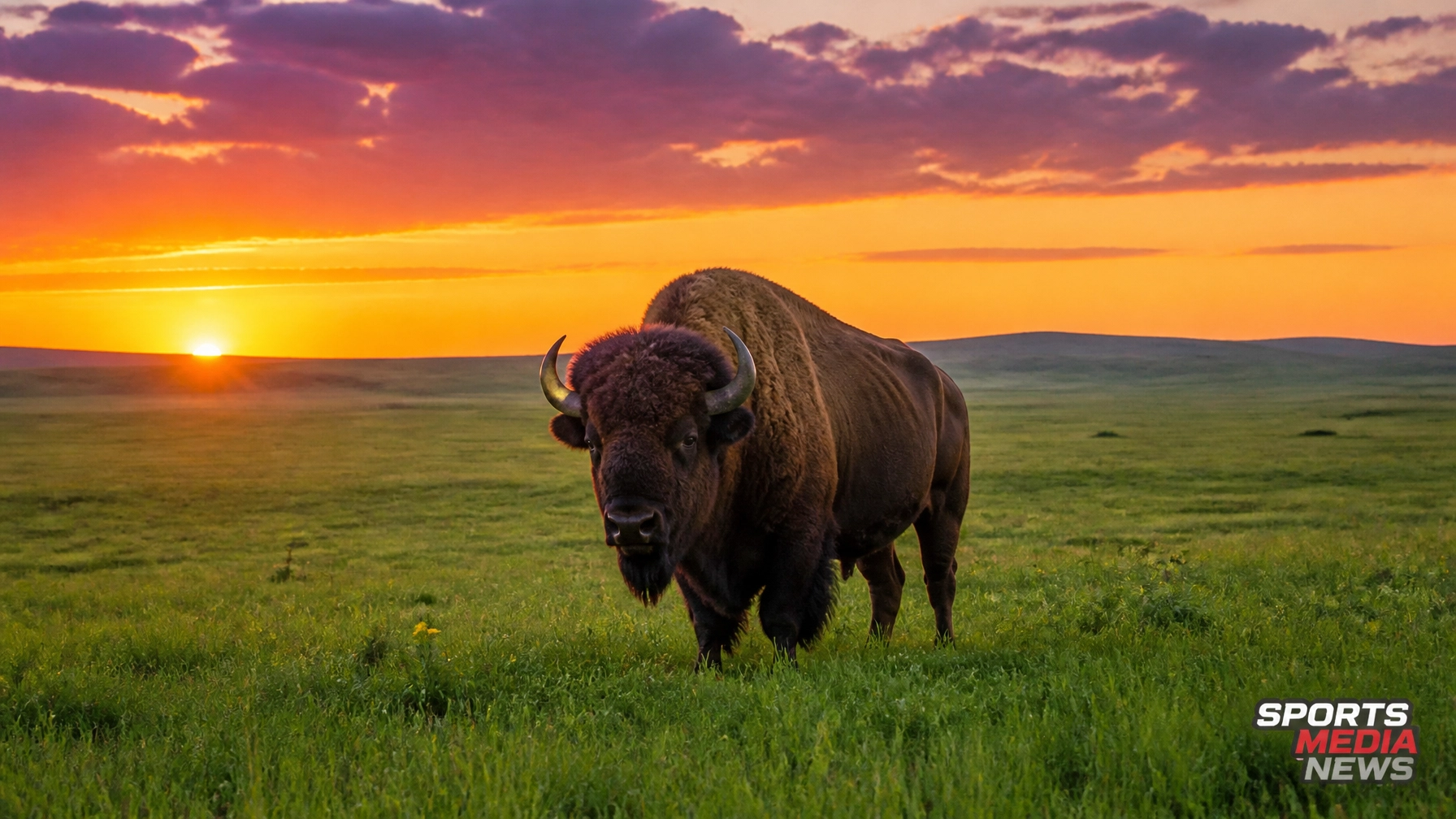
Bison, also known as buffalo, are more than just North America's largest land mammal.
According to Smithsonian's National Zoo and Conservation Biology Institute, bison are keystone species, meaning that they help shape diverse microhabitats. They contribute greatly to restoring biodiversity to grasslands.
Their behaviors support birds, insects, amphibians and plants. While they move around, they graze, wallow and disperse seeds along the grasslands. According to American Prairie, wallowing is when bison roll in dust and mud, creating depressions in the ground called wallows. This is where water from the rain and seeds from the bison's fur collect and help grow vegetation.

Research published in the journal Science shows that bison also play a key role in the nitrogen cycle. Herds traveling about 1,000 miles every year increase the number of microbes in the soil, which then increases the amount of nitrogen available to plants.
According to the World Wildlife Fund, bison's migration across grasslands is called the "green wave" because of the lush plant growth left in their wake.

History of Bison
Bison once roamed the Great Plains in the millions. Then settler expansion and overhunting put the species on the brink of extinction by the early 1900s.
Conservation efforts have helped restore the number of bison across North America.
The Smithsonian Magazine reports that around 400,000 bison live in North America, with 5,000 bison in Yellowstone National Park.

Conservation Goals
With the help of donors and collaborators, American Prairie brought back bison to their lands in 2005, 120 years after they had left.
Based on research from the Vermejo Statement, a long-term vision for the recovery of bison, American Prairie strives to reach a herd of 5,000 bison in order to continue conservation and ecological recovery.
"Our long-term goal is to grow bison herds to a population size that would result in the species fulfilling their ecological role on the landscape," said American Prairie.