


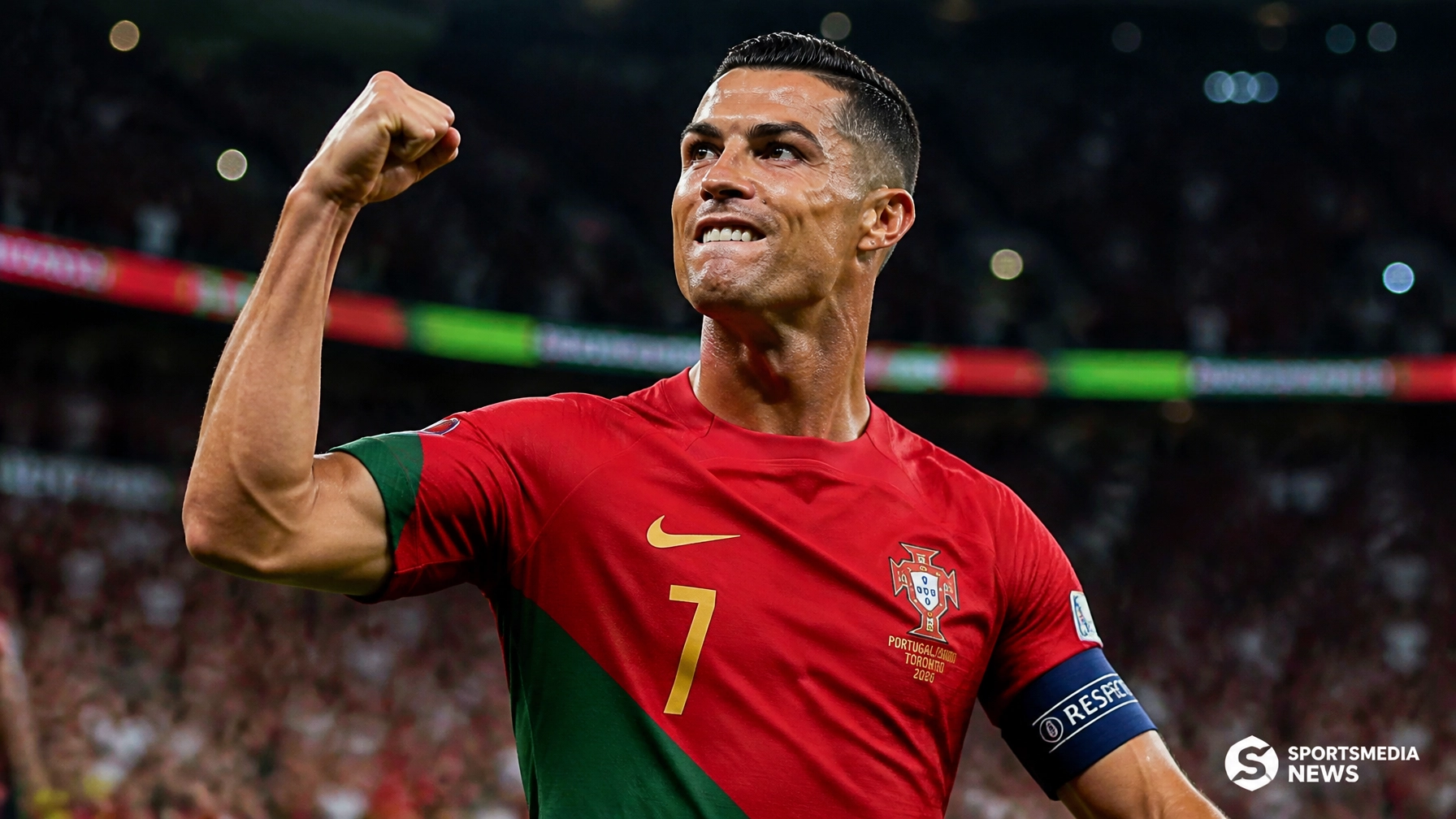
While the tactical evolution of modern soccer prioritizes collective pressing and structured systems, the dramatic 2-1 victory for Portugal over Croatia in the 2026 World Cup Round of 32 reaffirms a historical truth: the presence of an elite superstar remains the ultimate catalyst for championship success.
The Breakthrough in Toronto
On a high-stakes night at Toronto Stadium, Portugal secured their place in the Round of 16 through a combination of veteran composure and late-game clinical finishing. The match remained a tense stalemate until the 53rd minute when Croatia’s Ivan Perišić exploited a defensive lapse to put the 2018 finalists ahead. Facing an early exit, Portugal turned to the individual who has defined their national team for over two decades.
In the 68th minute, a VAR review confirmed a holding foul inside the box by Nikola Vlašić on Renato Veiga, awarding Portugal a critical penalty. Cristiano Ronaldo, at 41 years old, stepped up to the spot. Despite his exhaustive list of accolades, a goal in the World Cup knockout rounds had eluded him across five previous tournaments. Ronaldo converted down the middle as goalkeeper Dominik Livaković dove to his right, not only equalizing the match but making him the oldest goalscorer in World Cup knockout history.
"First half we dominated the game," Ronaldo said after the match. "In second half after the goal we get a little bit panic, but this is football. After the penalty, I think it was a little bit better for us. We created a few chances and I think at the end of the day we deserved to win the match."

Leadership Beyond the Pitch
The narrative of the match extended beyond the stat sheet. Ronaldo was substituted in the 81st minute, replaced as Portugal sought fresh legs to navigate the closing stages. However, his influence remained palpable. Observers noted Ronaldo’s constant communication from the technical area, effectively acting as an extension of the coaching staff.
Beneath his jersey, Ronaldo wore a shirt dedicated to Diogo Jota, his former teammate who tragically passed away in a car accident exactly one year ago. "Diogo Jota — we knew this before the game," Ronaldo said, turning to show the shirt. "It was a so special moment. We speak today to our group, the coincidence of life. It's unbelievable." This tribute served as a rallying point for a Portuguese squad that appeared emotionally charged throughout the contest. The resolve culminated in the 94th minute when Gonçalo Ramos found the net in stoppage time, sealing a 2-1 victory and a date with Spain in the Round of 16.
"I love that type of moment, I love that type of games," Ramos said. "I want to play every game like that."

Seeking Legitimacy: The Superstar Factor
The 2026 tournament is proving that even in an era of data-driven coaching, the "superstar effect" is not a myth. History supports the necessity of a singular, world-class talent to navigate the gauntlet of a World Cup.
Consider the following historical benchmarks of superstar-led triumphs:
- Pelé (Brazil 1958, 1970): Exploded onto the scene as a 17-year-old in 1958 and returned in 1970 to lead what many consider the greatest team of all time.
- Diego Maradona (Argentina 1986): In what is widely regarded as the most dominant individual performance in tournament history, Maradona’s five goals and five assists carried a disciplined but unheralded Argentina to the title.
- Zinedine Zidane (France 1998): Scored two goals in the final against Brazil, becoming the face of a multicultural France and providing the clinical edge a talented squad required.
- Ronaldo Nazário (Brazil 2002): Overcoming career-threatening injuries, he scored eight goals, including two in the final, to secure Brazil’s fifth star.
- Lionel Messi (Argentina 2022): Scored in every round of the tournament, winning his second Golden Ball and proving that a superstar’s sunset can still be their most brilliant phase.
The current iteration of the Portuguese team mirrors these historical blueprints. While the squad boasts talent like Bernardo Silva and Bruno Fernandes, the presence of Ronaldo provides a focal point that forces opponents into reactive tactical shifts.

The Blueprint for Success
The financial and cultural impact of these superstars is equally significant. According to recent industry reports, viewership for Portugal's Round of 32 match saw a 14% increase compared to non-superstar matchups in the same time slot. This "gravity" extends to the pitch, where defenders are often double-tasked with tracking Ronaldo, inadvertently creating the space that Gonçalo Ramos exploited for the winning goal.
"It is an arms race," Portugal coach Roberto Martinez said. "I need to tell them the message is very clear. The balls now have a chip, and it's very clear that's why the VAR intervened. It's not a subjective opinion."
The reliance on a single icon does come with risks, particularly as Ronaldo enters the final stages of his career. However, as evidenced in Toronto, his ability to deliver in the one moment that matters: the 68th-minute penalty: is a luxury most nations simply do not possess.

Lasting Impacts
Portugal now moves forward to face a high-octane Spain side in the Round of 16. The match will serve as a ultimate test of whether a superstar’s leadership can overcome a younger, more fluid tactical machine. If the victory over Croatia is any indication, the "Beautiful Game" still belongs to those who can produce magic when the clock is winding down.
Experts predict that the emotional momentum from the Jota tribute and Ronaldo’s historic knockout goal will make Portugal one of the most dangerous remaining contenders in the bracket. As the tournament progresses into the later stages, the focus will remain on whether these individual heroics can translate into the ultimate prize: the World Cup trophy.
By Jacob Potter