


From a $10 Bet to a National Stadium Phenomenon
By Tre Martin
March 31, 2026
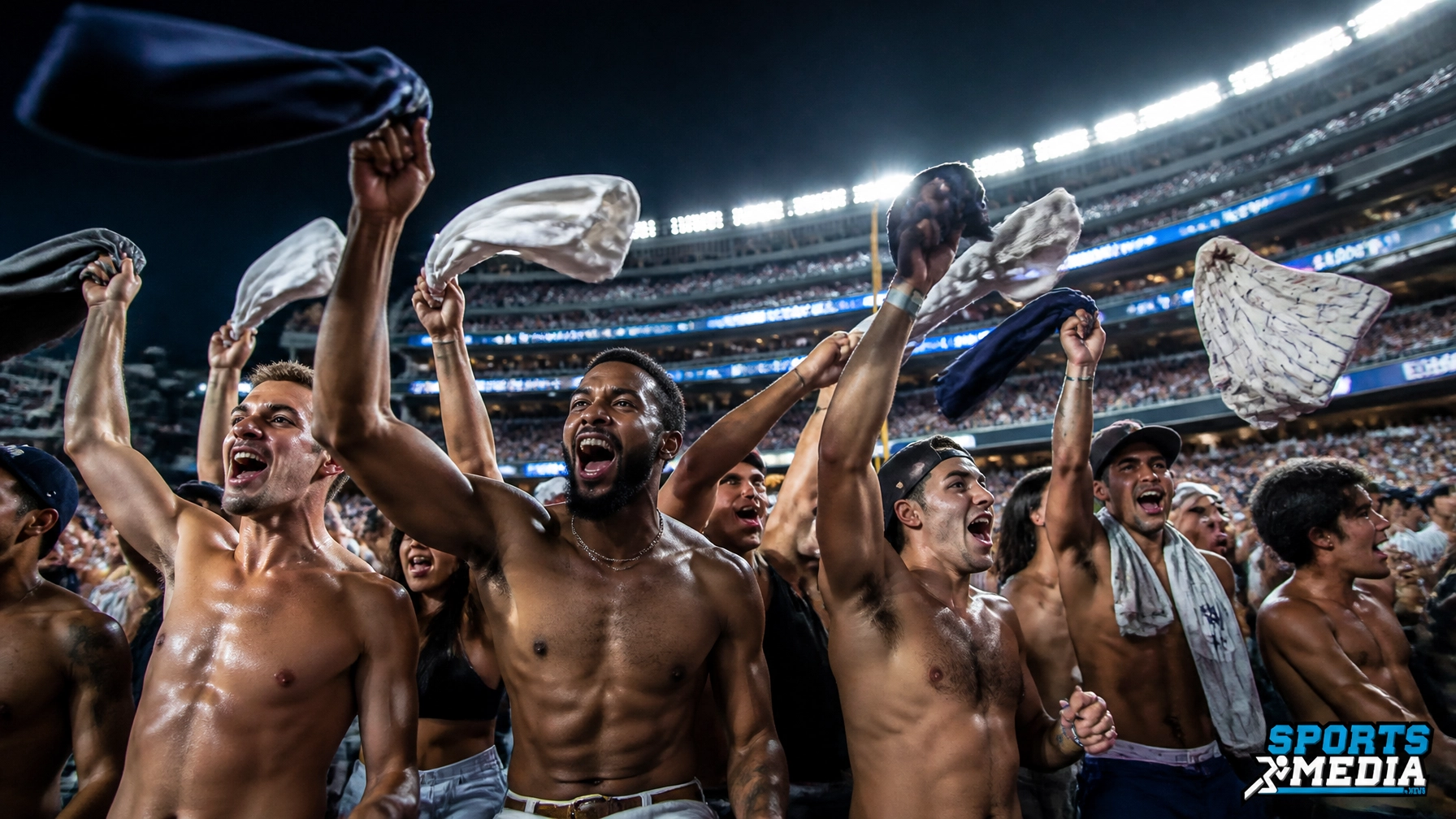
Nobody planned this. Nobody pitched it in a marketing meeting or tested it in a focus group. "Tarps Off" is the movement sweeping Major League Baseball in 2026, where fans take their shirts off and wave them overhead like a helicopter. But it started with a $10 dare, a bad football team, and one guy willing to look ridiculous alone.
This organic surge in fan engagement highlights a shift in how modern sports organizations must approach brandingstrategy and fan-driven innovation. While multi-million dollar ad campaigns strive for "viral" status, the "Tarps Off" phenomenon demonstrates that the most powerful branding often happens in the bleachers, far removed from the boardroom.
The Stillwater Catalyst: An Unlikely Origin
To understand the movement, you have to rewind to Oct. 11, 2025, in Stillwater, Oklahoma. Oklahoma State was in the middle of a disappointing 1-11 season, and down late in a 37-19 blowout at the hands of the Houston Cougars.
This is when a fan was dared by his sister to stand shirtless in an open section and wave his shirt around alone. The fan accepted the $10 bet and began to do it. Other fans soon joined the fan, and out of nowhere hundreds of people were shirtless in a section on a random Friday night in Oklahoma.

Crossing State Lines: The Collegiate Contagion
The trend caught fire all over the college football world; schools like Wisconsin, Michigan State, North Carolina, and many more joined the movement. Hundreds of fans all over the country were at a game, just trying to have a good time. This grassroots expansion is a prime example of brandingidentity shifting from a top-down corporate message to a bottom-up cultural identity.
“I really liked how spontaneous it was,” said Michigan State senior Supply Chain Management student Gavin Crosby. “It might’ve been a joke, but it still felt like school spirit and a cool tradition to be a part of.”
Crosby joined the section of yelling, shirtless fans in the Spartans' 31-20 loss against rival Michigan in October of 2025. His experience mirrors that of thousands of students who found a new way to express loyalty during otherwise challenging seasons. The movement was no longer about the score; it was about the community.
The Baseball Pivot: From Bleachers to Busch Stadium
Fast forward to May, and now baseball season is underway, and the trend has found its second wind. The Stephen F. Austin University Club baseball team was in town for the NCBA Division II World Series being held in Alton, Illinois, near St. Louis, home of the Cardinals. The team offered the players tickets to come out and watch the game against the Kansas City Royals.
During the eighth inning, one of SFA’s players floated the idea of going up the bleachers in right field and waving their shirts around. Many were hesitant, but eventually a dozen or so went up and started the movement. Nearby fans took notice, and in the matter of time the group of less than 20 grew to over four full shirtless sections.
The Cardinals, fueled by the yelling and shirtless fans, rallied to beat the Royals in extra innings by way of a walk-off hit from catcher Yohel Pozo. The "energy" on the field was palpable, reflecting a broader trend where stadium atmosphere directly impacts the media value of live broadcasts.

Corporate Recognition: The Business of "Tarps Off"
Cardinals manager Oliver Marmol loved the energy so much that he bought the tickets in that section for the following two games and created the “Tarps Off” section at Busch Stadium. A section dedicated to half-naked chanting and cheering.
This move by Marmol represents a significant pivot in professional sports management. Rather than enforcing strict dress codes or traditional norms, the Cardinals leaned into the chaos. "It's about the energy," Marmol noted in a post-game presser. "If it helps us win and the fans are having a blast, why would we stop it?"
However, this freedom comes with logistical considerations. Teams must balance this rowdy atmosphere with stadium safety and the restrictions surrounding flying objects or activities near major sporting events.
A National Phenomenon: The Social Media Surge
This story went national, with posts on TikTok, X, and Instagram flooding timelines. The “Tarps Off” movement regained its momentum after a long winter. Seattle Mariners fans went tarps off during a game against the White Sox. Phillies fans participated in a downpour in Philadelphia. Tigers fans followed in Detroit. In Houston, in Arizona, and many more teams have joined. By June, the trend had become, in the words of one outlet, "remarkably mainstream."

The viral nature of the movement is not just a social win but a commercial one. In an arms race for mass adoption, teams are finding that organic movements like these are more effective than expensive branding campaigns at reaching Gen Z and Millennial audiences.
The Bottom Line: Attendance and Revenue
And for the MLB, they aren’t complaining. Attendance at games has averaged roughly 1,000 more fans per game in 2026 than the prior year, and if this trend holds, baseball could average 30,000 fans per game for the first time since 2016. Whether "Tarps Off" is responsible or just a colorful symptom of an attendance spike, it's the kind of free energy that money can't buy.
Whether “Tarps Off” continues its dominance across major sports in 2026 is yet to be seen, but for MLB fans and college students all over the country, the energy, the fire, and the money that comes along with these organizations is something everyone should enjoy.
About the Author:
Tre Martin is a senior business analyst and sports journalist specializing in the intersection of fan culture and corporate strategy. With over a decade of experience covering the NFL and MLB, Martin provides in-depth analysis on how organic trends drive the billion-dollar sports industry.