


By Mark Ricci | May 29, 2026
Subheadline: Analyzing how the first 48-team, three-nation mega-tournament compares to past World Cups and redefines the global sports business landscape.
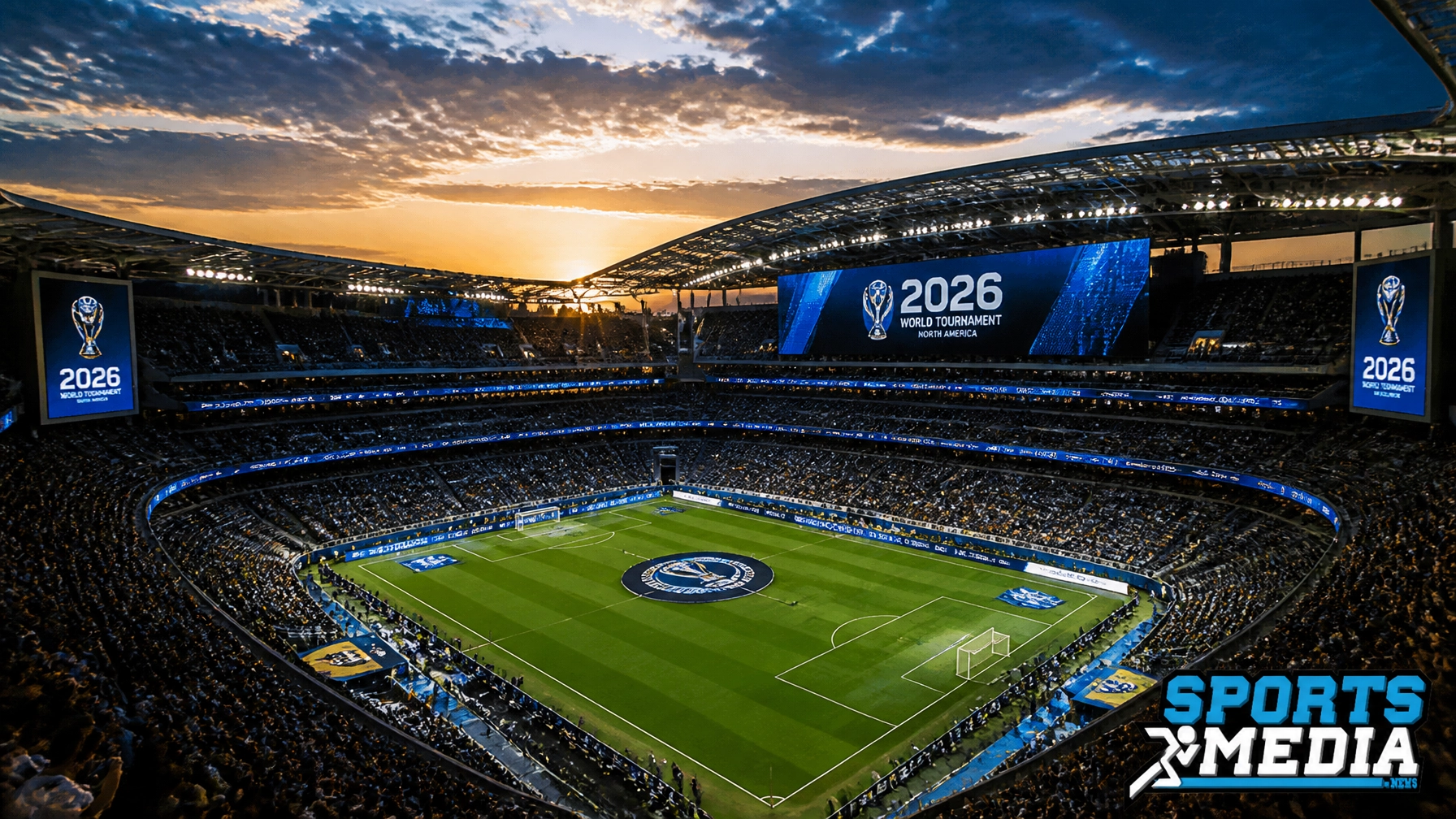
The 2026 FIFA World Cup represents more than just a return to North American soil; it signals a fundamental shift in the architecture of global sporting events. As the tournament approaches its June 11 kickoff, the sheer scale of the operation, spanning three nations and 48 teams, has set a new benchmark for commercial ambition and logistical complexity.
This transformation is driven by a staggering $11 billion revenue projection for the 2023–2026 cycle, a 56 percent increase over the previous four-year period. According to a recent report by the World Football Summit, "the 2023-2026 cycle is expected to generate $11 billion… that’s a whopping $4.56 billion more than the 2022 World Cup cycle." This financial surge is underpinned by a radical expansion of the tournament's competitive format and its commercial footprint.
Where and when: a three‑nation mega‑tournament
For the first time in history, the World Cup will be hosted by three countries: the United States, Canada, and Mexico. A total of 16 host cities will stage matches, including 11 in the U.S. (headlined by New York/New Jersey, Los Angeles, and Dallas), three in Mexico (Mexico City, Guadalajara, Monterrey), and two in Canada (Toronto and Vancouver).
The tournament returns to the traditional June–July calendar, with the opening match scheduled for June 11, 2026, and the final on July 19. This timing aligns with World Cups such as 2010, 2014, and 2018, in contrast to the November–December schedule of Qatar 2022. The geographic footprint is the largest since the joint Korea/Japan 2002 tournament and significantly dwarfs single‑nation hosts such as South Africa 2010 and Brazil 2014, which used 10 and 12 venues, respectively.
The new 48‑team format
The 2026 edition introduces the most significant structural change since the expansion to 32 teams in 1998. The move to 48 teams, a 50 percent increase in participants, has ripple effects across the entire sporting calendar.
Key structural changes include:
- Inventory Expansion: Total matches have surged to 104, up from the 64-match format maintained for the last quarter-century.
- Revised Group Stage: Twelve groups of four teams (Groups A–L) replace the old eight-group format.
- A New Knockout Round: A Round of 32 has been added, meaning finalists will now play eight matches instead of seven.
The mathematical shift is notable: in previous iterations, 50 percent of participants reached the knockout stages; in 2026, that number rises to approximately 66.7 percent. Critics have voiced concerns regarding the potential for "diluted quality," yet FIFA has maintained that the expansion is essential for global development.

Expanded global representation
The expansion is strategically designed to increase continental allocation, making 2026 the most geographically inclusive World Cup to date. This move is particularly impactful for emerging football nations:
- AFC (Asia): Increased from 4.5 to 8 direct spots.
- CAF (Africa): Increased from 5 to 9 direct spots.
- OFC (Oceania): Now features a guaranteed place for the first time.
By including more mid-tier nations from Africa and Asia, FIFA aims to capture new viewership markets. This serves as an "arms race" for attention in regions where football's commercial potential remains largely untapped. "The 2026 expansion increases the chance of lopsided matches," noted one industry analyst, "but it also gives more countries a rare chance to appear on the sport’s biggest stage."
Commercial scale vs. previous World Cups
Financially, 2026 is poised to be the most lucrative sporting event in history. FIFA’s projected $10.9 billion revenue for this cycle is largely driven by the North American market: the world’s largest for media and sponsorship.
Broadcast rights are expected to exceed $4.2 billion for the first time, while matchday revenues are projected to reach up to $3 billion. This is a massive jump from the roughly $950 million generated at Qatar 2022. The increase is a direct result of more games and larger stadium capacities. To incentivize participation, FIFA has also increased the prize pool to $655 million, a 50 percent rise from the previous edition.
The issue is particularly relevant for host cities. A report by Micronomics for the Los Angeles Host Committee projects that hosting eight matches could realize up to $594 million in total economic impact for LA County alone, including $243.2 million in increased wages.

Competitive and sporting comparisons
From a sporting perspective, the 2026 tournament introduces new variables that may alter team strategies. At 39 days, the tournament is roughly 10 days longer than Qatar 2022.
The added Round of 32 and the eight-match path to the title raise significant questions regarding player fatigue and squad depth. Analysts expect the "risk-reward balance" to shift: with more teams advancing from the group stages, we may see more cautious tactical approaches in early rounds, followed by high-stakes "Cinderella story" opportunities in the expanded knockout bracket.
Historical firsts versus earlier hosts
Relative to its predecessors, 2026 sets several historical markers. It is the first World Cup with three co-hosts and the first with 48 teams. Additionally, Mexico will become the first country to host or co-host three men’s World Cups (1970, 1986, 2026).
Earlier eras were considerably more compact. USA 1994, for example, featured only 24 teams and 52 matches. The 2026 16-city footprint marks a departure from the "compact" hosting model seen in Qatar, requiring a more sophisticated logistical approach to travel and regional scheduling.

Bottom line: how 2026 stacks up
Compared with past World Cups, the 2026 edition is defined by its unprecedented scale. It is bigger, more inclusive, and significantly more commercialized than any previous tournament. Whether it will be remembered as a sporting classic like Brazil 2014 or as a turning point where the World Cup became a "true global mega-event first and a tight sporting contest second" remains to be seen.
At the same time, the successful execution of this 104-match marathon will likely dictate the future of international sports hosting, potentially paving the way for even larger multi-national collaborations in the decades to come.
By Mark Ricci
Mark Ricci is a senior sports business analyst for Sportsmedia News, specializing in the intersection of finance, league strategy, and global media rights. His analysis focuses on the evolving economic structures of major international tournaments and the growth of emerging markets.