


By Jacob Potter
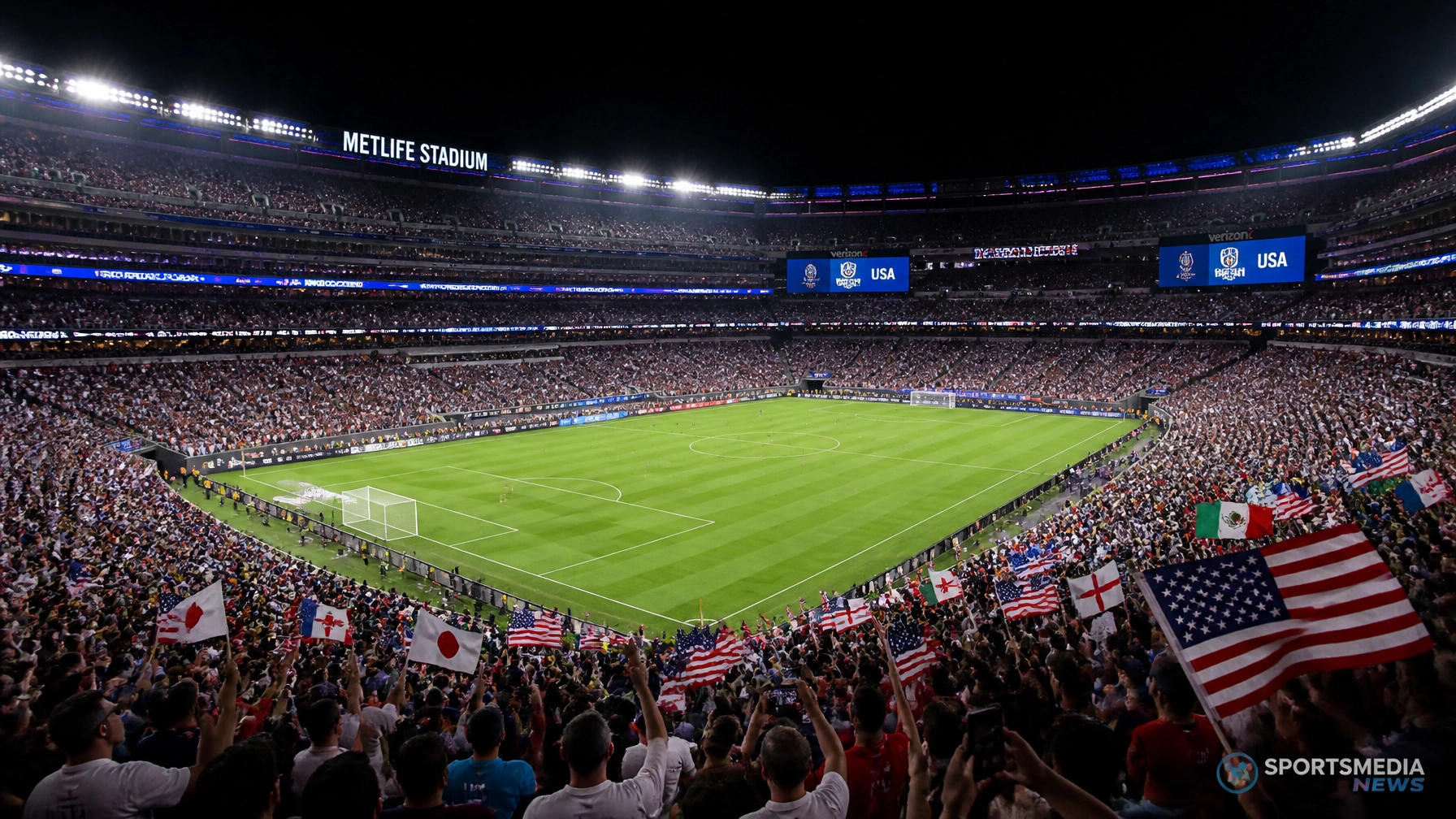
As the sun rises on July 1, 2026, the United States finds itself at the epicenter of the global sporting universe. With the FIFA World Cup moving into its critical knockout stages, the tournament has already begun to reshape the economic and cultural landscape of the 11 American host cities. Today’s high-stakes Round of 32 clash between the United States Men’s National Team (USMNT) and Bosnia-Herzegovina serves as a flashpoint for a tournament that officials project will generate more than $5 billion in immediate economic activity across the country.
The scale of the event is unprecedented in North American history. Spanning three nations but centered primarily in the U.S., the tournament is expected to drive a $17.2 billion boost to the national GDP. From the high-tech corridors of Seattle to the sun-drenched fan zones of Miami, the 2026 World Cup is proving to be more than a series of matches; it is a massive-scale industrial and social catalyst.
Economic Windfall and Host City Variations
The financial implications of hosting the world’s most-watched event are staggering in their breadth. According to a comprehensive socioeconomic impact study by Oxford Economics and FIFA, the tournament is expected to support approximately 185,000 full-time equivalent jobs and generate $10.2 billion in labor income for workers across the United States.
“We are looking at a level of visitor spending that dwarfs any previous single-sporting event,” says Dr. Michael Goldberg, a professor of sports economics specializing in mega-event impacts. “While the $17.2 billion GDP figure is the headline, the real story is the $30.5 billion in total gross output. This isn't just about ticket sales; it’s about the massive influx of 1.24 million international visitors who are staying longer and spending more than the average tourist.”
However, the impact has not been uniform across all 11 U.S. host cities. While Los Angeles projects a total economic impact of $594 million, including $343 million in direct visitor spending, Seattle expects to see upwards of $929 million in regional gains. These variations often stem from the number of matches hosted and the existing infrastructure of the cities.
"The issue is particularly relevant when you look at the 'crowding-out' effect," Goldberg adds. "In some cities, regular business travel and non-soccer tourism have slowed down because of the surge in hotel prices, leading to mixed results for local businesses not directly tied to the hospitality sector. Yet, for the host regions, the net gains remain overwhelmingly positive."
Seeking Legitimacy: The USMNT’s On-Field Surge

The commercial success of the tournament has been bolstered by the record-breaking performance of the USMNT. After finishing at the top of Group D, the American squad enters today’s match against Bosnia-Herzegovina with significant momentum. The team set a national record by scoring eight goals during the group stage, a feat that has fueled domestic television ratings and jersey sales.
Central to this success is the return of Christian Pulisic. Following a period of injury concern, Pulisic’s presence on the pitch has provided both tactical stability and a marketing anchor for the tournament. "Winning Group D wasn't just a sporting achievement; it was a validation of the decade-long investment in the U.S. developmental system," says an industry executive familiar with the national team's operations. "Every round the U.S. advances is worth tens of millions in incremental domestic interest."
As the USMNT prepares for the Round of 32, the "arms race" for soccer relevance in America has reached a fever pitch. Fans can follow real-time updates and breaking developments on these matches through our articles section, which tracks the tactical shifts and player performance data defining this tournament.
Grassroots and Governance: Soccer’s Long-Term Footprint

Beyond the glitz of the sold-out stadiums, a more permanent transformation is occurring at the community level. The Soccer Forward Foundation, a joint initiative between FIFA and U.S. Soccer, has utilized a $100 million windfall from the tournament to aggressively expand grassroots access.
The centerpiece of this effort is the commitment to install 1,000 mini-pitches in underserved urban and rural areas by the end of the tournament. These small-sided "FIFA Arena" pitches are designed to reduce the "pay-to-play" barriers that have historically hindered soccer growth in the U.S.
"The goal is to move the needle from 20 million participants to over 34 million by 2030," explains Sarah Evans, a director involved in the grassroots rollout. "By investing in these high-quality, accessible spaces in cities like Birmingham and Oakland, we are capturing a $2.7 billion youth soccer opportunity that has been largely untapped. We aren't just building courts; we are building a sustainable culture."
This focus on infrastructure serves as a strategic counter-argument to critics who point to the high costs of stadium upgrades. While several host cities have faced tensions with FIFA over cost-sharing agreements for security and transit, the long-term legacy of these 1,000 mini-pitches provides a tangible benefit that will outlast the final whistle in July.
Infrastructure and the Urban Legacy
The 2026 World Cup has forced a rapid acceleration of urban infrastructure projects. Significant investments in public transit and stadium technology have been fast-tracked in cities like Atlanta and Dallas-Fort Worth. These upgrades, while necessary for the influx of 6.5 million total fans, have not been without controversy.
Several host city governments have voiced concerns over the financial burden of FIFA’s stringent requirements. "The tension is real," notes a city planning consultant. "Cities are bearing the brunt of operational costs: security, transportation, and fan zone management: while FIFA retains a significant portion of the direct revenue from hospitality and ticket sales. This has led to a more cautious approach from local municipalities compared to the 1994 tournament."
Despite these frictions, the "Lasting Impacts" of the infrastructure spend are visible. Stadiums have been retrofitted with state-of-the-art sustainability features, and transit expansions that were projected to take a decade were completed in half the time to meet the World Cup deadline.
The Global Lens: Soft Power and the Messi-Ronaldo Factor

While the USMNT provides the domestic spark, the global star power of Lionel Messi and Cristiano Ronaldo has ensured that the 2026 World Cup maintains a firm grip on the international imagination. With a projected global audience of over 6 billion viewers, the tournament is a massive exercise in American "soft power."
The presence of the sport’s two greatest icons on American soil has created a cultural phenomenon reminiscent of Pelé’s arrival in the 1970s or the 1994 World Cup that gave birth to Major League Soccer (MLS). The 2026 event, however, is operating on a significantly larger scale. The influx of international media has offered a platform to showcase a modern, diverse America to a global audience, potentially shifting international perceptions.
"This is the most significant cultural exchange in the history of American sports," says a marketing expert. "Comparing this to 1994 is like comparing a local shop to a global conglomerate. The digital reach, the celebrity integration, and the sheer volume of fans have turned the U.S. into the definitive home of the sport for these six weeks."
Looking Ahead
As the tournament moves toward the quarter-finals, the focus remains on the immediate results on the pitch and the broader economic ripples through the host cities. Today’s match against Bosnia-Herzegovina is expected to draw record-breaking viewership, further cementing soccer’s place in the American sports hierarchy.
The 2026 World Cup is poised to leave a legacy that is both economic and structural. With $17.2 billion in GDP growth and a nationwide network of new soccer facilities, the tournament represents a fundamental shift in how the United States engages with the world’s game. Whether the USMNT can translate their group stage success into a deep knockout run remains to be seen, but the institutional and financial transformation of the sport in America is already well underway.
For further information on the business of sports and upcoming tournament schedules, visit our press releases page for the latest official updates.