


Twenty-five Tour cards disappeared this year. The PGA TOUR cut its fully exempt membership from 125 players to just 100, and the Fall Series has become something more than a few late-season tournaments for journeymen. It’s survival.
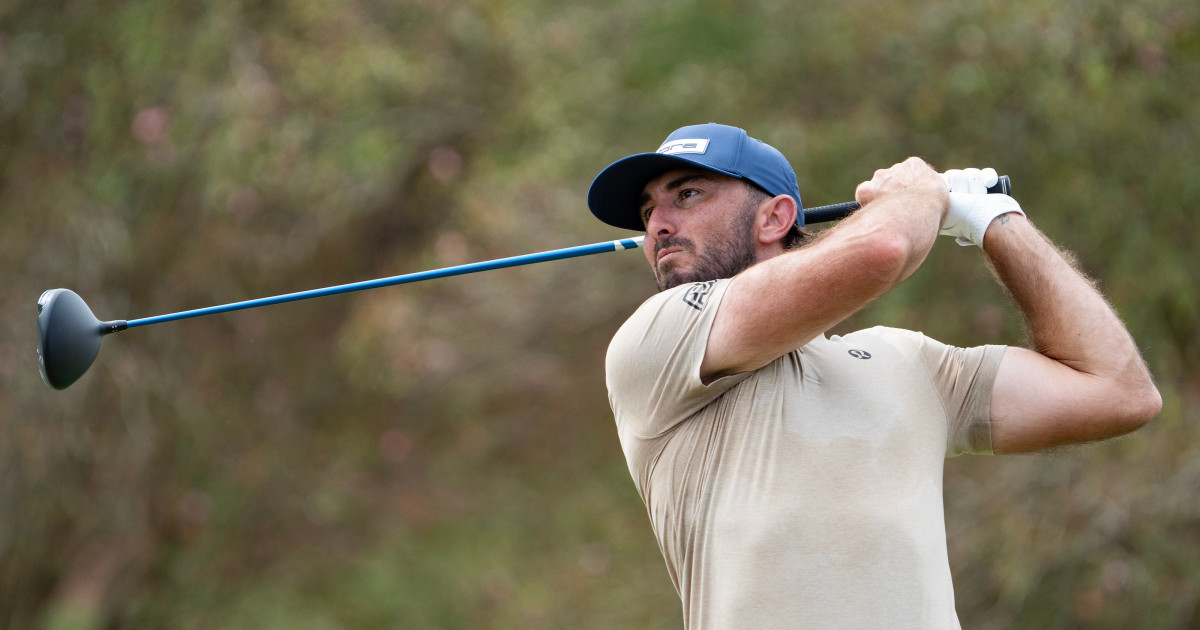
Max Homa knows this better than anyone. He sits at 100th with 453.046 FedEx Cup points. That’s the cutline. The six-time Tour winner finds himself one bad week away from conditional status, which means scrambling for Monday qualifiers and hoping for sponsor exemptions.
What Changed
Players finishing 101st through 150th now get conditional status for 2026, split into three tiers with different levels of access to events. The difference between 100th and 101st isn’t symbolic. One position separates a guaranteed schedule from uncertainty.
The rule targets a simple goal: stronger fields. Fewer cards mean hungrier players fighting harder for spots. But it also means established Tour winners can find themselves on the outside looking in after one poor season.
Who’s on the Edge
Isaiah Salinda and Austin Eckroat sit just behind Homa at 101st and 102nd. Salinda has 447.403 points. Eckroat has 443.656. Both are close enough that a single top-10 finish in the remaining Fall events could move them into safety.
Joel Dahmen (103rd, 435.647 points) and Max McGreevy (104th, 434.001 points) face similar math. They need results, not steady play. Consistent finishes outside the top 20 won’t cut it. They need something substantial.
Further down the standings, the situation gets worse. Sam Ryder sits at 106th. Andrew Putnam is 107th. Lanto Griffin holds 108th. Lee Hodges is 109th at 412.214 points. Taylor Moore rounds out the group at 110th with 410.659 points.
These aren’t rookies learning the Tour. These are players who have won, competed in playoffs, and built careers over years. Now they’re fighting to keep their jobs.
The Veterans
Billy Horschel won the FedEx Cup in 2014. He’s captured multiple Tour titles and represented the United States in international competition. Right now, he’s 112th with 404.967 points.
Matt Kuchar has nine Tour victories. He’s won over $55 million in career earnings. He’s a Ryder Cup and Presidents Cup veteran. But in 2025, he’s ranked 114th with 386.204 points, staring at conditional status for the first time in decades.
Both players have the game to turn things around. The Fall Series still includes the World Wide Technology Championship in Mexico, the Butterfield Bermuda Championship, and The RSM Classic in Georgia. Winning any of these events guarantees a two-year exemption and 500 FedEx Cup points. That would solve everything.
But both also know what conditional status means. Limited access. Waiting for sponsor invitations. Playing your way into tournaments instead of having them guaranteed. After spending careers inside the top tier, the adjustment would be brutal.
What’s at Stake
Players ranked 51st and beyond carried their points from the regular season and the first playoff event into the Fall. Every tournament result matters. A T-15 finish adds valuable points. A missed cut does nothing.
The Fall events don’t offer reduced points or smaller fields. Winners get the same benefits as regular season champions: full exemption through 2027, entry into The Sentry in January, spots in THE PLAYERS Championship, and eligibility for majors that invite Tour winners.
Alex Noren (111th, 410.500 points) needs roughly 45 points to crack the top 100. That’s approximately a top-6 finish in a Fall event. Takumi Kanaya (113th, 397.636 points) needs more like 60 points, which means a top-3 showing or multiple strong results across the remaining tournaments.
The bottom of the conditional tier tells another story. Players from 126th to 150th get the least access. Anyone finishing outside the top 150 loses their card entirely and must return to Q-School.
What Happens Next
This week brings the Bank of Utah Championship at Black Desert Resort in southern Utah. It’s the fourth of seven Fall Series events, and the stakes are ramping up. The $6 million purse and 500 FedEx Cup points represent real money and valuable positioning, but the larger battle is about cards and status.
After Utah, three tournaments remain before the Fall Series wraps up in late November: the World Wide Technology Championship in Mexico, the Butterfield Bermuda Championship, and The RSM Classic in Georgia. Every player outside the top 100 is doing the same calculation: how many points separate me from safety, and how do I get them?
For Horschel and Kuchar, one victory fixes everything. For others closer to the line, a string of solid finishes might be enough. But for players sitting 115th or lower, the road gets steeper. They need multiple strong weeks or one exceptional performance.
The pressure doesn’t ease as the season winds down. It builds. Because unlike most professional sports, where teams guarantee contracts regardless of performance, the Tour operates on pure meritocracy. Play well, keep your card. Struggle, and you’re looking for a new way to make a living.
Four tournaments remain. Roughly 20 players are fighting for maybe 10 spots. Some will make it. Others won’t. That’s how the Fall Series works now.