


By Mark Ricci
Published June 5, 2026
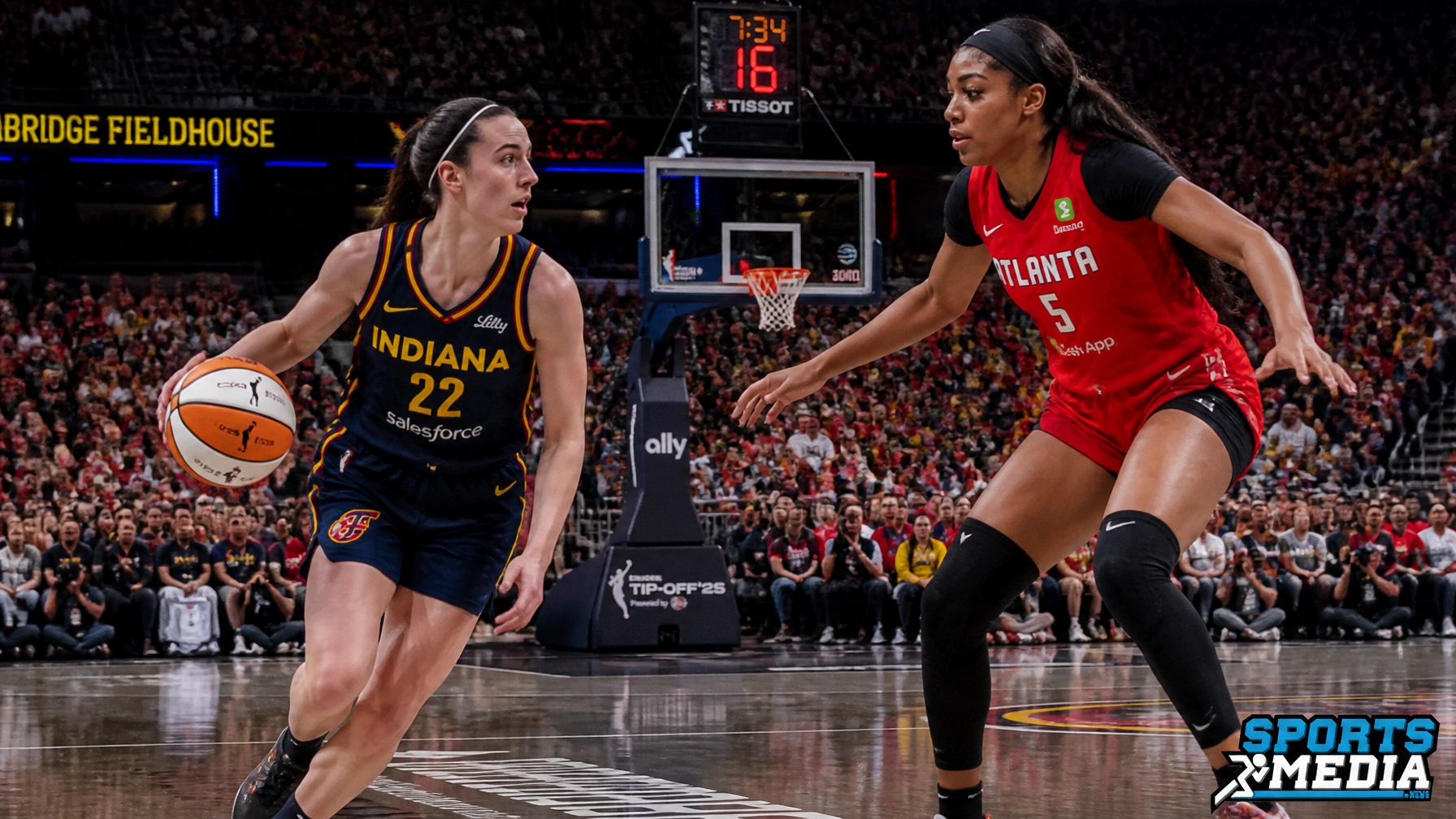
The Indiana Fever’s 83–71 win over the Atlanta Dream in the 2026 Commissioner’s Cup felt less like an ordinary June game and more like a showcase of what the modern WNBA has become: elite star power on the court, big storylines around Caitlin Clark and Angel Reese, and a national audience watching every twist.
The matchup in Indianapolis served as the Fever’s first Commissioner’s Cup game of the 2026 season, coming at a critical juncture for a team seeking to find its rhythm. Indiana entered the night having dropped two straight games on a challenging West Coast road trip, bringing their record to 4–4. In contrast, the Atlanta Dream arrived with a 6–2 record, riding the momentum of a strong early-season start and establishing themselves as a premier force in the Eastern Conference.
Beyond the standings, the evening was billed as the latest chapter in the Caitlin Clark vs. Angel Reese rivalry: a narrative arc that has defined much of the league's recent growth. Heading into the contest, Clark’s teams held a 4–1 record against Reese’s at the professional and collegiate levels combined. This game, broadcast nationally on Amazon Prime, underscored the ongoing shift toward marquee, star-driven events that are drawing record viewership to the league.
On-Court Highlights: Fever 83, Dream 71
The Fever's victory was a balanced offensive masterclass, anchored by three distinct performances that kept Atlanta on its heels. Kelsey Mitchell led all scorers with 25 points, including three critical shots from beyond the arc. Mitchell also contributed two assists and two steals, providing the veteran leadership necessary to weather Atlanta’s early pressure.

Aliyah Boston delivered what many analysts are calling her most complete performance of the young 2026 season. Boston finished with 19 points, 7 rebounds, and 3 blocks. Perhaps most significantly, she knocked down three three-pointers, a tactical development that forced Atlanta’s interior defenders to step away from the basket, opening lanes for Indiana’s guards.
Caitlin Clark narrowly missed a triple-double, recording 17 points, 8 assists, and 7 rebounds. Despite facing aggressive traps and double-teams, Clark’s ability to stabilize the offense and find the open player remained the Fever’s greatest asset.
Strategic Shifts and Interior Dominance
The game’s momentum shifted permanently in the second quarter. After a tight opening frame, Indiana outscored Atlanta 23–14 in the second and 24–22 in the third. This surge provided a double-digit cushion that the Dream would never fully erase.
One of the night's most telling statistics was the rebounding margin. The Fever dominated the glass, outrebounding the Dream 35–30. This achievement was particularly notable given that Atlanta entered the game as the No. 1 rebounding team in the WNBA, averaging 37.0 boards per contest. Indiana’s commitment to attacking the paint and securing second-chance opportunities effectively neutralized Atlanta’s greatest strength.
Angel Reese and the Dream’s Resistance
Despite the loss, Angel Reese continued her historic pace. She finished the night with 11 points, 10 rebounds, 3 assists, and 2 blocks, logging yet another double-double. During the course of the game, Reese became the fastest player in Atlanta Dream franchise history to reach 100 career points and 100 career rebounds. More significantly, she became the fastest player in WNBA history to record 50 career double-doubles.

Atlanta’s offense, which has been powered by the high-scoring duo of Allisha Gray and Rhyne Howard, struggled to find its usual rhythm against Indiana’s defensive schemes. Gray finished with 13 points, while Howard added 15, but their combined efforts were hampered by Indiana’s length and defensive rotations.
Sideline Storylines: A "Gut-Check" Performance
The game was not without its moments of high drama off the ball. It was later revealed that Caitlin Clark played much of the game through a significant illness. Reports confirmed that Clark felt ill and was vomiting at halftime, yet she returned to the floor to finish the game, leading her team to victory.
This performance has already been characterized as a "gut-check" moment for the 2024 Rookie of the Year. “There’s a level of mental toughness required to perform at this level when your body is failing you,” said one long-time WNBA analyst. “That halftime return will likely go down as one of those legendary moments that fans talk about for years.”

Seeking Legitimacy in a Growing Market
The atmosphere at Gainbridge Fieldhouse mirrored the high stakes of the game. With the Commissioner's Cup on the line and a national audience watching on Amazon Prime, the energy in Indianapolis was described as "playoff-lite." The Fever bench was visibly animated throughout the contest, especially after key blocks by Boston and late-game buckets by Mitchell.
This victory does more than just move the Fever to 5–4; it signals a team that is evolving beyond its young core. By beating a 6–2 Atlanta team that had been one of the league's hottest stories, Indiana proved they could compete with the upper echelon of the Eastern Conference.
Lasting Impacts and Future Outlook
As the 2026 season progresses, the implications of this matchup will continue to resonate. For Indiana, the game proved that when Mitchell and Boston deliver elite performances, they are far more than a one-player show. This balance is exactly what the Fever will need as they navigate a season defined by increased competition and national scrutiny.
For Atlanta, the struggle in the paint highlights a specific vulnerability. While Reese remains a dominant force, the Dream must find ways to maintain their rebounding edge when opponents effectively space the floor with shooting bigs like Boston.

Nationally, the broadcast underscored the league’s massive growth. The intersection of athlete performance and sports commerce has never been more visible, with major streaming platforms like Amazon Prime betting heavily on the star power of the WNBA’s new generation.
The result is a league where every highlight is a national event. Whether it is Clark orchestrating an offense under the weather or Reese stacking another record-breaking double-double, the 2026 season is proving that the WNBA’s "Brightest Stars" are capable of carrying the league to unprecedented heights.
Mark Ricci is a senior sports business analyst for Sportsmedia News. Covering league dynamics, event analytics, and industry trends, Mark provides in-depth insights into the intersection of athlete performance and sports commerce.