


By Jacob Potter | July 16, 2026
The conversation regarding the greatest athlete of all time has long been a multi-directional debate, shifting between the six NBA rings of Michael Jordan, the seven Super Bowl titles of Tom Brady, and the singular cultural gravity of Muhammad Ali. However, following the events of July 15, 2026, at Mercedes-Benz Stadium in Atlanta, that debate appears to be narrowing toward a singular conclusion.
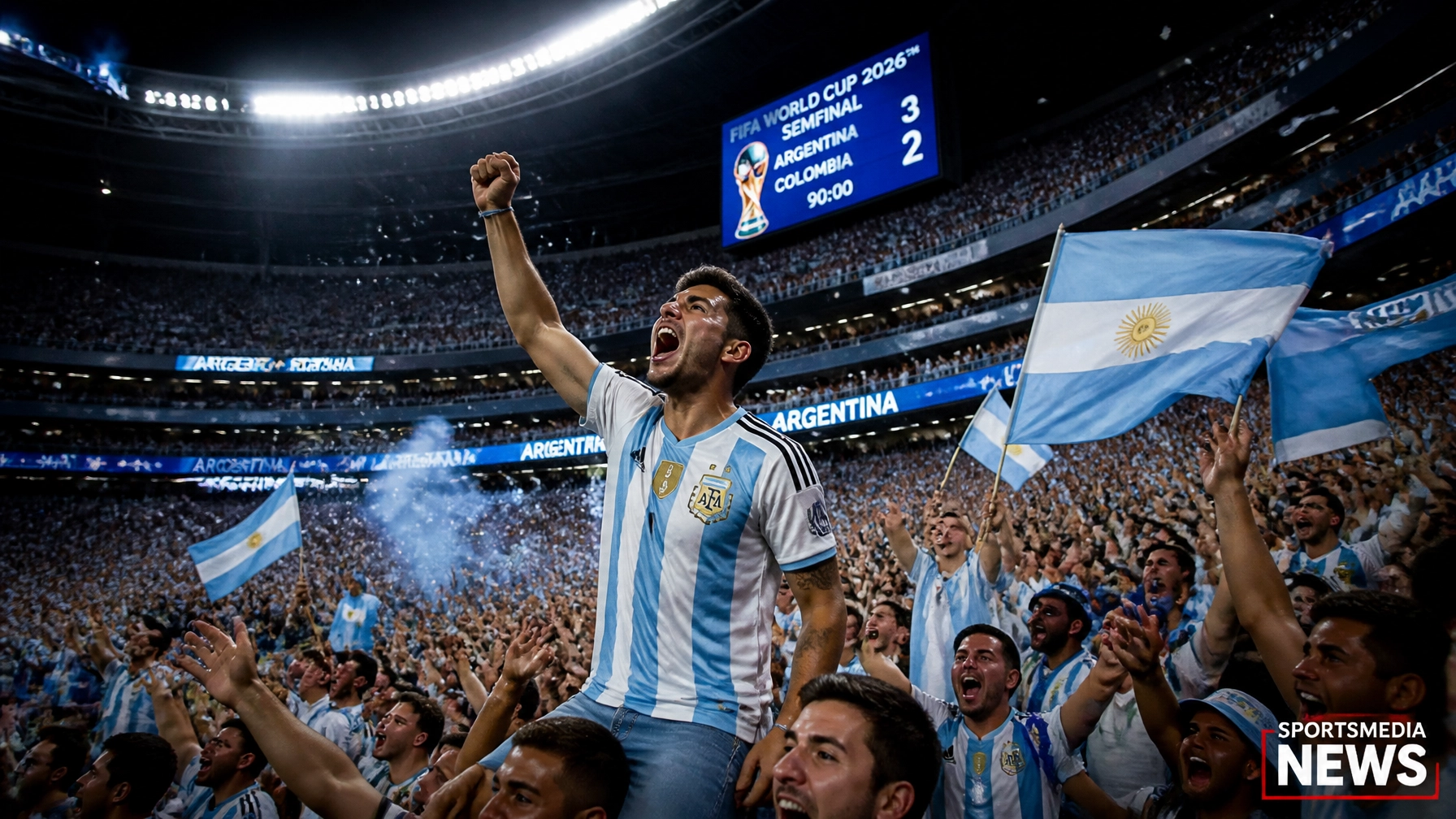
In a high-stakes semi-final that saw Argentina defeat England 2-1, Lionel Messi once again dismantled the conventional limitations of age and expectation. At 39 years old, the Argentine captain did not merely participate; he orchestrated the result. With Argentina trailing late in the match, Messi provided the 85th-minute assist for Enzo Fernández's equalizer before threading a stoppage-time pass to Lautaro Martínez for the game-winning goal.
The victory propels Argentina into the 2026 World Cup final against Spain, scheduled for July 18 at MetLife Stadium in New Jersey. For Messi, the match represents more than a title defense; it is the final piece of a resume that no athlete in team sports history has ever matched.
The Atlanta Miracle
The semi-final in Atlanta served as a microcosm of Messi's late-career evolution. No longer the explosive winger who could outrun entire defensive lines, the 39-year-old has transitioned into a tactical "quarterback" role. His performance against England was defined by efficiency: two key passes, two assists, and a composure that seemed to stabilize an Argentine side that was minutes away from elimination.
To maintain that level of spatial awareness and technical precision at 39, under the physical duress of a World Cup semi-final, places Messi in a tier of his own. It is not just talent; it is an unprecedented maintenance of elite performance.
The win marks the first time England has been eliminated from a semi-final in this era, further cementing the "Messi factor" as the deciding variable in international play. As Argentina prepares for the final, the focus remains on whether the captain can lead his nation to back-to-back global titles: a feat not achieved since Pelé’s Brazil in 1962.
Breaking the Pelé Barrier
The historical weight of the upcoming final at MetLife Stadium cannot be overstated. While Pelé remains the only player with three World Cup titles, his 1962 victory was largely won from the sidelines due to injury. If Messi leads Argentina to victory on July 18, he would become the first primary protagonist to lead a team to consecutive World Cups in 64 years.

The "back-to-back" is the hardest achievement in modern sports. In the NFL, it is rare. In the NBA, it is a dynasty marker. In the World Cup, where the tournament only happens every four years, it is nearly impossible. If Messi secures this, he moves past the Pelé-Maradona debate into a global conversation that includes names like Jordan and Gretzky.
Already the all-time World Cup top scorer — having surpassed Miroslav Klose earlier in this tournament — Messi has also become the oldest player to score in a World Cup knockout match. A win against Spain would make him the only player in history to possess two World Cup titles, two Copa América titles (2021, 2024), and eight Ballon d'Ors.
Defying Father Time
Messi’s longevity has become his most potent argument. While other greats like Diego Maradona or Ronaldinho had shorter, albeit brilliant, peaks, Messi has remained at the pinnacle of the sport for over two decades. From a teenage prodigy at Barcelona to a 39-year-old champion in 2026, his career has spanned multiple eras of football tactics and physical conditioning.

The financial and commercial impact of his presence continues to ripple through the industry. Much like the massive adoption of sports sponsorships seen in recent years, "Messi-mania" has driven ticket prices for the final at MetLife Stadium to record highs, with some resale seats reportedly reaching the $50,000 mark.
This sustained excellence is what draws the strongest comparisons to Michael Jordan. Jordan’s six NBA titles were achieved across two "three-peats," but even he walked away from the game twice during his prime. Messi has faced the unrelenting pressure of being the world's best player every year since 2007, rarely missing significant time and consistently delivering in the most critical moments.
Comparing the GOATs
To understand Messi’s place, one must look across the aisle at other sporting icons:
- Michael Jordan: 6 NBA titles, 6 Finals MVPs, 5 MVPs. Jordan redefined the global marketing of an athlete, but his dominance was contained within a 15-year window.
- Tom Brady: 7 Super Bowl titles. Brady’s longevity is the closest parallel to Messi’s, though football remains a sport of extreme specialization, whereas Messi influences every phase of the game.
- Muhammad Ali: 3-time Heavyweight Champion and Olympic Gold. Ali's impact was as much social as it was athletic, though his statistical dominance was interrupted by his exile from the sport.
- Pelé: 3 World Cups. The gold standard for decades, but he played in an era where the tactical and physical demands were vastly different from the modern global game.
The issue is particularly relevant when considering the global nature of soccer. Jordan and Brady dominated North American sports. Messi dominates a sport played by four billion people. The scale of his achievement is, by definition, larger.
The Final Hurdle
As Argentina arrives in New Jersey, they face a Spanish side that represents the future of the sport: fast, technical, and disciplined. Spain has navigated their side of the bracket with clinical precision, setting up a final that is being billed as "The Master vs. The Apprentices."

Security and logistics for the event are expected to be the most stringent in the history of the New York-New Jersey area. Authorities have already issued warnings regarding restrictions surrounding flying over major sporting events to ensure the safety of the 82,500 fans in attendance.
If Messi lifts the trophy on July 18, the debate will effectively end. He would be the first player to win the World Cup Golden Ball twice, the first to win back-to-back titles in the modern era, and the only athlete to maintain such a high statistical floor for 20 years.
While some will always favor the rings of Jordan or the rings of Brady, Messi’s 2026 run is proving that he is not just the greatest soccer player to ever live: he is the greatest athlete to ever step onto a field of play. The match at MetLife Stadium is no longer just about a trophy; it is about the final confirmation of a legend.
Jacob Potter is a senior sports analyst for Sportsmedia News, specializing in international football and the business of global sporting events.